I’m going to start this post with a disclaimer, because my wife was on the panel that discussed this topic in Washington D.C. during the Daily Beast’s 2nd annual Hero Summit held on October 10, 2013. I also have an opinion on what makes a hero and will share my thinking in the conclusion of this post that will appear November 12, 2013.
This closing discussion of the Daily Beasts 2nd annual Hero Summitexamined many aspects of courage—physical, moral, political, even intellectual. Note: I suggest you click on the previous link, scroll down and read the comments.
The panelists included General John Allen, U.S. Marine Corps (Ret.). Allen quoted Lord Moran from memory: “If you know a man of character in peace, you will know a man of courage in war.” Heroism is about those people who are “willing to sacrifice everything, everything for the principles they hold most dear,” said Allen.
Allen clearly was thinking of the men and women—his soldiers—still in the field. “Less than one percent of the population is involved in the defense of this nation,” said Allen. They fight, they risk their lives every day and often in corners of the world that the rest of the United States has forgotten.
“We fail to talk about the routine heroism,” said Allen. Those soldiers—that professional military—is made up of people “who truly are keeping the wolf from the door.”
The second panelist was David Brooks, a New York Times columnist. Brooks talked about “the heroism of everyday life,” and especially the need to confront oneself, to battle against your own sin and weakness.
The third panelist was Anchee Min, my wife. “The home front is the real battle,” said the author of The Cooked Seed and Red Azalea, a New York Times Notable Book of the Year. Courage, in her life, included standing up to her very American daughter, enlisting her when she was young in the work of survival—buying her tools and a book about plumbing on her birthday—and driving her to earn good grades.
The fourth panelist was Wole Soyinka—Professor, Obafemi Awolowo University, Ile-Ife, Osun State, Nigeria—who was awarded the Nobel Prize for Literature in 1986. He spoke of his admiration of all those young people, especially those young women, who are fighting for an education against horrendous odds in places like Nigeria, Somalia, Mali and elsewhere.
Lloyd Lofthouse is a former U.S. Marine and Vietnam Veteran.
His latest novel is the award winning suspense-thriller Running with the Enemy. Blamed for a crime he did not commit while serving in Vietnam, his country considers him a traitor. Ethan Card is a loyal U.S. Marine desperate to prove his innocence or he will never go home again.
And the woman he loves and wants to save was fighting for the other side.
To follow this Blog via E-mail see upper left-hand column and click on “FOLLOW!”
My novel, “Running with the Enemy”, is being featured Sunday, November 10, at The Fussy Librarian, a new website that offers personalized e-book recommendations. Readers choose from 32 genres and indicate preferences about content and then the computers work their magic. It’s pretty cool — check it out! @ www.TheFussyLibrarian.com
Literary Awards for this novel:
Runner Up in General Fiction 2013 Beach Book Festival
Honorable Mentions in General Fiction 2013 San Francisco Book Festival 2013 Hollywood Book Festival 2013 New York Book Festival
Praise for “Running with the Enemy”
“Obviously drawn from the author’s first-hand experiences as a Marine serving in Vietnam,Running with the Enemy is a rough but occasionally heartfelt war story. … The book is sometimes too obviously drawn from his experience. But ultimately that’s a small complaint about a book that, on the whole, is quite good and has a lot to say about the nature of the conflict …” – 21st Annual Writer’s Digest Self-Published Book Awards commentary from an anonymous judge
“The author definitely has inlcuded vivid, entrancing descriptions of the country, the people and the military who served there. … It is an action-filled, intriguing story I will not forget soon.”
– 5-star review from KMT through a Library Thing Giveaway
“The fight/combat scenes are stunning, very realistic. … Betrayal, revenge, murder, and desperation make this a must read! … Very highly recommended.”
– 5-star review from Great Historicals
“This was quite a riveting but cruel story, not for the faint of heart. Well written with very graphic language and violent scenes but all-over, a very good suspense book.”
– 4.5-star review from Lynelle of (South Africa)
If you lived in a war zone, would you rather have dumb bombs or smart bombs dropped on targets?
Dylan Stableford—writing for Yahoo News—reported on a documentary about the fear and stress of life under the threat of U.S. drones, and I left this comment: “If people in countries where al Qaeda and the Taliban operate don’t like the U.S. drone attacks, then all they have to do is stop supporting Islamic terrorists and fight back against them so the U.S. troops will go home and take their drones with them.”
An anonymous, faceless person criticized my comment. His or her name was Win—who, as far as I know, could be an al Qaeda or Taliban PR person—wrote, “Lloyd, you sound like the typical dumbshit in government, underestimating how difficult it really is to do that. You are implying these people deserve what happened to them. If either you or me lost all that we have one day for absolutely no reason because some dumbshit from a foreign country willed that it happened to either one of us, I can guarantee, guaran-damn-tee that our blood would boil and our rage fueled.”
From Win’s comment it is obvious that he or she has little or no knowledge about the battlefield in countries where wars are fought. And I want to remind Win that we did not start this war for “absolutely no reason”. The war was started by Islamic Fundamentalist terrorists on 9/11 in New York City when they killed thousands of civilians by hijacking commercial jets full of passengers and ramming those jets into the World Trade Center and the Pentagon.
Now back to the question: If you lived in a war zone through no fault of your own and you didn’t want anything to do with the war, would you rather have dumb bombs or smart bombs used to hit targets in your country?
In World War II, for example, the United States killed millions of German and Japanese civilians bombing the cities in those countries with dumb bombs. Fleets of bombers flew over targets and dropped thousands—probably millions—of bombs without knowing exactly where those bombs would land and explode.
In fact, the United States dropped more dumb bombs on Vietnam, Laos and Cambodia than it dropped in all of World War II.
In World War II, civilian deaths in Germany are estimated to be between 1.5 to 3.5 million. In Japan, civilian deaths were 500-thousand to one million. In comparison, the United States—the country that dropped most of the dumb bombs that caused that collateral damage—only lost 1,700 of its own noncombatants.
To defeat Germany and Japan, the United States and its allies also dropped napalm on German and Japanese cities. In one bombing of Tokyo, for example, 2,000 tons of incendiary dumb-bombs were dropped over the course of 48 hours, and between 80,000 and 130,000 civilians were roasted to death in the firestorm that followed.
In Vietnam, the collateral damage was somewhere between 245,000 and two-million civilian deaths. But the United States didn’t drop dumb bombs only in Vietnam. The U.S. also dropped dumb bombs In Cambodia and Laos. In Cambodia the collateral damage was 200,000 to 300,000 civilian deaths. In Laos, the collateral damage from dumb bombs was 20,000 to 200,000 dead civilians—and millions were wounded.
Now, let’s focus on civilian casualty counts in the Iraq and Afghanistan Wars to see if the use of smart bombs to target enemy combatants resulted in reduced civilian casualties—that dirty word is known as collateraldamage.
Classified US military documents released by Wikileaks in October 2010 recorded that there had been 66,081 civilian deaths in Iraq over a period of six years. But the Iraq Body Count Project’s numbers are higher: 110,937 – 121,227.
When checking these numbers for Iraqi civilian deaths, there were no details on who did the killing and how these civilians died. And we know that al Qaeda blows up civilians all the time in the streets; on buses; in Mosques and Churches; in restaurants, at weddings and funerals, etc. Therefore, it’s easy to conclude that American smart bombs were not responsible for all of those deaths. In fact, reports from Afghanistan indicate that collateral damage from Western smart bombs is responsible for less than 10% of all civilian deaths.
One source I checked reported that “In the first six months of 2013, the United Nations Assistance Mission in Afghanistan counted 1,319 civilian deaths and 2,533 civilian injuries with 9% attributable to pro-government forces—this means that collateral damage from the West’s smart bombs may have only killed 119 civilians. Compare that to six months of civilian deaths during World War II in Germany or Japan or in Vietnam when the West was only using dumb bombs and often sent fleets of B52s to carpet bomb urban and rural areas.
That same report said, that in all of 2012, total civilian casualties were 2,754 deaths and 4,805 injured with 8% of those loses attributed to pro-government forces meaning that 92% of the deaths were caused by al Qaeda and/or the Taliban.
In conclusion, the United States is at war in Afghanistan with insurgent forces who started this war on 9/11—the same Islamic fundamentalists who have sworn to destroy Western civilization, and I’m convinced that they would not hesitate to use dirty bombs or nuclear weapons on Western cities like London, Paris, Berlin, Rome, New York, Washington D.C., Los Angeles, San Francisco, etc. killing millions of civilians without any effort to minimize the damage.
On April 11, 1880, General William Tecumseh Sherman, who played an instrumental role in defeating the South during America’s Civil War by ruthlessly destroying everything in his army’s path, said this in Columbus Ohio: “There is many a body here today who looks on war as glory, but boys, it is all hell.”
I fought in Vietnam as a field-radio operator in the United States Marine Corps. We had rules forced on us by civilian “dumb-shits” who said we couldn’t shoot at the enemy unless we could see who was shooting at us first. And most of the time, we couldn’t see who was shooting at us.
We lost the Vietnam War. We didn’t lose World War II.
If the West is going to win the war against al Qaeda and the Taliban, then the West must be as ruthless as it was in World War II, and if the West fails, then civilians will be dying in American and European cities by the millions.
General Sherman was right. War is hell, and if you are reading this and you do not live in a country that is a war zone like Iraq or Afghanistan, then you should bless your fortunate stars and pray that the war doesn’t come to your neighborhood.
No one who is innocent deserves to be killed from a bomb—dumb or smart—but as cruel as it sounds, “Better them then us.” And if you believe in coexistence, then I think you should be the one to—face-to face—convince al-Qaeda to stop killing innocent people.
_______________________
Lloyd Lofthouse is a former U.S. Marine and Vietnam Veteran.
His latest novel is the award winning suspense-thriller Running with the Enemy. Blamed for a crime he did not commit while serving in Vietnam, his country considers him a traitor. Ethan Card is a loyal U.S. Marine desperate to prove his innocence or he will never go home again.
And the woman he loves and wants to save was fighting for the other side.
To follow this Blog via E-mail see upper left-hand column and click on “FOLLOW!”
The Urban Dictionary says that pogey bait means: “The Marines in China before WW II were issued candy (Baby Ruths, Tootsie Rolls, etc.) as part of their ration supplements. At the time, sugar and other assorted sweets were rare commodities in China and much in demand by the Chinese, so the troops found the candy useful for barter in town.
“The Chinese word for prostitute, roughly translated, is pogey. Thus, Marines being Marines, candy became Pogey Bait.”
Hop on my time machine and join me in the early 1960s when I was being trained at the Marine Corps Recruit Depot in San Diego.
As a recruit still in boot camp, we were allowed visitors after so many weeks [can’t remember exactly how many weeks that was], and my parents drove from LA County to visit me for the first time since I had left home.
Unknown to me, my mother had baked my favorite cakes and cookies and brought along a cooler packed with ice, Doctor Peppers and Pepsi/Coke—my favorite sodas back then—now they are the same as poison to me. But as a teen, I gulped this poison daily by the liter.
In a letter home, I had asked my parents to request to see two other Marine recruits—friends of mine. Before we were released to go to the visiting area, one of the drill instructors told us that we were not to eat or drink any pogey bate.
However, my two friends ignored that order and stuffed themselves with cake and cookies washing it all down with one Coke, Pepsi or Doctor Pepper after another. I just said no and didn’t take one bite or sip.
When we got back to the barracks, we discovered that we had been under surveillance and the drill instructor knew who had disobeyed his orders about eating that pogey bate. When it came time to sleep, I went to bed but my two friends were outside doing squat thrusts past midnight as they shouted their sins for the platoon to hear.
But in the chow hall every meal, Marine recruits were getting their sugar fix another way. They were smothering slices of white bread with butter then pouring an inch of sugar on that slice of buttered bread before eating it.
I think this was proof that recent scientific studies are right that sugar is more addictive than cocaine. Source: Plos One.org PLOS ONE (eISSN-1932-6203) is an international, peer-reviewed, open-access, online publication.
Lloyd Lofthouse is a former U.S. Marine and Vietnam Veteran.
His latest novel is the award winning suspense-thriller Running with the Enemy. Blamed for a crime he did not commit while serving in Vietnam, his country considers him a traitor. Ethan Card is a loyal U.S. Marine desperate to prove his innocence or he will never go home again.
And the woman he loves and wants to save was fighting for the other side.
To follow this Blog via E-mail see upper left-hand column and click on “FOLLOW!”
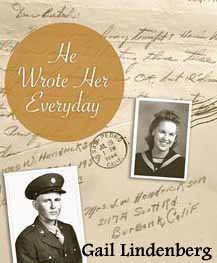
A: It certainly wasn’t my original plan. When I retired from teaching, I had no intention of writing anything. But when my mother handed me those letters, the book took shape quickly. I still feel as though my father is the real author of the book. It’s as though he stood over my shoulder the entire time.
2. Q: Is this a novel? You never refer to it as such.
A: I call it a “book” because it defies easy categorization. The genre would have to be “historical novel,” and yet that doesn’t quite work for me either. Dad’s letters are primary witness accounts of events as they happened. My mother’s interviews are her own memories, filtered by time and my reporting of what she said. The back-story of the war experiences is my fictional version of what I read in the letters and remember from my father’s stories.
3. Q: Did you have any other books to serve as a model for your writing?
A: Yes, but they were not war novels. I have never been interested in reading books about war time and my lack of depth in this area was a major weakness when I began. Margaret Atwood wrote a book called ALIAS GRACE. It is historical fiction and tells the story of a woman by using articles and public records about her. Her book made me realize that this book of Dad’s would actually work as a genre of literature. I was encouraged by her pattern of including original documents, her own research, and a back-story that, while it might not have happened, was entirely plausible. Just because it didn’t happen exactly as written does not mean that it isn’t true.
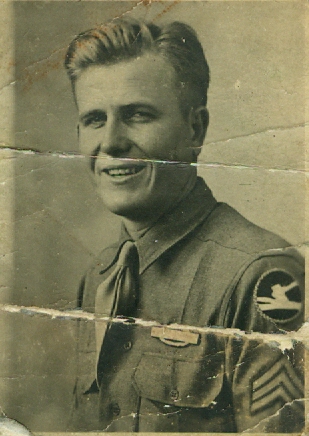
Staff Sergeant James William Hendrickson, Jr. 1945
4. Q: How long did it take you to complete the book?
A: I started scanning the letters at Christmas time in 2010. I read the letters as I scanned, and the idea for the story took root over the next few months.. I began the actual writing four months later. My goal was to complete the book in time for my Mother’s ninetieth birthday on December 8, 2012. Then I received a diagnosis of cancer. Surgery, chemo, and radiation treatment began in August of 2012. I printed a “rough draft” which was a hard-cover family version. Only twenty copies came off the press. Once I had recovered my faculties, such as they are, post chemo, I edited the book with the help of my Writer’s Workshop group. The book has been up on Amazon as a Trade Paperback and e-version since September of 2013.
5. Q: Your mother is a character in the book. What was your mother’s reaction to the story?
A: She says she feels like quite the celebrity. The book has received a very positive response, and she has heard from people from her home town as well as relatives and friends. She did say that she thought I was too hard on Grandma Hendrickson. And every time she reads a section through again, we have a conversation about that during our phone time. I still phone her every Saturday morning. She always tells me that my father would be very proud to read it…and we both laugh. We can see him shaking his head to think that his letters would be available to the world to read.
6. Q: How do you think your father would react to the book?
A: I can only hope that he would feel like it was a true depiction of who he was and who the men were who fought alongside him. Dad’s life was one of sacrifice for others. I think this is true of most men who serve their country, but especially so for the boys who fought in World War II out of conviction for a cause and a sense of duty. Dad wanted to bring his brother back from PW camp. He wanted to right a wrong. He lived his life by those convictions.
7. Q: Would you characterize this book as a romance more than a war novel?
A: I never saw it as a romance. These were just my parents. It was only after reading it aloud, six pages at a time, to my editing group that I had any sense at all that it would be perceived as such. One woman said, “Gail, I have fallen in love with your father.”
I do think that the history piece and the war story he tells might fall into the category of edging on being anti-war. But I have a strong notion that most men who go to war would like to be certain that their children will not have to. Dad’s idea was that this would be the war to end all wars.
The answer to your question should probably be that the book will be seen by the reader as they wish to view it. There are two history teachers I know of who are using the web site for the book with lesson plans to provide a research source for studies of WWII. And there are women who read it just to enjoy the story line provided by the strong relationship my parents were able to forge in war time.
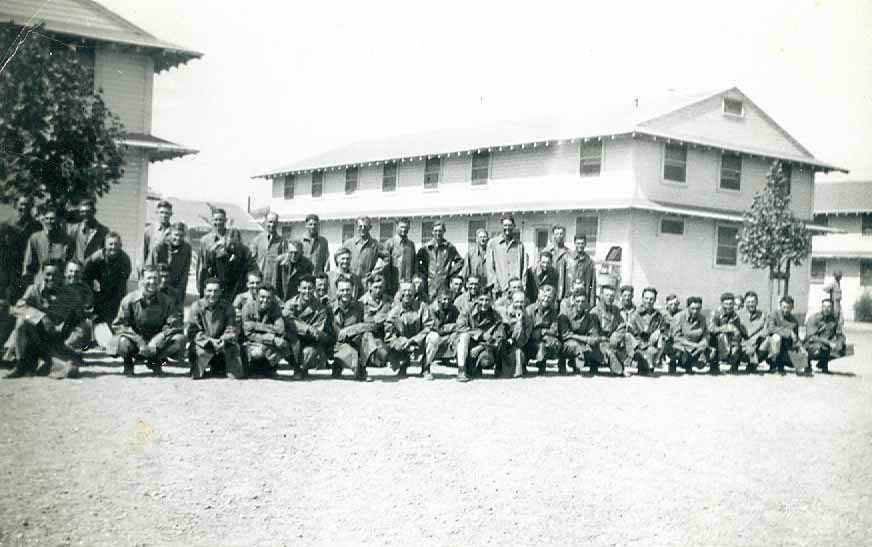
Camp Roberts, Burbank, California
8. Q: The link to your web site is included as a section in the book. Why is that?
A: When I wrote the first version, I scanned all the letters, pictures, etc. and copied them to a thumb drive for my family. As I was editing the final book, I realized that the graphics would make the book far too expensive for printing. Also, folks who read it before publication were, for the most part, interested in the letters. So I decided to set up a web site where people could go and find every letter, document, and photograph Mom saved from those two years of war time. HeWroteHerEveryDay.com is up and running for those who are interested.
9. Q: What kind of response have you gotten from people who have read your book? You mention that the response has been largely positive. Any negatives?
A: Yes, the response has been warm and generous. But then, the people who know me would probably not tell me if they didn’t like it.
Many people who read the advance manuscript wanted to know more about Dad after he got home. So the published version has a brief epilogue that outlines Dad’s life post war.
I did have one relative who wasn’t happy about a small anecdote in the book about someone on my mother’s side of the family. That surprised me, because the story is primarily about my father and the Arizona Hendricksons. But that was the only sour note in the symphony…at least so far.
10. Q: Will there be a sequel?
A: I honestly don’t think so. This book was unique in that it was driven by real events that were already written about by the subject of the book, my father. I am too close to the years following Dad’s war service. That was my childhood and I was his first baby since the twins were 5 months old by the time he got home. I would not know where to begin.
And, after all, the whole point of the book is that my father was just an ordinary man who lived through extraordinary times. He was sent to war. They didn’t just hold the Germans off; they turned the tide of the war. Dad wasn’t expected to survive, but he—and so many thousands of others—did survive. And they came home to America and lived ordinary lives. While that story might not make a good sequel to this book, it certainly made a good life for me and those of my generation. It’s a legacy that I hope we will be able to pass along to our children.
Lloyd Lofthouse, this blog’s host, is a former U.S. Marine and Vietnam Veteran.
His latest novel is the award winning suspense-thrillerRunning with the Enemy. Blamed for a crime he did not commit while serving in Vietnam, his country considers him a traitor. Ethan Card is a loyal U.S. Marine desperate to prove his innocence or he will never go home again.
And the woman he loves and wants to save was fighting for the other side.
To follow this Blog via E-mail see upper left-hand column and click on “FOLLOW!”
As a WW II combat veteran of the 84th Infantry Division (Railsplitters), serving in the same unit as the subject of this book, I [Allan Wilford Howerton] was honored to be asked to read and react to the manuscript of He Wrote Her Everyday prior to its publication.
Note from Blog host: the 84th Infantry Division landed on Omaha Beach, November 1 – 4, 1944, and fought in the Battle of the Bulge in December 1944 – January 1945.
Ms Lindenberg, in getting the story together, has made a grand contribution to the literature of World War II. In addition to a war story, it is a wonderful book about love, longing, and faithfulness under unimaginable hardship and uncertainty.
Anyone with an interest in World War II will like He Wrote Her Everyday. It tells, among many other things, a true story about the plight of replacements rushed to the front lines to augment units suffering heavy casualties in the Siegfried Line and the Battle of the Bulge.
I was there, an infantryman in the same division, but thankfully not a replacement. They were assigned, often in the middle of a battle, knowing no one and without buddies to rely on. Many became casualties but those who survived adjusted pretty rapidly and went on, like the subject of this book, to make major contributions during the drive across Nazi Germany to end the war.
Writing about war experience is difficult for those who experienced it first-hand. It is nearly impossible for someone who wasn’t there to give a believable picture of how things really were. Use of the letters written during the war gives this book a strong sense of the soldier’s walk through the snow.
Lloyd Lofthouse, this blog’s host, is a former U.S. Marine and Vietnam Veteran.
His latest novel is the award winning suspense-thrillerRunning with the Enemy. Blamed for a crime he did not commit while serving in Vietnam, his country considers him a traitor. Ethan Card is a loyal U.S. Marine desperate to prove his innocence or he will never go home again.
And the woman he loves and wants to save was fighting for the other side.
To follow this Blog via E-mail see upper left-hand column and click on “FOLLOW!”
Semper Fi is Latin for “always faithful” and it is the motto of the United States Marine Corps— faithful to God, Country, Family and the Corps. The Urban Dictionary says it wasn’t always this way. Up until 1871, the motto was “First to fight”—a motto that still applies.
Every U.S. Marine knows that Semper Fi is the universal Marine greeting.
Recently I had a reason to explain this motto to my wife when she asked me if I wanted her to share something from me to General John R. Allen when she attended The Daily Beast’s Hero Summit on October 10—my wife was invited to be on the same panel at the summit with General Allen; David Brooks, the columnist for the New York Times who has written so often about moral standards and imperatives, and Nigerian novelist and Nobel laureate Wole Soyinka.
I said to my wife, “Say two words to General Allen, Semper Fi.”
“What does that mean?” she asked. “What if he doesn’t know what it means?”
“It’s Latin for always faithful,” I replied. “And trust me, General Allen will know what those two words means. If you look at the Marine Corps emblem, you will see it on a flag flying above the American Eagle.”
As for popcorn, I couldn’t resist adding popcorn to this post because right before I sat down to write, my wife made some in the microwave and then went to see a movie at the local theater. I stayed to write this post.
The smell of fresh-popped corn filled the house and I couldn’t resist filling my own bowl with this American treat. Believe me when I say that popcorn is as American as the flag, mom and apple pie, because the History of Popcorn clearly establishes that it originated in the Americas. And the popularity of popcorn as we eat it today started in Iowa in the 1880s.
I made my bowl with two scoops of Orville Redenbacher’s gourmet popping corn poured in a lunch-sized paper bag; two minutes on high in the microwave; a dash of California Branch Garlic Oil made with Extra Virgin Olive Oil; a second dash of 100% Pure Chosen Foods Avocado Oil, and a third dash of Himalayan Pink Salt, referred to as the purest salt in the world. Then I started eating as I wrote this post about Semper Fi. [Note: all the ingredients for the popcorn came from Costco, an American company.]
The United States Marine Corps celebrates its birthday on November 10 because on that day, a decree of the Second Continental Congress led to the Marine Corps first official recruiting drive in the Tun Tavern in Philadelphia, Pennsylvania—some argue that the recruiting may have started unofficially before November 10, 1775.
I wonder what kind of beer the first Marines in 1775 drank at the Tun Tavern.
Did you know there is a Founding Fathers Lager Beer listed along with forty-nine other brands that made the list of The 50 Most Patriotic Beers in America?
Too bad the best beer I have ever sipped, St. Bernardus Abt 12 [a product of Belgium], doesn’t qualify.
I guess I should have called this post, Simper Fi, Popcorn and Beer. After all, a cold beer goes great with salty snacks, and I drank my first beer when I was still on active duty in the U.S. Marines back in the 1960s during a brief stay in Okinawa before shipping out to fight in Vietnam.
Do you think a chilled-bottle of beer and a salty-bowl of popcorn would be a good way to celebrate the Marine Corps birthday?
_______________________
Lloyd Lofthouse is a former U.S. Marine and Vietnam Veteran.
His latest novel is the award winning suspense-thriller Running with the Enemy. Blamed for a crime he did not commit while serving in Vietnam, his country considers him a traitor. Ethan Card is a loyal U.S. Marine desperate to prove his innocence or he will never go home again.
And the woman he loves and wants to save was fighting for the other side.
To follow this Blog via E-mail see upper left-hand column and click on “FOLLOW!”
Recently, I logged on to discover another story about a father serving in the United States Navy returning home after a six-month overseas deployment.
I’m a sucker for this genre of YouTube homecoming videos, because as I watch them I relieve that moment forty-seven years ago in December of 1966 when I returned home without warning at three in the morning after a combat tour in Vietnam. I wrote about my return in Coming Home. There was no YouTube back then.
It’s powerful moment to watch a family reunion when a military father or mother returns home from a dangerous war zone.
However, this time I questioned why this homecoming should gain national attention in the media. What was unique about it?
Rachel Martin writing for Indiana News Center.com said, “First Class Petty Officer Scott McComas has been serving overseas on the island of Diego Garcia for the Navy Reserves. McComas says he’s been gone for a year, four times before.”
I was curious where he served the other four times. Maybe one or more of those deployments was in a more dangerous place than Diego Garcia.
The island of Diego Garcia is really remote and isolated. It’s 1,970 nautical miles east of Africa, 967 nautical miles south-southwest of the southern tip of India and 2,550 nautical miles west-northwest of the West coast of Australia.
Princeton University Press says, “The American military base on the island of Diego Garcia is one of the most strategically important and secretive U.S. military installations outside the United States. Located near the remote center of the Indian Ocean and accessible only by military transport, the base was a little-known launch pad for the wars in Iraq and Afghanistan and may house a top-secret CIA prison where terror suspects are interrogated and tortured.”
In addition, the UK forcibly evicted/removed the 2,000 people who lived on Diego Garcia before the U.S. military moved in. Source: Global Post.com
For years I imagined the island of Diego Garcia was a desolate, freezing rock surrounded by nothing but a brutal, stormy ocean. Then I searched YouTube and discovered I was wrong—really wrong.
Diego Garcia is a tropical paradise with warm to hot temperature year around and if you watch the embedded video above you will discover breathtaking beaches and crystal clear water.
What about all the American troops who are serving in dangerous or risky overseas deployments? There are still 69,000 American troops fighting in Afghanistan; 15,000 are in Kuwait; 28,500 in South Korea not far from the threat of the lunatics in North Korea; 3,628 in Kyrgyzstan; 2,714 in Bahrain, and 806 in Qatar. Source: U.S. Deployments Overseas
In fact, the vast majority of Navy deployments are at sea on Naval ships and submarines inside metal hulls. Some of those deployments are in dangerous waters like the Persian Gulf, the Gulf of Aden or the Red Sea.
Then again, maybe it was the uniqueness of that Indiana corn-maze that made this homecoming a worthy news item, and it really had nothing to do with a Navy father coming home from a tropical paradise. And it’s cute to watch a young daughter throw herself in her daddy’s arms because he’s been away from home for six months.
_______________________
Lloyd Lofthouse is a former U.S. Marine and Vietnam Veteran.
His latest novel is the award winning suspense-thriller Running with the Enemy. Blamed for a crime he did not commit while serving in Vietnam, his country considers him a traitor. Ethan Card is a loyal U.S. Marine desperate to prove his innocence or he will never go home again.
And the woman he loves and wants to save was fighting for the other side.
To follow this Blog via E-mail see upper left-hand column and click on “FOLLOW!”
Recently I read a comment left on another forum/blog that said only troops in combat deserve to be called heroes. I don’t agree. I read about heroes all the time who do not wear a military uniform fighting in one of America’s endless foreign wars.
For example, recently I read about four heroes and none of them wear a military uniform.
The first hero is an eight-year-old boy named Johnathan Bent who “ran through the [burning] building, banging on neighbors’ doors, including his mom’s, waking everyone up. … ‘This little kid is amazing. He actually really saved people’s lives’, said neighbor Sean Johnson.” Source: wsmv.com and New York Daily News.com
The second hero is Anne Mahlum, the Founder and CEO of Back On My Feet. This 501 [C] 3 non-profit organization was founded to use running to create self-sufficiency in the lives of those experiencing homelessness. In late June 2007, Mahlum founded the organization at the age of twenty-seven.
Every morning, founder and avid runner Anne Mahlum waved hello and ran past a group of homeless men. Then Mahlum decided to contact Sunday Breakfast Rescue Mission, the homeless shelter where these men were living, and invite the men to join her on her runs.
The third hero or heroes was a group who risked their lives to save a man who fell on the subway tacks in Boston. “A man seemingly accidentally walked straight onto the train tracks, falling unconscious as a result of his scary plunge. But immediately, the waiting crowd sprang into action. After failing to get the man’s attention, two people jump onto the tracks to pick the man up. Another person enters the frame from the opposite platform to give the final helping hand needed to get the lackadaisical man out of danger.” Source: Yahoo News.com
The fourth hero was Abdul Haji, a 39-year-old real estate executive who rushed to the mall as the attack got underway. He managed to evacuate scores of people to safety, including that young American girl, Portia Walker, and he is being hailed in Kenya as a hero. Source: ABC News
But Haji dismisses all the talk of him being a hero, saying he was just going to the mall to save his brother. “I think anybody in the situation would have probably done the same thing,” he said.
Every time I hear the word hero, the first hero I think of is a U.S. Marine I learned about at MCRD when I was training at the Marine Corps west-coast boot camp in San Diego. At the Chosin Reservoir—when I was age five—during the Korean conflict, fourteen Marines, two soldiers and one Navy pilot received the Medal of Honor. The Marine I’m talking about who earned the Medal of Honor was private Hector A. Cafferata Jr.
Cafferata [now age 84] made a target of himself under the devastating fire of automatic weapons, rifles, grenades and mortars; he maneuvered up and down the line and delivered accurate and effective fire against the onrushing force, killing fifteen, wounding many more and forcing the others to withdraw so that reinforcements could move up and consolidate the position. He single-handedly held off a regimental-sized enemy force and annihilated two enemy platoons after most of his comrades had fallen.
Tell us about your heroes.
_______________________
Lloyd Lofthouse is a former U.S. Marine and Vietnam Veteran.
His latest novel is the award winning suspense-thriller Running with the Enemy. Blamed for a crime he did not commit while serving in Vietnam, his country considers him a traitor. Ethan Card is a loyal U.S. Marine desperate to prove his innocence or he will never go home again.
And the woman he loves and wants to save was fighting for the other side.
To follow this Blog via E-mail see upper left-hand column and click on “FOLLOW!”

![Pageflex Persona [document: PRS0000035_00034]](https://thesoulfulveteran.com/wp-content/uploads/2013/05/april-5-website-cover.jpg)