Sex is Therapy for Some Combat Vets

For some combat veterans, physical intimacy acts as therapy because it triggers positive brain chemicals that reduce stress, build safety, and combat emotional numbness. These veterans may use intense physical and sexual stimulation to briefly dull or escape persistent emotional pain, intrusive thoughts, and combat-related trauma.

Combat veterans who engage in high-risk sexual behavior in countries like Thailand despite the threat of imprisonment are often driven by complex psychological factors, including Post-Traumatic Stress Disorder (PTSD), compulsive sexual behavior (CSB), and trauma-induced impulsivity. Research from the VA Office of Research and Development shows that veterans have considerably more behavioral addictions than the general population, often engaging in extreme risk-taking as an unhealthy coping mechanism to manage severe psychological distress.

https://www.research.va.gov/currents/0617-study_yields_insight_on_sexual_disorder.cfm

The chronic adrenaline and high-alert state caused by combat exposure can alter the brain’s threat and drive systems. This prompts certain people to pursue intense experiences to achieve a sense of typical arousal or dominion.

https://www.swords-to-plowshares.org/toolbox-article/common-mental-and-behavioral-health-conditions

How Intimacy Helps Some Combat Veterans

Oxytocin release: Sex and close touch release oxytocin, a brain chemical that lowers fear and builds trust.

A sense of being grounded: Reassuring contact aids a detached mind in returning to the present.

Reducing isolation: PTSD often makes people feel cut off from others; physical closeness restores a human connection.

Reclaiming joy: It replaces memories of war and danger with a positive, shared human experience.

The Varied Impact of Trauma on Individuals

Not a universal rule: Loving sex is not therapy for every combat veteran. Many vets struggle with avoidance, anger, or being triggered during sex.

Shared struggles: Both survivors of abuse and combat veterans can experience hyperarousal (high anxiety), emotional numbing, or pain because their nervous systems are stuck in “survival mode.”

The role of safety: Healing depends on mutual trust and consent. If a partner is insecure or under duress, intimacy can result in damage rather than recovery, irrespective of the nature of the trauma.

“Clinical research demonstrates a complex picture. While some veterans view sexual intimacy as a comforting ‘means to an end’ to manage symptoms, the data repeatedly shows that PTSD often disrupts intimacy. Emotional numbing, hyper-vigilance, and trauma-focused medications commonly make physical closeness a significant challenge for veterans.”

https://www.ptsd.va.gov/professional/treat/specific/ptsd_family.asp

https://pmc.ncbi.nlm.nih.gov/articles/PMC2783889

https://www.npr.org/sections/health-shots/2017/01/01/507749611/for-veterans-trauma-of-war-can-persist-in-struggles-with-sexual-intimacy

https://www.research.va.gov/currents/spring2015/spring2015-3.cfm

Combat veterans with post-traumatic stress disorder (PTSD) may take sexual risks to cope with emotional numbness, recreate adrenaline highs, or self-regulate intense internal distress.

Why Risk-Taking Happens

In Search of Excitement: PTSD commonly leads to emotional detachment or a lack of sensation (anhedonia). High-risk sexual behavior can trigger a massive surge of adrenaline, allowing veterans to for a short time perceive a sense of intensity or aliveness that everyday life lacks.

Some individuals unconsciously search for turbulent, perilous, or pivotal scenarios because it matches the known nervous system excitement they felt while serving.

Handling Negative Feelings: Research indicates that sudden increases in unhappiness or bad moods often result in unwise sexual behavior. Sex becomes a maladaptive coping mechanism to distract from or soothe painful memories, anxiety, or depression.

https://pmc.ncbi.nlm.nih.gov/articles/PMC4684959

Substance Use Impairment: Many veterans deal with co-occurring alcohol or substance use disorders. Intoxicants lower inhibitions and impair judgment, thereby causing reckless or high-risk decisions.

Compulsive Behaviors: Trauma is linked to compulsive sexual behaviors, where the act functions as a powerful psychological reinforcement loop to briefly escape core PTSD symptoms like hypervigilance or intrusive thoughts.

https://www.psychologytoday.com/us/blog/the-debrief/201802/why-do-veterans-have-issues-sex-and-intimacy

Locations such as Pattaya, Thailand, at first grew as Rest and Recreation (R&R) locations throughout the Vietnam War, establishing a heritage of a military environment and easily available adult amusement.

The next link leads to a post I recently published on one of my other blogs. The two are related!

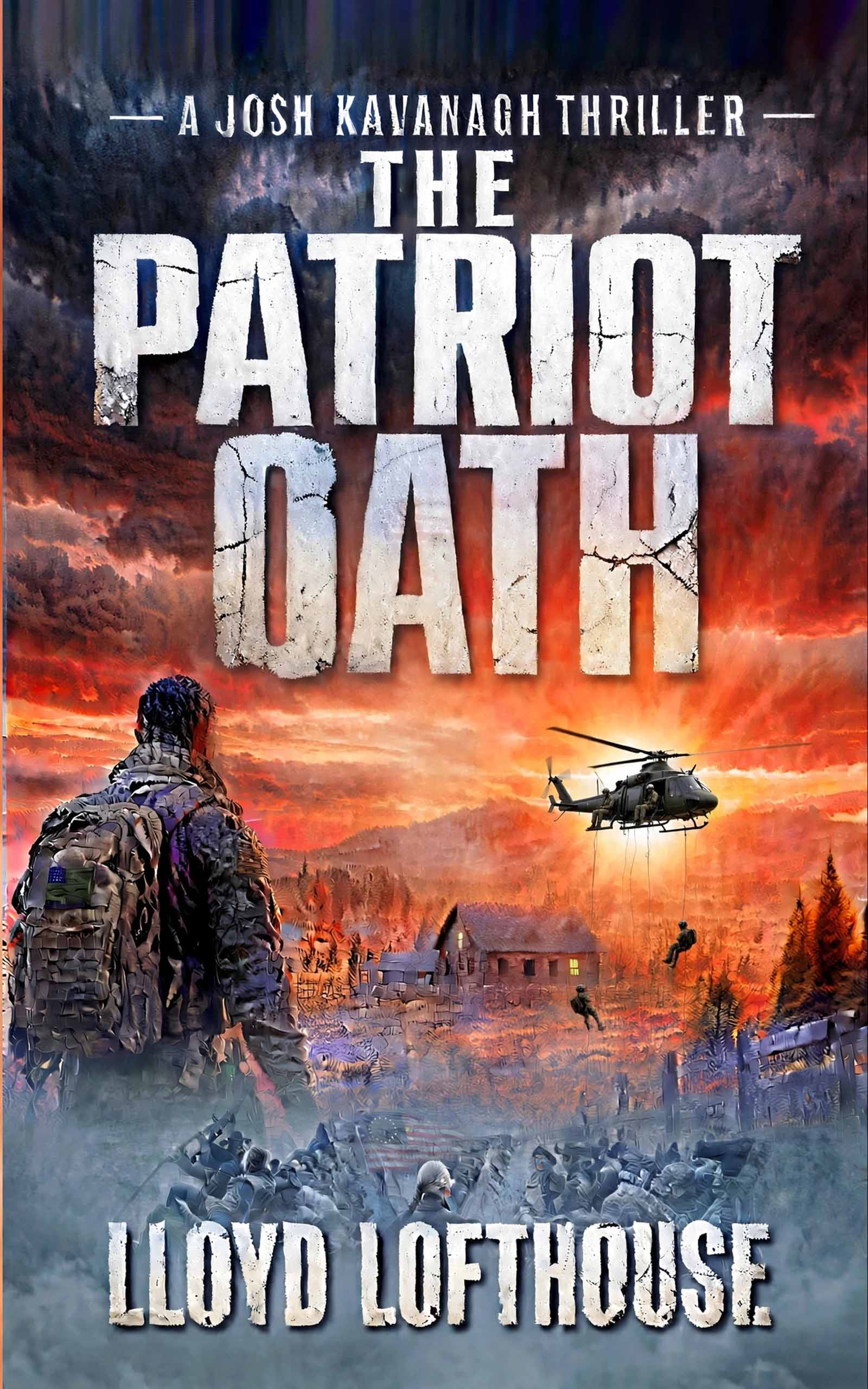
“Usually starting one of the genre, I find the overwhelming right of center or further right political beliefs. This time, with centralist politics, the story is more on the action than the politics. A good, well-balanced read.” | Michael Wooten – Five Stars – with more than 360 reviews on Goodreads
Is the U.S. too Fat to Fight?

In 2012, fifteen times more troops were discharged from the US Army due to obesity than five years prior, and over the last 15 years, the numbers of obese people actively serving in the US military more than tripled. Source: rt.com

And The Hill.com says, “Spiking rates of childhood obesity are a threat to a nation’s security and demand government intervention, according to retired military leaders.”—In 2010, more than one-third of children and adolescents in the United States were overweight or obese.

In fact, “Combined with other disqualifying factors—including criminal backgrounds and poor education (whose fault is that?)—excess weight means that an estimated 75 percent of young adults could not serve in the military even if they desired to.”

In addition, according to the Trust for America’s Health.org, “The number of obese adults, along with related disease rates and health care costs, are on course to increase dramatically in every state in the country over the next 20 years.”

The Centers for Disease Control and Prevention says, “More than one-third of U.S. adults (35.7%) are obese.” In fact, two-thirds of U.S. adults are overweight or obese.

But the National Center for Constitutional Studies says it is the voluntary duty of the citizens of a country to enlist in the army in time of war … and support the President in an hour of crises.” In addition, the Founding Fathers of the United States assumed that American citizens would undertake responsibility for the ordinary functioning of the civil social order—that included defense of country.

However, there is a solution to this weighty problem, and the U.S. Marines already successfully used it in 1965-66.

When I served in the U.S. Marines (1965-1968), there was a recruit at the Marine Corps Recruit Depot in San Diego who was so fat and out of shape that he couldn’t perform the simplest exercises without fainting. He was sent to what was known then as the book camp’s fat boy platoon where he spent more than a year exercising ten-to-sixteen hours a day to lose weight and build muscles before he was sent to combat in Vietnam where he was landing in DaNang the day I was leaving.

Therefore, if America needs young citizens of military age to defend the country, those fat boys and girls may find themselves in a boot camp for a year or more exercising their fat off—the ultimate weight loss, cannon fodder machine.

Discover Eating out in Vietnam in 1966

_______________________

Lloyd Lofthouse is a former U.S. Marine and Vietnam Veteran.

His latest novel is the award winning suspense-thriller Running with the Enemy. Blamed for a crime he did not commit while serving in Vietnam, his country considers him a traitor. Ethan Card is a loyal U.S. Marine desperate to prove his innocence or he will never go home again.

And the woman he loves and wants to save was fighting for the other side.

To follow this Blog via E-mail see upper left-hand column and click on “FOLLOW!”

What is PTSD?

Most combat veterans that have PTSD, Post Traumatic Stress Disorder, do not talk about it.  Many are heavy drinkers attempting to drowned the disorder to keep the monster at bay. Booze and drugs do not work. They make the vampire worse. Get your life back. Support and understanding is out there.

What is post-traumatic stress disorder, or  PTSD (visit this source for more information)?

PTSD is an illness. You can get PTSD after living through or seeing a dangerous event, such as war, a hurricane, or bad accident. PTSD makes you feel stressed and afraid after the danger is over. It affects your life and the people around you.

If you have PTSD, you can get treatment and feel better.

Who gets PTSD?

PTSD can happen to anyone at any age. Children get PTSD too.

You don’t have to be physically hurt to get PTSD. You can get it after you see other people, such as a friend or family member, get hurt.

What causes PTSD?

Living through or seeing something that’s upsetting and dangerous can cause PTSD. This can include:

  • Being a victim of or seeing violence
  • The death or serious illness of a loved one
  • War or combat
  • Car accidents and plane crashes
  • Hurricanes, tornadoes, and fires
  • Violent crimes, like a robbery or shooting.

There are many other things that can cause PTSD. Talk to your doctor if you are troubled by something that happened to you or someone you care about.

Combat PTSD: What are the Symptoms?

http://ptsdcombat.blogspot.com/2006/03/combat-ptsd-what-are-symptoms.htmlIntrusiveRe-experiencing of the traumatic event(s)

  • Distressing recollections
  • Flashbacks (feeling as if you’re back in combat while awake)
  • Nightmares (frequent recurrent combat images while asleep)
  • Feeling anxious or fearful (as if you’re back in the combat zone again)

AvoidantDrawing inward or becoming emotionally numb

  • Extensive and active avoidance of activities, places, thoughts, feelings, memories, people, or conversations related to or that remind you of your combat experiences
  • Loss of interest
  • Feeling detached from others (finding it hard to have loving feelings or experiencing any strong emotions)
  • Feeling disconnected from the world around you and things that happen to you
  • Restricting your emotions
  • Trouble remembering important parts of what happened during the trauma
  • Shutting down (feeling emotionally and/or physically numb)
  • Things around you seem strange or unreal
  • Feeling strange and/or experiencing weird physical sensations
  • Not feeling pain or other sensations

Since returning from Vietnam in 1966, I couldn’t put a term to the symptoms I was experiencing. For fifteen years, I was a heavy drinker and never talked about what happened. The nightmares that are called flashbacks came at night and were vivid and real. There are many nights even now where I will wake and listen for warning sounds that danger is near. I’ll reach for the weapon I keep close to where I sleep to make sure it is still there.

Learn more from PTSD Vet Charged with Murder

_______________________

Lloyd Lofthouse, a former U.S. Marine and Vietnam Veteran, is the award winning author of The Concubine Saga.

His latest novel is Running with the Enemy. Blamed for a crime he did not commit while serving in Vietnam, his country considers him a traitor. Ethan Card is a loyal U.S. Marine desperate to prove his innocence or he will never go home again.

And the woman he loves and wants to save was trained to hate and kill Americans.

To follow this Blog via E-mail see upper right-hand column and click on “Sign me up!”