Who do Americans admire most?

In December my wife and I went to see the The Wolf of Wall Street; then on Friday, January 10, Lone Survivor (its opening day).

Walking the mile-and-a-half home, both films stirred emotions and made for conversation. I admit that I didn’t think The Wolf of Wall Street was about a real man. It was so outrageous, so amoral, and so greedy—you name it—that I thought it was the product of a very active imagination.

When I Googled the film, I discovered it was based on a real story and was surprised that anyone could be this rotten other than a serial killer who loves murdering innocent people—the real Wolf of Wall Street, Jordan Belfort, was as depraved and greedy as they come. The film is worth seeing. DiCaprio does a great job playing Belfort, a man who is often unfaithful to his wives, and in the end has no loyalty to anyone when it comes to his own survival.

Belfort and his employees lead a lifestyle of total debauchery with lavish parties, sex and drugs both in the workplace and in their personal lives.

Belfort was indicted in 1998 for securities fraud and money laundering, but he only served 22 months in a federal prison designed for white collar criminals. This prison, as depicted in the film, was more of a country club with tennis courts—but still a prison you can’t leave until you’ve served your time. It seems that today, Belfort is worth millions again (although nowhere close to the amount—about $200 million—he took from his victims); hasn’t paid back what the court ordered; lives in Manhattan Beach, California and is engaged again.

Lone Survivor is about a team of SEALS in Afghanistan and is also based on a true story. The film starts out with SEAL boot camp and in short order shows how tough it is to earn the right to be a SEAL. These are tough guys who value loyalty, patriotism and honor above all else and they are more than willing to die for what they believe.

Mark Wahlberg plays the lone survivor, Marcus Luttrell. Three of the four SEALS in his team are killed in combat with a vicious enemy, the Taliban, who once ruled most of Afghanistan while supporting Al Qaeda.

While I was disgusted at Belfort’s debauchery and greed, I was angry at what happened to the SEALS in Lone Survivor. Not long after they were dropped off in the Afghan mountains to carry out their mission, they discover that the intel was bad. Instead of a few Taliban, they were up against hundreds and they lost radio contact. When the help arrives, it’s without the proper support because there are not enough Apache gunships to support all of the ground operations in Afghanistan. The result, one of the troop carrying choppers is shot down with everyone aboard killed aborting the rescue attempt.

Why was I angry? Because when I served in Vietnam—several times while in the field—I lost radio contact—once on a deep recon where four of us were dozens of miles in front of our own lines. We even drove our World War II vintage jeeps—with no armor I might add—through an abandoned village where the cooking fires were still smoldering and there was a Vietcong flag flying from a radio antenna sticking out of the top of a tree. Several decades later, and Congress should have done something about fixing it so no ground troops would ever be out of radio contact, and I blame the lack of enough air support on Congress and President G. W. Bush for not making sure the troops had all the support they needed to succeed and come home.

Then there are the rules of combat that limit our troop’s ability to fight a war. We had them in Vietnam and they sucked. Noncombatants should not be allowed to make rules for combat. Most Americans—who live in a real fantasy world—do not understand war.

The challenge is how do we measure who Americans might admire most?

For The Wolf of Wall Street, the film—with a $100 million budget—opened in December in 2,537 theaters and has earned $90.8 million as of January 10, 2014.

Lone Survivor opened wide in 2,875 theaters on January 10; had a production budget of $40 million and has earned $14.782 million (the film started in 2 theaters on December 25, 2013 and went wide on January 10) compared to The Wolf of Wall Street that made $18.5 million its first weekend.

Who do you admire most and why: Belfort’s and his mob or Marcus Luttrell and the SEALS?

_______________________

Lloyd Lofthouse is a former U.S. Marine and Vietnam Veteran.

His latest novel is the award winning suspense-thriller Running with the Enemy. Blamed for a crime he did not commit while serving in Vietnam, his country considers him a traitor. Ethan Card is a loyal U.S. Marine desperate to prove his innocence or he will never go home again.

And the woman he loves and wants to save was fighting for the other side.

To follow this Blog via E-mail see upper left-hand column and click on “FOLLOW!”

Q & A with Gail Lindenberg, the author of “He Wrote Her Every Day”

1. Q:  What made you decide to write a war novel?

A:  It certainly wasn’t my original plan.  When I retired from teaching, I had no intention of writing anything.  But when my mother handed me those letters, the book took shape quickly.  I still feel as though my father is the real author of the book. It’s as though he stood over my shoulder the entire time.

2. Q:  Is this a novel?  You never refer to it as such.

A:  I call it a “book” because it defies easy categorization.  The genre would have to be “historical novel,” and yet that doesn’t quite work for me either.  Dad’s letters are primary witness accounts of events as they happened.  My mother’s interviews are her own memories, filtered by time and my reporting of what she said.  The back-story of the war experiences is my fictional version of what I read in the letters and remember from my father’s stories. 

3. Q:  Did you have any other books to serve as a model for your writing?

A:  Yes, but they were not war novels. I have never been interested in reading books about war time and my lack of depth in this area was a major weakness when I began.  Margaret Atwood wrote a book called ALIAS GRACE.  It is historical fiction and tells the story of a woman by using articles and public records about her.  Her book made me realize that this book of Dad’s would actually work as a genre of literature. I was encouraged by her pattern of including original documents, her own research, and a back-story that, while it might not have happened, was entirely plausible.  Just because it didn’t happen exactly as written does not mean that it isn’t true.
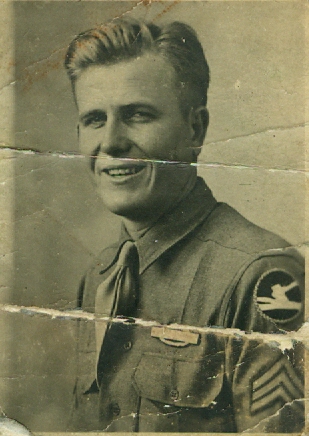

Staff Sergeant James William Hendrickson, Jr. 1945

4. Q:  How long did it take you to complete the book?

A:  I started scanning the letters at Christmas time in 2010.  I read the letters as I scanned, and the idea for the story took root over the next few months..  I began the actual writing four months later.  My goal was to complete the book in time for my Mother’s ninetieth birthday on December 8, 2012.  Then I received a diagnosis of cancer.  Surgery, chemo, and radiation treatment began in August of 2012.  I printed a “rough draft” which was a hard-cover family version.  Only twenty copies came off the press.  Once I had recovered my faculties, such as they are, post chemo, I edited the book with the help of my Writer’s Workshop group.  The book has been up on Amazon as a Trade Paperback and e-version since September of 2013.

5. Q:  Your mother is a character in the book. What was your mother’s reaction to the story?

A:  She says she feels like quite the celebrity.  The book has received a very positive response, and she has heard from people from her home town as well as relatives and friends.  She did say that she thought I was too hard on Grandma Hendrickson.  And every time she reads a section through again, we have a conversation about that during our phone time. I still phone her every Saturday morning.  She always tells me that my father would be very proud to read it…and we both laugh.  We can see him shaking his head to think that his letters would be available to the world to read.

6. Q:  How do you think your father would react to the book?

A:  I can only hope that he would feel like it was a true depiction of who he was and who the men were who fought alongside him.  Dad’s life was one of sacrifice for others.  I think this is true of most men who serve their country, but especially so for the boys who fought in World War II out of conviction for a cause and a sense of duty.  Dad wanted to bring his brother back from PW camp.  He wanted to right a wrong.  He lived his life by those convictions.

7. Q:  Would you characterize this book as a romance more than a war novel?

A:  I never saw it as a romance.  These were just my parents.  It was only after reading it aloud, six pages at a time, to my editing group that I had any sense at all that it would be perceived as such.  One woman said, “Gail, I have fallen in love with your father.” 

I do think that the history piece and the war story he tells might fall into the category of edging on being anti-war.  But I have a strong notion that most men who go to war would like to be certain that their children will not have to.  Dad’s idea was that this would be the war to end all wars. 

The answer to your question should probably be that the book will be seen by the reader as they wish to view it.  There are two history teachers I know of who are using the web site for the book with lesson plans to provide a research source for studies of WWII.  And there are women who read it just to enjoy the story line provided by the strong relationship my parents were able to forge in war time.
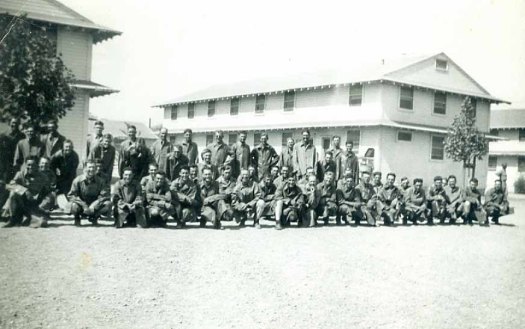
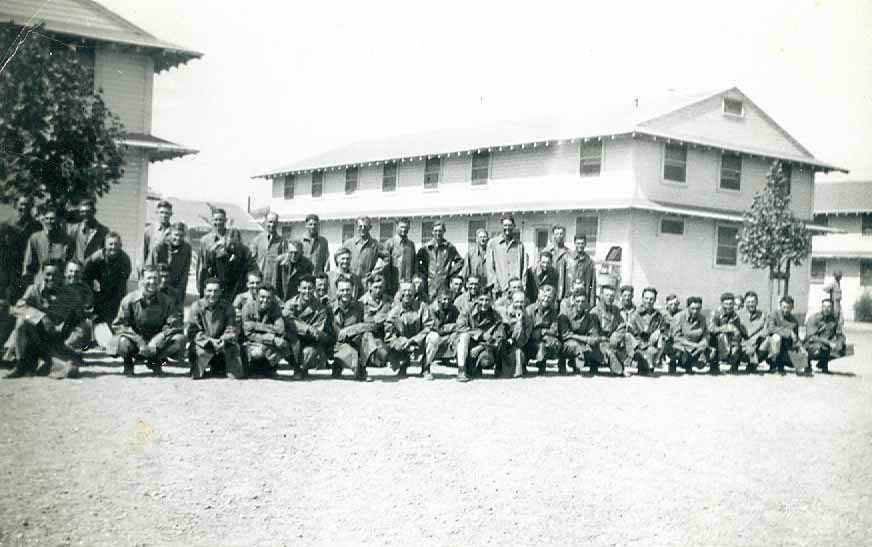
Camp Roberts and Burbank visits 'Jim's in there somewhere'

Camp Roberts, Burbank, California

8. Q:  The link to your web site is included as a section in the book.  Why is that?

A:  When I wrote the first version, I scanned all the letters, pictures, etc. and copied them to a thumb drive for my family.  As I was editing the final book, I realized that the graphics would make the book far too expensive for printing.  Also, folks who read it before publication were, for the most part, interested in the letters.  So I decided to set up a web site where people could go and find every letter, document, and photograph Mom saved from those two years of war time.  HeWroteHerEveryDay.com is up and running for those who are interested.

9. Q:  What kind of response have you gotten from people who have read your book?  You mention that the response has been largely positive.  Any negatives?

A:  Yes, the response has been warm and generous.  But then, the people who know me would probably not tell me if they didn’t like it. 

Many people who read the advance manuscript wanted to know more about Dad after he got home.  So the published version has a brief epilogue that outlines Dad’s life post war. 

I did have one relative who wasn’t happy about a small anecdote in the book about someone on my mother’s side of the family.  That surprised me, because the story is primarily about my father and the Arizona Hendricksons.  But that was the only sour note in the symphony…at least so far.

10. Q:  Will there be a sequel? 

A:  I honestly don’t think so.  This book was unique in that it was driven by real events that were already written about by the subject of the book, my father.  I am too close to the years following Dad’s war service. That was my childhood and I was his first baby since the twins were 5 months old by the time he got home. I would not know where to begin. 

And, after all, the whole point of the book is that my father was just an ordinary man who lived through extraordinary times.  He was sent to war. They didn’t just hold the Germans off; they turned the tide of the war.   Dad wasn’t expected to survive, but he—and so many thousands of others—did survive.  And they came home to America and lived ordinary lives.  While that story might not make a good sequel to this book, it certainly made a good life for me and those of my generation.  It’s a legacy that I hope we will be able to pass along to our children.

Return to or Start with He Wrote Her Everyday, a review by World War II Vet and author Allan Wilford Howerton

_______________________

Lloyd Lofthouse, this blog’s host, is a former U.S. Marine and Vietnam Veteran.

His latest novel is the award winning suspense-thriller Running with the Enemy. Blamed for a crime he did not commit while serving in Vietnam, his country considers him a traitor. Ethan Card is a loyal U.S. Marine desperate to prove his innocence or he will never go home again.

And the woman he loves and wants to save was fighting for the other side.

To follow this Blog via E-mail see upper left-hand column and click on “FOLLOW!”

“He Wrote Her Every Day” reviewed by World War II Vet and author Allan Wilford Howerton

As a WW II combat veteran of the 84th Infantry Division (Railsplitters), serving in the same unit as the subject of this book, I [Allan Wilford Howerton] was honored to be asked to read and react to the manuscript of He Wrote Her Everyday prior to its publication.


Note from Blog host: the 84th Infantry Division landed on Omaha Beach, November 1 – 4, 1944, and fought in the Battle of the Bulge in December 1944 – January 1945.

Ms Lindenberg, in getting the story together, has made a grand contribution to the literature of World War II. In addition to a war story, it is a wonderful book about love, longing, and faithfulness under unimaginable hardship and uncertainty.

Anyone with an interest in World War II will like He Wrote Her Everyday. It tells, among many other things, a true story about the plight of replacements rushed to the front lines to augment units suffering heavy casualties in the Siegfried Line and the Battle of the Bulge.

I was there, an infantryman in the same division, but thankfully not a replacement. They were assigned, often in the middle of a battle, knowing no one and without buddies to rely on. Many became casualties but those who survived adjusted pretty rapidly and went on, like the subject of this book, to make major contributions during the drive across Nazi Germany to end the war.

Writing about war experience is difficult for those who experienced it first-hand.  It is nearly impossible for someone who wasn’t there to give a believable picture of how things really were.   Use of the letters written during the war gives this book a strong sense of the soldier’s walk through the snow.

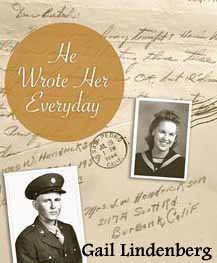
Cover for He Wrote Her Everday by Gail Lindenberg

HIGHLY RECOMMENDED. Allan Wilford Howerton, World War II veteran and the author of Dear Captain…

Continued on October 22, 2013 in a Question and Answer about the writing of “He Wrote Her Every Day” with author Gail Lindenberg

_______________________

Lloyd Lofthouse, this blog’s host, is a former U.S. Marine and Vietnam Veteran.

His latest novel is the award winning suspense-thriller Running with the Enemy. Blamed for a crime he did not commit while serving in Vietnam, his country considers him a traitor. Ethan Card is a loyal U.S. Marine desperate to prove his innocence or he will never go home again.

And the woman he loves and wants to save was fighting for the other side.

To follow this Blog via E-mail see upper left-hand column and click on “FOLLOW!”
Semper Fi and Popcorn

Semper Fi is Latin for “always faithful” and it is the motto of the United States Marine Corps— faithful to God, Country, Family and the Corps. The Urban Dictionary says it wasn’t always this way. Up until 1871, the motto was “First to fight”—a motto that still applies.

Every U.S. Marine knows that Semper Fi is the universal Marine greeting.

Recently I had a reason to explain this motto to my wife when she asked me if I wanted her to share something from me to General John R. Allen when she attended The Daily Beast’s Hero Summit on October 10—my wife was invited to be on the same panel at the summit with General Allen; David Brooks, the columnist for the New York Times who has written so often about moral standards and imperatives, and Nigerian novelist and Nobel laureate Wole Soyinka.

I said to my wife, “Say two words to General Allen, Semper Fi.”

“What does that mean?” she asked. “What if he doesn’t know what it means?”

“It’s Latin for always faithful,” I replied. “And trust me, General Allen will know what those two words means. If you look at the Marine Corps emblem, you will see it on a flag flying above the American Eagle.”

As for popcorn, I couldn’t resist adding popcorn to this post because right before I sat down to write, my wife made some in the microwave and then went to see a movie at the local theater. I stayed to write this post.

The smell of fresh-popped corn filled the house and I couldn’t resist filling my own bowl with this American treat. Believe me when I say that popcorn is as American as the flag, mom and apple pie, because the History of Popcorn clearly establishes that it originated in the Americas. And the popularity of popcorn as we eat it today started in Iowa in the 1880s.

I made my bowl with two scoops of Orville Redenbacher’s gourmet popping corn poured in a lunch-sized paper bag; two minutes on high in the microwave; a dash of California Branch Garlic Oil made with Extra Virgin Olive Oil; a second dash of 100% Pure Chosen Foods Avocado Oil, and a third dash of Himalayan Pink Salt, referred to as the purest salt in the world. Then I started eating as I wrote this post about Semper Fi.  [Note: all the ingredients for the popcorn came from Costco, an American company.]

The United States Marine Corps celebrates its birthday on November 10 because on that day, a decree of the Second Continental Congress led to the Marine Corps first official recruiting drive in the Tun Tavern in Philadelphia, Pennsylvania—some argue that the recruiting may have started unofficially before November 10, 1775.

I wonder what kind of beer the first Marines in 1775 drank at the Tun Tavern.

Did you know there is a Founding Fathers Lager Beer listed along with forty-nine other brands that made the list of The 50 Most Patriotic Beers in America?

Too bad the best beer I have ever sipped, St. Bernardus Abt 12 [a product of Belgium], doesn’t qualify.

I guess I should have called this post, Simper Fi, Popcorn and Beer. After all, a cold beer goes great with salty snacks, and I drank my first beer when I was still on active duty in the U.S. Marines back in the 1960s during a brief stay in Okinawa before shipping out to fight in Vietnam.

Do you think a chilled-bottle of beer and a salty-bowl of popcorn would be a good way to celebrate the Marine Corps birthday?

_______________________

Lloyd Lofthouse is a former U.S. Marine and Vietnam Veteran.

His latest novel is the award winning suspense-thriller Running with the Enemy. Blamed for a crime he did not commit while serving in Vietnam, his country considers him a traitor. Ethan Card is a loyal U.S. Marine desperate to prove his innocence or he will never go home again.

And the woman he loves and wants to save was fighting for the other side.

To follow this Blog via E-mail see upper left-hand column and click on “FOLLOW!”
 

A surprise family reunion—Navy father returns home

Recently, I logged on to discover another story about a father serving in the United States Navy returning home after a six-month overseas deployment.

I’m a sucker for this genre of YouTube homecoming videos, because as I watch them I relieve that moment forty-seven years ago in December of 1966 when I returned home without warning at three in the morning after a combat tour in Vietnam. I wrote about my return in Coming Home. There was no YouTube back then.

It’s powerful moment to watch a family reunion when a military father or mother returns home from a dangerous war zone.  

However, this time I questioned why this homecoming should gain national attention in the media. What was unique about it?

Rachel Martin writing for Indiana News Center.com said, “First Class Petty Officer Scott McComas has been serving overseas on the island of Diego Garcia for the Navy Reserves. McComas says he’s been gone for a year, four times before.”

I was curious where he served the other four times. Maybe one or more of those deployments was in a more dangerous place than Diego Garcia.

The island of Diego Garcia is really remote and isolated.  It’s 1,970 nautical miles east of Africa, 967 nautical miles south-southwest of the southern tip of India and 2,550 nautical miles west-northwest of the West coast of Australia.

Princeton University Press says, “The American military base on the island of Diego Garcia is one of the most strategically important and secretive U.S. military installations outside the United States. Located near the remote center of the Indian Ocean and accessible only by military transport, the base was a little-known launch pad for the wars in Iraq and Afghanistan and may house a top-secret CIA prison where terror suspects are interrogated and tortured.”

In addition, the UK forcibly evicted/removed the 2,000 people who lived on Diego Garcia before the U.S. military moved in. Source: Global Post.com

For years I imagined the island of Diego Garcia was a desolate, freezing rock surrounded by nothing but a brutal, stormy ocean. Then I searched YouTube and discovered I was wrong—really wrong.

Diego Garcia is a tropical paradise with warm to hot temperature year around and if you watch the embedded video above you will discover breathtaking beaches and crystal clear water.

What about all the American troops who are serving in dangerous or risky overseas deployments? There are still 69,000 American troops fighting in Afghanistan; 15,000 are in Kuwait; 28,500 in South Korea not far from the threat of the lunatics in North Korea; 3,628 in Kyrgyzstan; 2,714 in Bahrain, and 806 in Qatar.  Source: U.S. Deployments Overseas

In fact, the vast majority of Navy deployments are at sea on Naval ships and submarines inside metal hulls. Some of those deployments are in dangerous waters like the Persian Gulf, the Gulf of Aden or the Red Sea.

Then again, maybe it was the uniqueness of that Indiana corn-maze that made this homecoming a worthy news item, and it really had nothing to do with a Navy father coming home from a tropical paradise. And it’s cute to watch a young daughter throw herself in her daddy’s arms because he’s been away from home for six months.

_______________________

Lloyd Lofthouse is a former U.S. Marine and Vietnam Veteran.

His latest novel is the award winning suspense-thriller Running with the Enemy. Blamed for a crime he did not commit while serving in Vietnam, his country considers him a traitor. Ethan Card is a loyal U.S. Marine desperate to prove his innocence or he will never go home again.

And the woman he loves and wants to save was fighting for the other side.

To follow this Blog via E-mail see upper left-hand column and click on “FOLLOW!”
Ignorance of PTSD might be dangerous: Part 2 of 2

It’s been forty-seven years since I served in Vietnam, and over those years, the few times I’ve been in threatening situations, my thoughts are not of running away or breaking down in tears of fear. Instead, I’m thinking of the fastest way I can kill the person I perceive as a threat. If I’m close enough, I’ll be looking at his throat thinking about digging my teeth in and tearing out his jugular.

In the film “Patton”—played by George C. Scott—there is a scene where the general explodes in anger at troops who were in military hospitals suffering from severe PTSD—known as battle fatigue or shell shock back then.  The violence they had experienced had traumatized them severely. But General Patton thought anyone who suffered from PTSD was a coward and a fake.

I think that Russell Ireland, who owns the Big I’s Restaurant in Oxford, Massachusetts, is evidently an uneducated throw back to that World War II era, who does not think a war veteran suffering from PTSD deserves the same respect as a vet who lost body parts and probably also suffers from PTSD.

To Ireland’s way of thinking—just like General Patton—if the injury isn’t physical, it doesn’t count. For example, missing body parts.

I never know when my PTSD is going to flare or what may trigger it. When I’m awake, I’m always vigilant of my surroundings watching for threats.

 At night and early morning hours I often wake up and see enemy combatants in the darkness—they seem real but I’ve experienced this so many times over the decades that I often stare at them and maybe use a flashlight I keep by my bed to make sure it isn’t real before I can go back to sleep.  And by my side is a .45 caliber Glock automatic with a loaded magazine.  In the closet is a pump shotgun. In the gun safe are more weapons and boxes of ammo.

I did not buy these weapons to go hunting. I bought these weapons so I could sleep at night knowing I was prepared for the unexpected that my PTSD keeps reminding me is out there. Watching the daily news also doesn’t help so I avoid it most of the time. Before Vietnam, I read newspapers. After Vietnam, I stopped reading them. Newspapers are filled with reminders of crimes and violence in the United States that may trigger PTSD symptoms.

PTSD wasn’t recognized until the 1980s and then vets started to receive help from the VA.  I have carried the dark shadow of my PTSD with me since 1966 and didn’t get any help from the VA until after 2005 when I discovered that I was eligible.

And ignorant idiots like Russell Ireland don’t have any idea about the time bomb they may be triggering when they confront a vet with combat induced PTSD. He may have been fortunate that James Glaser had his trained service dog by his side.

By the way, it’s been forty-seven years since I served in Vietnam and I haven’t killed or physical attacked anyone yet. As for Dr. Phil, I’ve never been impressed by his show. It’s more of a shock and awe thing promoted by Oprah [she’s the billionaire who owns the show] while Dr. Phil acts the guru to an ignorant mob of fools—Dr. Phil’s net worth is estimated to be $200 million or more earned from his show.

Return or start with Ignorance of PTSD might be dangerous: Part 1

_______________________

Lloyd Lofthouse is a former U.S. Marine and Vietnam Veteran.

His latest novel is the award winning suspense-thriller Running with the Enemy. Blamed for a crime he did not commit while serving in Vietnam, his country considers him a traitor. Ethan Card is a loyal U.S. Marine desperate to prove his innocence or he will never go home again.

And the woman he loves and wants to save was fighting for the other side.

To follow this Blog via E-mail see upper left-hand column and click on “FOLLOW!”

Ignorance of PTSD might be dangerous: Part 1 of 2

Charlene Sakoda writing for Odd News reported that James Glaser, a retired Air Force veteran, who served in Iraq, was forced to leave a restaurant with his service dog trained to help him keep his PTSD under control.

Glaser called the police and the officer who responded to the call failed to convince the owner of the restaurant that the dog was legitimate. Russell Ireland, the owner of the restaurant, said, “Get that fake service dog out of my restaurant.”

When the police officer said the papers the vet carried on him proved the dog was not fake, Ireland said, “I don’t give a [expletive]”.

Ireland was an ignorant and biased fool. It seems that even Dr. Phil is one of those ignorant fools [watch the following video to see what I mean].

CNN reported that violence is a growing problem among vets with PTSD. “Study after study has highlighted the struggles faced by troops returning home, including substance abuse, relationship problems, aggression or depression…”

And a PTSD service dog is trained to deal with and disarm a PTSD reaction to a situation.

My combat induced PTSD was rated at 30% by the VA, and that was decided after a number of sessions with a VA counselor and Q&A sessions with other VA counselors and shrinks. And I’ve met a vet with a 100% PTSD disability who suffered much worse in Vietnam. Just the sound of a helicopter flying overhead caused him to suffer an awake flashback in daylight [click on A Prisoner of War for Life to discover more].

Suffering from a PTSD flashback does not mean vets turn into a mass of quivering cowardly jello. In fact, the opposite may happen. I’ll explain in Part 2.

Continued on September 24, 2013 in Ignorance of PTSD might be dangerous: Part 2

_______________________

Lloyd Lofthouse is a former U.S. Marine and Vietnam Veteran.

His latest novel is the award winning suspense-thriller Running with the Enemy. Blamed for a crime he did not commit while serving in Vietnam, his country considers him a traitor. Ethan Card is a loyal U.S. Marine desperate to prove his innocence or he will never go home again.

And the woman he loves and wants to save was fighting for the other side.

To follow this Blog via E-mail see upper left-hand column and click on “FOLLOW!”

Wounded Warriors Returning from the Abyss

Dawn Halfaker graduated from West Point as a 1st lieutenant and led a platoon in Iraq in 2004. A few weeks into her deployment, her platoon was ambushed, she was hit and when she woke up in the hospital days later, her right arm was gone.

With her military career over, she decided to help fellow wounded veterans. The Huffington Post interviewed Halfaker, and asked, “What happened on the day you got wounded?”

Halfaker replied, “It was a routine, 3-hour patrol mission looking for enemy activity on a relatively quiet night until, after about two and a half hours, we drove right into an ambush. I was in the first vehicle of the convoy, and one of the rocket-propelled grenades hit me and one of my squad leaders, severely injuring both of us.”

She launched Halfaker and Associates, and today it is an award winning professional services and technology solutions firm. She also is involved as the president of the Wounded Warrior Project that has a vision “to foster the most successful, well-adjusted generation of wounded service members in our nation’s history.”

Serving her country, she lost an arm and was awarded a Bronze Star Medal along with a Purple Heart for her wounds in combat. But her success since that fateful day doesn’t mean she doesn’t have days where she doesn’t hate her life. In 2005, in a New York Times interview, she said, “Some days when I’m holding a cup of coffee, my ID, carrying a bag, trying to open the door at work, I spill coffee on myself. Those are the days I say, ‘I hate my life.’ I cry and think, Why do I have to be this way?”

But no matter how she feels on down days, she always rebounds and wonders how her life turned out so great.

If we learn anything from this retired Army captain, it is that there is no excuse to give up on life.

Why is it that some combat veterans become homeless alcoholics and drug users stricken with severe PTSD and others—for example Halfaker—end up becoming the successful CEO of her own business with 150 employees and a positive role model for the rest of us?

Discover A Prisoner of War for Life

_______________________

Lloyd Lofthouse is a former U.S. Marine and Vietnam Veteran.

His latest novel is the award winning suspense-thriller Running with the Enemy. Blamed for a crime he did not commit while serving in Vietnam, his country considers him a traitor. Ethan Card is a loyal U.S. Marine desperate to prove his innocence or he will never go home again.

And the woman he loves and wants to save was fighting for the other side.

To follow this Blog via E-mail see upper left-hand column and click on “FOLLOW!”

Is the U.S. too Fat to Fight?

In 2012, fifteen times more troops were discharged from the US Army due to obesity than five years prior, and over the last 15 years, the numbers of obese people actively serving in the US military more than tripled. Source: rt.com

And The Hill.com says, “Spiking rates of childhood obesity are a threat to a nation’s security and demand government intervention, according to retired military leaders.”—In 2010, more than one-third of children and adolescents in the United States were overweight or obese.

In fact, “Combined with other disqualifying factors—including criminal backgrounds and poor education (whose fault is that?)—excess weight means that an estimated 75 percent of young adults could not serve in the military even if they desired to.”

In addition, according to the Trust for America’s Health.org, “The number of obese adults, along with related disease rates and health care costs, are on course to increase dramatically in every state in the country over the next 20 years.”

The Centers for Disease Control and Prevention says, “More than one-third of U.S. adults (35.7%) are obese.” In fact, two-thirds of U.S. adults are overweight or obese.

But the National Center for Constitutional Studies says it is the voluntary duty of the citizens of a country to enlist in the army in time of war … and support the President in an hour of crises.” In addition, the Founding Fathers of the United States assumed that American citizens would undertake responsibility for the ordinary functioning of the civil social order—that included defense of country.

However, there is a solution to this weighty problem, and the U.S. Marines already successfully used it in 1965-66.

When I served in the U.S. Marines (1965-1968), there was a recruit at the Marine Corps Recruit Depot in San Diego who was so fat and out of shape that he couldn’t perform the simplest exercises without fainting. He was sent to what was known then as the book camp’s fat boy platoon where he spent more than a year exercising ten-to-sixteen hours a day to lose weight and build muscles before he was sent to combat in Vietnam where he was landing in DaNang the day I was leaving.

Therefore, if America needs young citizens of military age to defend the country, those fat boys and girls may find themselves in a boot camp for a year or more exercising their fat off—the ultimate weight loss, cannon fodder machine.

Discover Eating out in Vietnam in 1966

_______________________

Lloyd Lofthouse is a former U.S. Marine and Vietnam Veteran.

His latest novel is the award winning suspense-thriller Running with the Enemy. Blamed for a crime he did not commit while serving in Vietnam, his country considers him a traitor. Ethan Card is a loyal U.S. Marine desperate to prove his innocence or he will never go home again.

And the woman he loves and wants to save was fighting for the other side.

To follow this Blog via E-mail see upper left-hand column and click on “FOLLOW!”

Women Warriors in Combat

In the United States it is a hot-button issue that women should or should not be allowed to serve in combat. Those against claim women cannot compete with men in combat—that they don’t have the physical strength or proper mindset.

Curious, I decided to discover where women have been allowed to serve in combat and how they performed.

The Washington Post listed countries that allow women in front-line combat positions. “In Europe: Denmark, Estonia, Finland, France, Germany, Lithuania, Netherlands, Norway, Poland, Romania and Sweden. Elsewhere: Australia, Canada and New Zealand in the Anglosphere; plus Eritrea, Israel, and North Korea.”

It made sense that Israel would need women to serve in combat units, and I decided to focus on this country first. After all, Israel population is less than 8 million, and Israel is a tiny island of democracy in an Arab-Islamic world with constant religious and civil unrest.

In fact, women served alongside men in ground forces in the paramilitary groups that predated Israel’s foundation as a state in 1948. Then for the next 25 years, they were mostly relegated to roles as administrators, medical assistants or trainers, but after the Yom Kipper War in 1973, they started to serve as combat instructors and officers.

The NY Times reported that Arielle Werner, who grew up in Minnesota and immigrated to Israel in order to join a combat unit, said female recruits underwent the same training regimen as men.

 “Each year, 1,500 female combat soldiers are drafted into the IDF, a number which has remained consistent in recent years. Female soldiers also play crucial roles in command and control positions.” Source: Israel Defense Forces.com

In fact, a professor at Duke University studied Soviet women in combat during World War II and said she was shocked by the stories and images she came across—stories of Soviet women in combat, images of Soviet women dressed in military uniforms, holding sniper rifles, teaching other solders to kill.

Anna Krylova, associate professor of modern Russian history at Duke University, said, “When it came to paramilitary training, men and women received the same education and, even more important, were expected to perform the same tasks. … Significantly, the Soviet women who became soldiers did not think of themselves as women performing a man’s job.”

For example, Lyudmila Pavlichenko—a Soviet sniper—killed over three hundred Germans during World War II and women in the Red Army also made parachute drops behind enemy lines. Source: History News Network

Therefore, it is obvious to me that the issue isn’t if women can or can’t perform in combat but if the society/country they live in allows them to think they can serve in combat.

And America, promoted as the land of the free, is still a country where the Equal Rights Amendment—first introduced to the United States Congress in 1923—has been repeatedly defeated by conservative members of the GOP (Republican Party), who want to keep women as second class citizens earning less than men and serving in the kitchen to cook and the bedroom for breeding purposes only—without the right to an abortion. Maybe conservative men fear what women might do if they were trained to kill.

What do you think about military women fighting in combat units?

Discover Causes of Increased Sexual Assaults in the US Military

_______________________

Lloyd Lofthouse is a former U.S. Marine and Vietnam Veteran.

His latest novel is the award winning suspense-thriller Running with the Enemy. Blamed for a crime he did not commit while serving in Vietnam, his country considers him a traitor. Ethan Card is a loyal U.S. Marine desperate to prove his innocence or he will never go home again.

And the woman he loves and wants to save was fighting for the other side.

To follow this Blog via E-mail see upper left-hand column and click on “FOLLOW!”