Every Thursday afternoon I drive to a local VA medical clinic and join a veteran writers group. One of the regular members, who never served in combat, seems obsessed with the glory of war. He can’t seem to hear enough stories from us combat vets. To listen to him, it seems that he sees war as wonderful and proof that the United States is defending and supporting democracy and freedom everywhere in the world.
Most combat vets don’t think the same. In fact, I haven’t known a combat vet yet who doesn’t question everything an elected representative or corporate CEO claims on almost any topic that leads to more profits or power for a member of the 0.1%. For some reason, being shot at by bullets, mortar rounds and rockets—not counting the threat of stepping on a land mine and getting your legs blown off—creates skeptics of most combat vets who saw action.
Now I have read for the first time in Newsweek [RECOMMENDED READING] that the POW-MIA flag was another propaganda campaign backed by President Richard Nixon to fool the American people and demonize the enemy and create justification for the Vietnam War and his illegal bombings of Cambodia and Laos that he kept secret from the U.S. Congress (National Geographic Magazine). The POW-MIA flag was originally created to embarrass President Lyndon Johnson as a way to end the war instead of turning the Communists in North Vietnam and their South Vietnamese Allies into monsters who—it turns out—in reality didn’t hold a candle to the monsters the United States and its dictator in South Vietnam were.
If the United States is a great country that supports democracy and freedom throughout the world, why have there been so many repeated lies to start wars?
It’s obvious that the Vietnamese, who fought the United States, were not doing anything different than the Vietnamese have done before when they fought for 1,000 years to be free of China’s occupation starting in 111 BC and continuing to 938 AD.
The Vietnamese also fought French occupation for decades—French Indochina was formed in October 1887. After Gia Định fell to French troops in 1859, many resistance movements broke out in occupied areas. In the north, most movements were led by former court officers and lasted decades, with Phan Đình Phùng fighting in central Vietnam until 1895. In the northern mountains, former bandit leader Hoàng Hoa Thám fought until 1911. Even the teenage Nguyễn Emperor Hàm Nghi left the Imperial Palace of Huế in 1885 with regent Tôn Thất Thuyết and started the Cần Vương (“Save the King”) movement, trying to rally the people to resist the French. He was captured in 1888 and exiled to French Algeria. By 1900 a new generation of Vietnamese were coming of age who had never lived in precolonial Vietnam. These young activists were as eager as their grandparents to see independence restored.
Then beginning in 1950, American military advisors arrived in what was then French Indochina. U.S. involvement escalated in the early 1960s and escalated dramatically after the so-called Gulf of Tonkin incident that resulted in Congress giving the U.S. president authorization to increase U.S. military presence.
I arrived in Chu Lai, Vietnam in 1965 with the 1st Marine Division’s 1st Tank Battalion. At the time we didn’t know that the Tonkin Gulf incident was exaggerated and based on a lie. The original American report blamed North Vietnam for both incidents, but eventually became very controversial with widespread claims that either one or both incidents were false, and possibly purposefully so. While four North Vietnamese sailors were claimed to have been killed and six more wounded, there were no U.S. casualties.
In 1995, former U.S. Secretary of Defense Robert McNamara met with former Vietnam People’s Army General Võ Nguyên Giáp to ask what happened on 4 August 1964 in the second Gulf of Tonkin Incident. “Absolutely nothing”, Giáp replied. Giáp claimed that the attack had been imaginary—manufactured by President Lyndon B. Johnson’s White House staff with his permission.
Then there is President G. W. Bush’s lies about Weapons of Mass Destruction in Iraq causing Congress to once again authorize another war based on more exaggerations and lies.
If you have watched the videos and read this post, are you still a deaf, dumb and blind U.S. patriot totally obedient to the elected and corporate leaders of the United States?
I wonder if you also know that similar lies and propaganda have been used for decades in the United States to destroy the labor unions of middle class workers and also demonize public school teachers—all for profit and power.
_______________________
Lloyd Lofthouse is a former U.S. Marine and Vietnam Veteran.
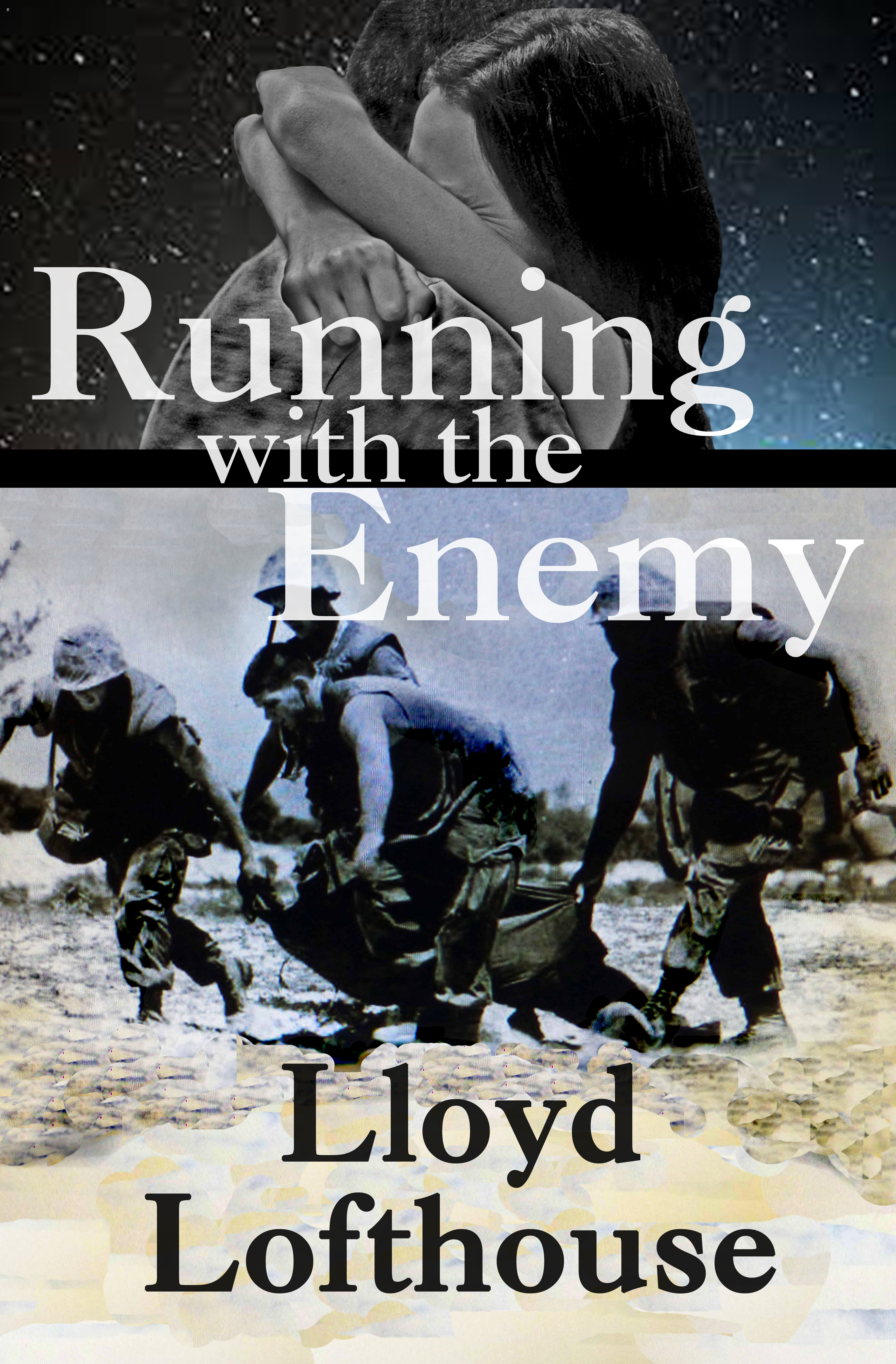
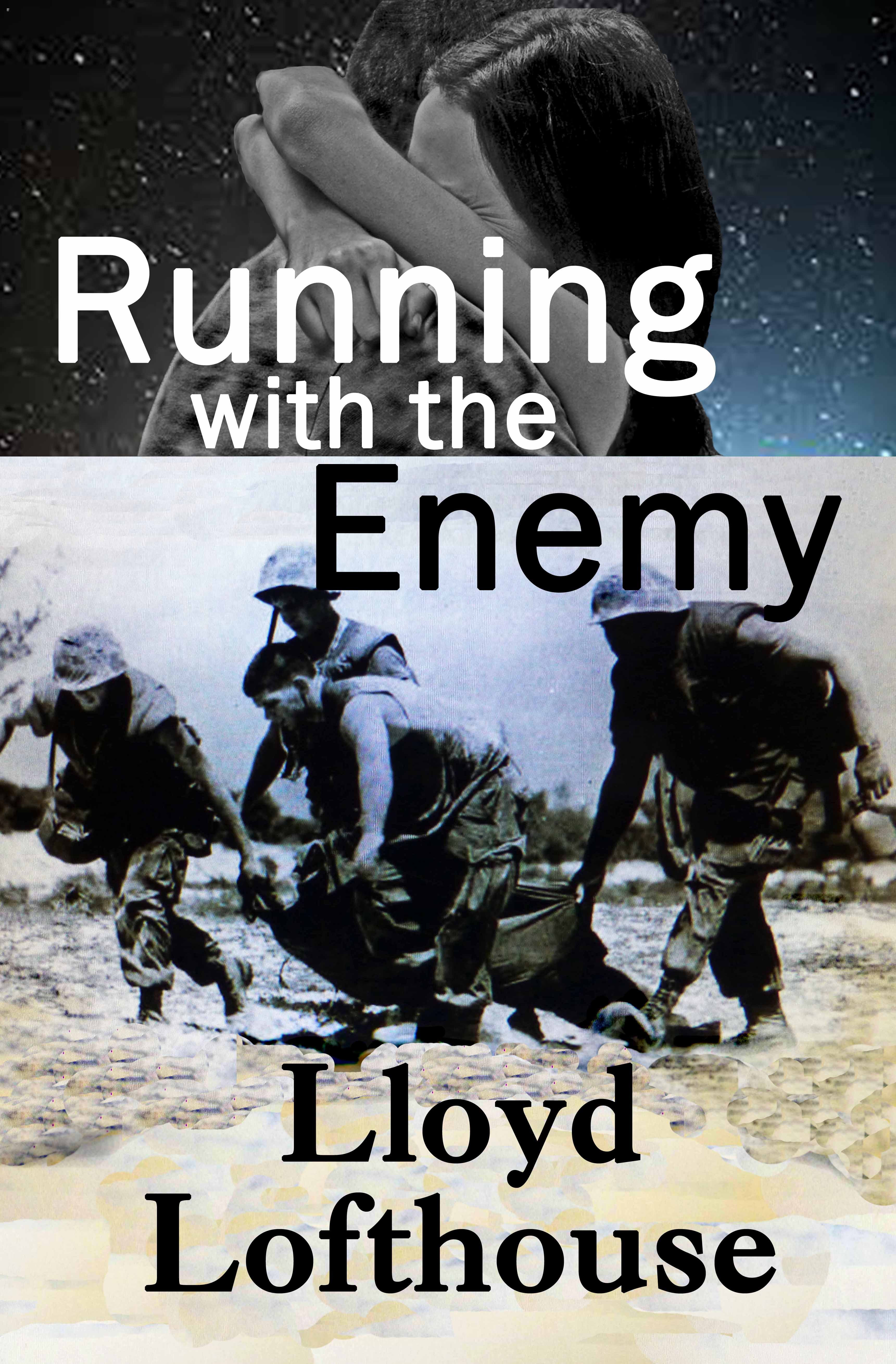
His second novel is the award winning love story and suspense-thriller Running with the Enemy. Blamed for a crime he didn’t do while serving in Vietnam, his country considers him a traitor. Ethan Card is a loyal U.S. Marine desperate to prove his innocence or he will never go home again.
This is a love story that might cost the lovers everything—even their lives.
To follow this Blog via E-mail see upper left-hand column and click on “FOLLOW!”
He Wrote Her Every Day by Gail Lindenberg is a true story that warms the heart. Barely married a year, Jim leaves his young wife, the love of his life, and ends up fighting in Europe during the final months of World War II. He experiences a lot of combat and is awarded a Silver Star when he risks his life leading a charge against a Nazi machine gun position.
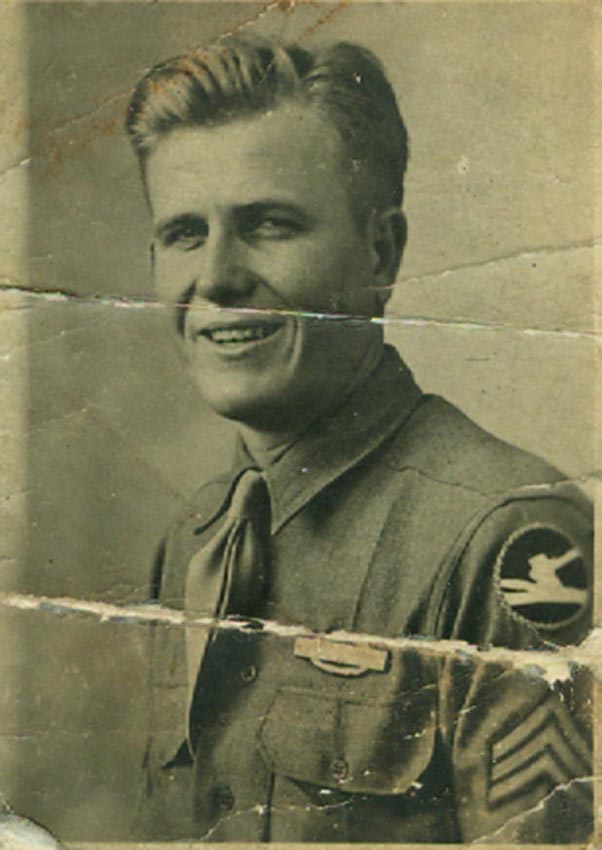
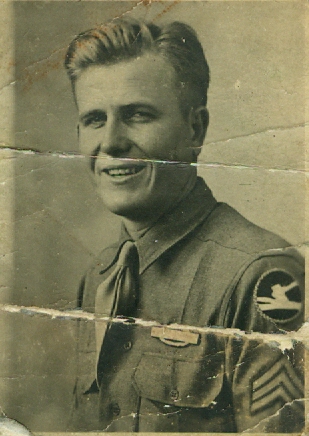
James (Jim) William Hendrickson, Jr.
His brother Bill is in a prisoner of war camp somewhere in Germany, and Jim dreams of being the one who liberates him. You will need to read the book to find out what happened to Bill.
Jim also seldom missed a day to write a letter or add to one he was working on. Between being in the field chasing the enemy, on guard duty and/or in combat, he always finds time to write even when everyone else is trying to sleep—even when he is in a filthy, cramped foxhole in freezing winter weather.
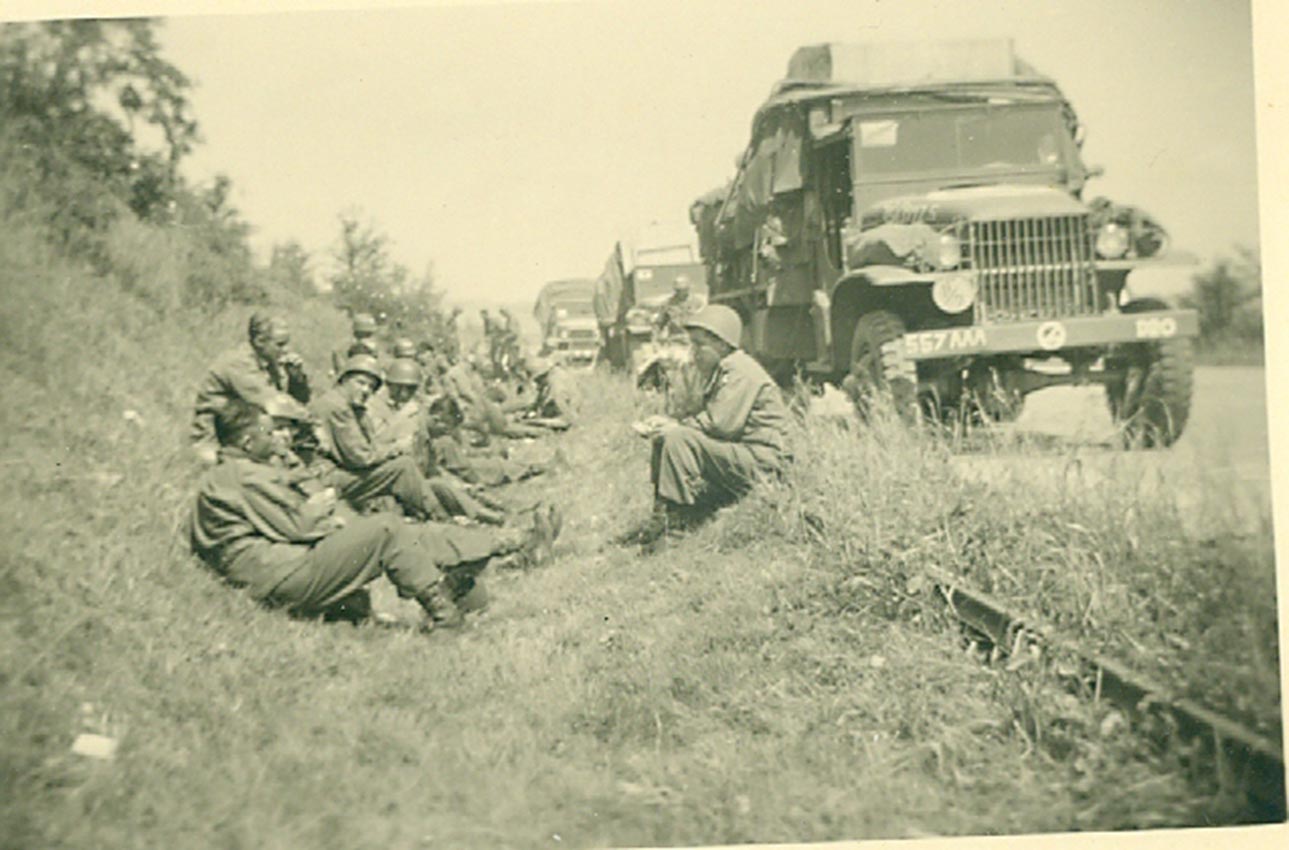
somewhere in Germany 1944
I’ve never read a seamless story that grounded me in both the home front and a combat zone like this one did—especially after the war and the long months of waiting in Germany when Jim is anxious to return home but there is one delay after another. I kept turning the pages waiting for that moment when Jim finally made it back home to Arizona, and the conclusion brought a big smile to my face as I remembered the moment when I arrived home from another war.
Irene (Butch) – Jim’s wife and the love of his life
The author sent me a copy of the paperback for my honest review, and don’t miss the rest of the photos you will discover at He Wroter Her Every Day.com. This is a story that was lovingly researched and written by one of his daughters—a wonderful story that immortalizes a father who served his country with courage and honor.
_______________________
Lloyd Lofthouse is a former U.S. Marine and Vietnam Veteran.
His second novel is the award winning love story and suspense-thriller Running with the Enemy. Blamed for a crime he didn’t do while serving in Vietnam, his country considers him a traitor. Ethan Card is a loyal U.S. Marine desperate to prove his innocence or he will never go home again.
This is a love story that might cost the lovers everything—even their lives.
To follow this Blog via E-mail see upper left-hand column and click on “FOLLOW!”
I can’t remember when I paid $3 at Half Price Books for an audio book of Pardonable Lies by Jacqueline Winspear. You see, I enjoy reading. That’s why I buy books—audio and the old fashioned kind on paper—and DVD’s of films and TV series faster than I watch or read/listen to them, and they are all around me in the study where I write. They are also books in storage under the house. I think I’ll have to live another thousand years to read them all—as long as I don’t buy more.
In an attempt to read faster, I started reading with my ears when I’m in the car on the way to the farmer’s market, Costco, Trader Joe’s and Whole Foods. And I drive in the slow lane to gain more listening time.
The reason I am now a fan of Winspear’s work, and specifically Maisie Dobbs, the main character in eleven of the author’s twelve novels, is because Maisie has a serious and convincing case of PTSD, and I came home in 1966 from Vietnam with PTSD.
As I wrote this post, I visited the author’s website, and saw that Pardonable Lies is the 3rd novel in the Maisie Dobbs series, and I smiled, because that means I have ten more to read—hopefully with my ears since I’m reading about four or five audio books to every tree book.
This is where I copy and paste from Winspear’s page on The World of Maisie Dobbs: “The period of time from the mid-1900’s until the 1930’s was a time of unprecedented change in Britain. The devastation of The Great War, mass emigration to America and Canada, rapid social changes—not least votes for women—to be followed by the Roaring Twenties, the General Strike and the Depression. It was a time of burgeoning artistic expression, with the movements that we now know as Art Nouveau and Art Deco demonstrating a dramatic departure from the Victorian age.
“The Great War demanded that there was hardly a field of endeavor left untouched by a woman’s hand, so that men could be released for the battlefield. The first women joined the police force, they worked in construction, on the trains and buses, on the land and in all manner of military support roles. The made munitions and they worked close to the front lines as nurses, ambulance drivers; as intelligence agents and code-breakers. And after the war, it was these same remarkable women who, more often than not, faced a life alone, for the men they might have married had been lost to war.
“It was also during these first decades of the century that scientific methods of detection were being rapidly developed. From medicine to international travel to the study of the human mind, all benefited from a time that was both terrifyingly painful in terms of the cost to human life, and yet demonstrated a hunger for innovation and a fascination with the avant-garde.
“It is in this world that Maisie Dobbs came of age.”
_______________________
Lloyd Lofthouse is a former U.S. Marine and Vietnam Veteran.
His second novel is the award winning love story and suspense-thriller Running with the Enemy. Blamed for a crime he didn’t do while serving in Vietnam, his country considers him a traitor. Ethan Card is a loyal U.S. Marine desperate to prove his innocence or he will never go home again.
This is a love story that might cost the lovers everything—even their lives.
To follow this Blog via E-mail see upper left-hand column and click on “FOLLOW!”
While reading Last Plane Out of Saigon, an opinionated but accurate memoir by Richard Pena and John Hagan, I did a lot of reflection and here are some of my thoughts.
During a war, the U.S. government has the power to draft—against their will—recruits who might end up fighting in a just or unjust war. Then there are those Americans who join voluntarily to serve in the military. It’s been 49 years since I served as a volunteer in the U.S. Marine and fought in Vietnam, and for the last several decades, after a lot of research to understand what happened and why the U.S. started that war, I have concluded that the war in Vietnam was wrong and it was based on lies. I think the same about the Iraq War.
There is a big difference between volunteering versus being drafted and forced to serve, and two-thirds of the U.S. troops who served in Vietnam were volunteers and about 70% of those who were killed were also volunteers and 62% of the troops killed were age 21 or younger.
For me, a few weeks before I graduated from High school, I voluntarily surrendered the freedom most Americans take for granted and joined the U.S. Marines on a delayed deferment. In fact, once you join any of the branches of the U.S. military, you leave your free choice behind, and you don’t get it back until after you are honorably discharged. The military is another world with its own courts, hospitals and prisons, and the troops are trained to serve and obey without question. Disobey and a recruit might end up in prison or even executed for the crime of treason.
In the summer of 1965, I was in boot camp at MCRD in San Diego when we heard that the U.S. war in Vietnam was escalating and once we left boot camp every recruit was going to be on his way to fight. That scuttlebutt turned out to be true, and I arrived in Chu Lai, Vietnam, about 90 miles south of Da Nang on March 28, 1966.
About halfway through my combat tour, the first draftees started to arrive, and one was assigned to the communications platoon where I was a field radio operator. To me, and the other Marines in that platoon, it was considered wrong that anyone should be forced to serve in the U.S. Marines and fight in one of America’s wars, and we went out of our way to shelter that draftee.
In Richard Pena and John Hagan’s “Last Plane out of Saigon,” on page 100, Pena wrote something that I agree with: “I submit that the true American patriots are those who see the faults of our country and do not hide from them but instead attempt to rectify them.”
I didn’t always think that way. As a child, I grew up in a totally non-political family, and at the same time I was also being brainwashed by patriotic films disguised as adventures, thrillers and suspense out of Hollywood—for instance, most John Wayne movies. My parents never voted and the one time I asked my father why, he said all politicians were crooks, and it was a waste of time to vote because it wasn’t going to change anything. When I was in college on the GI Bill 1968 – 1973, I would become more aware and today I disagree with my father, because I think that when we don’t vote, the criminals in the White House and Congress get away with their crimes, but active, knowledgeable voters can change that.
To understand the dramatic attitude shift of the Vietnam War in the United States, in August 1965, when I reported to boot camp at MCRD, 62% of Americans agreed with the war. By the time I flew home from Vietnam near the end of December 1966, that number was down to about 52% and dropping. In 1968 when I was honorably discharged from active duty, support for the war was down to 37%, and by 1971, during my third year of college on the GI Bill, support was down to 28%.
“Last Plane Out of Saigon” is Richard Pena’s story, and it roughly captures the nation’s mood at the end of the war. Pena was drafted—forced to fight in a war that was clearly wrong. His book is a journal of what he felt, thought and did in Vietnam where he witnessed the horrors of war working in the operating room of Vietnam’s largest military hospital in Saigon.
I served in Vietnam in 1966 during the buildup. Soon after I left, U.S. troop strength reached about a half-million. But by the time Richard Pena arrived near the end of the war as a draftee in the fall of 1972, U.S. troop strength in Vietnam was down to about 100,000 and dropping.
I think many of American’s troops—both volunteers and draftees—served honorably for mostly honorable reasons, but many of the leaders of the United States who supported the war and sent the troops to fight justified their criminal actions based on lies and deceit.
That leads to a question I have no answer for. How does one serve honorably in a dishonorable war? As for the 5-stars I gave this book, how can I justify loving a book about a dishonorable war? I awarded the 5-stars based on the honesty of the book that revealed the reason why more than 70% of Americans were not allowing themselves to be fooled by the liars who started the war.
_______________________
Lloyd Lofthouse is a former U.S. Marine and Vietnam Veteran.
His latest novel is the award winning suspense-thriller Running with the Enemy. Blamed for a crime he did not commit while serving in Vietnam, his country considers him a traitor. Ethan Card is a loyal U.S. Marine desperate to prove his innocence or he will never go home again.
And the woman he loves and wants to save was fighting for the other side.
To follow this Blog via E-mail see upper left-hand column and click on “FOLLOW!”
According to Box Office Mojo, Killing Season’s widest release was to 12 theaters for seven days and then it went to DVD. I think this decision was made because most film audiences in American prefer romance and fantasies—not the brutal, bloody reality of gory, brutal up close and personal hand-to-hand combat.
The film was released on July 11, 2013, and it was a flop at the box office earning a total of $39,881 in theaters. Peter Sobczynski reviewed the film and gave it less than one star. Sobczynski says, “The film is quite awful—badly written, ineptly staged, horribly acted, historically suspect and boring beyond belief—and fully deserving of its ignominious fate.”
Here’s the thing, I don’t agree with Sobczynski. I didn’t think it was a bad film—and was that because I have no taste, or because I’m a former U.S. Marine who fought in Vietnam?
To me, this film reveals rather brutally what combat does to two men, and how war might leave mental scars that run deep. In fact, similar brutality appears in my novel, “Running with the Enemy”. If you have a weak stomach and lose sleep easily over reading about or watching extreme violence, this film and my novel are not for you.
Here’s a brief plot summary without spoilers: In Belgrade, Serbia, former Scorpions soldier Emil Kovač (Travolta) meets an informant to retrieve a file on American military veteran and former NATO operative Colonel Benjamin Ford (De Niro). Ford has fled to a cabin retreat somewhere in the Appalachian Mountains, to forget the war. Now a recluse, he meets Kovač, posing as a European tourist, during a hunting trip. The two men become friendly, until Kovač reveals his true identity. Intent on revenge for something Ford allegedly did in Serbia, he initiates a gory game of cat-and-mouse with Ford. The latter is badly injured but is quick to rebound.
I find it interesting that the film had 257 customer reviewson Amazon, and 132 were 4-and-5 star reviews—that’s 51%. Only 62 were 1-and-2 stars—that’s 24%. More than twice as many reviewers enjoyed the film, and I was one of them.
The Most Helpful Review said, “Killing Season is a movie that thrills and leaves you thinking. It is timely because the tension echoes many of the current situations going on in society. In their own right each of the two in the movie have their reasons (and justifications) for their points and places. In the end (sorry, no spoiler here) the stark realization of the view from the other side really brings home the powerful moral of this movie. De Niro is his usual amazing self and Travolta delivers a nearly convincing eastern bloc persona. Well worth seeing.”
I also scanned the 1-star reviews and the most detailed one I read ended with: “If you’ve ever wanted to see De Niro piss on his own leg to heal a gaping wound this is your chance. You won’t get another.”
I asked Google why it might have been a good idea for De Nrio to piss on his wound, andWise Geek.org says, “As difficult as it might be for some to comprehend, the medical benefits of urine have been widely studied in many areas including, but not limited to, the effect of pee on wounds. Normal urine is not only pH balanced, it is non-toxic and is believed to contain many nutrients and healing compounds. Normal urine is both anti-viral and anti-bacterial, making it a potentially ideal treatment for cuts, abrasions, wounds, and skin infections of any kind.”
>>>Focus on the key word there: “normal” urine.<<<
I don’t know about you, but don’t expect me to pee on my wound if I was in the same situation. I’d rather use powdered cayenne. I keep some in the car, bathroom, kitchen and my wood shop. In fact,Earth Clinic.com says, “For stopping profuse bleeding, we eagerly recommend using powdered cayenne to speed up the coagulation process and close the wound.”
I learned about using powdered cayenne on wounds when I belonged to a wood-carving club. Every veteran wood carver in that club had some fine ground pepper/powdered cayenne stored in their tool box with their super-sharp carving knives—just don’t put powdered cayenne or black pepper in your eyes, mouth or nose. It burns really bad, but surprisingly doesn’t burn when sprinkled on cuts and gashes—at least that has been my experience.
_______________________
Lloyd Lofthouse is a former U.S. Marine and Vietnam Veteran.
His latest novel is the award winning suspense-thriller Running with the Enemy. Blamed for a crime he did not commit while serving in Vietnam, his country considers him a traitor. Ethan Card is a loyal U.S. Marine desperate to prove his innocence or he will never go home again.
And the woman he loves and wants to save was fighting for the other side.
To follow this Blog via E-mail see upper left-hand column and click on “FOLLOW!”
Maybe we can’t blame the Obama administration for all of what happened at the VA. Maybe the GOP is responsible for wrecking the VA medical system so it broke down and was failing in its mission long before Obama was sworn in as President and moved into the White House.
From Forbes, we learn: “In the “old days” of the VHA, before President Clinton, many of those eligible for care wouldn’t use the system – the care was considered sub-optimal. Through reforms implemented during the Clinton years by Dr. Kenneth Kizer, the VHA went through an amazing transformation – and patient enrollment surged. Great primary care, a beautiful and relatively easy to use electronic medical record, AND a culture of accountability. Veterans received wonderful care for a great price. Unfortunately, in 1999, the GOP made it clear they were going to refuse Dr. Kizer’s renomination, and instead of being slung through mud, he resigned and went to the private sector.”
ProPublica reports: “The scandal surrounding long wait times within the Veterans Affairs’ health care system has garnered national attention as VA secretary Eric Shinseki resigned amidst growing opposition to his leadership. To help make sense of the institutional problems that led to the scandal, we’ve compiled some of the best reporting about chronic issues of mismanagement in the VA.”
“An array of lawmakers from both parties called on Veterans Affairs Secretary Eric Shinseki to resign on Wednesday following the publication of a new report describing the “systemic” practice of mishandling medical appointments at a Veterans Affairs facility in Phoenix that may have led to the deaths of 23 veterans.” – Foreign Policy Magazine
The American Legion reports that a Department of Veterans Affairs memorandum written four years ago warned that “inappropriate scheduling practices” were being used at some VA medical facilities “in order to improve scores on assorted access measures.” These practices were sometimes referred to as “gaming strategies.” The document, dated April 26, 2010, was written by William Schoenhard (appointed to the VA by President Obama in 2009), who then served as VA’s deputy under secretary for health operations and management. The nine-page memo lists several specific scheduling practices to avoid.
President Obama appointed Eric Shinseki as the US Secretary of Veterans Affairs in 2009.
Arne Duncan, who is orchestrating the destruction and dismantling of the democratic U.S. Public schools was appointed by President Obama to be the US Secretary of Education in 2009.
FCC Chairman Tom Wheeler was appointed by President Obama to lead the US Federal Communication Commission in 2013, and now he is attempting to end Internet Neutrality and allow corporations to control the Internet with pay to play power to choke anyone’s site from being easily accessed—a clear form of censorship.
Do you see the pattern here?
UPDATE for May 22, 2014
Only in this White House could a Cabinet Secretary (Eric Shinseki at the VA) get not just one but two public presidential statements of confidence. … as internal documents emerge ( a 2010 memo) showing that an agency (the VA) knew about fraud and left the problem to such an extent that people died while waiting for medical care. What does it take to get fired from a job in the Barack Obama Administration? (The Fiscal Times)
What does this tell us—that Arne Duncan after being connected to fraud and lies in the Department of Education will be with us until the end of 2016? See Smoking Gun 1 and 2 to discover the scandal at the Department of Education and how that is also being ignored. When will memos and e-mails of Duncan’s incompetence and fraud be splashed across the media, and when will Republicans (the GOP) admit that America’s public schools are the best in the world and the problem is poverty (see Smoking Gun)?
The GOP continues to hammer the Obama White House over four deaths in Benghazi (after several Congressional investigations find nothing that leads to the White House) but ignores that fact that children are dying in the public schools due to cutbacks thanks to Arne Duncan’s Department of Education spending billions on useless testing leading to full-time nurses losing their jobs in the schools. See: Another student dies after falling sick at Philly school with no nurse on duty
UPDATE May 20, 2014
The top official for veterans’ health care resigned Friday, as the Obama administration and Congress begin to respond to a growing political firestorm over allegations of treatment delays and falsified records at veterans’ hospitals nationwide. The House has scheduled a vote for Wednesday on legislation that would give Veterans Affairs Secretary Eric Shinseki greater authority to fire or demote senior executives and administrators at the agency and its 152 medical Centers. (You may read the rest of this report @ Military.com http://www.military.com/veterans-report/steps-taken-to-address-va-firestorm?ESRC=vr.nl)
First published May 13, 2014:
What’s going on? First the Public Schools and now the VA!
First: Under President Clinton and a Congress dominated by a GOP majority, the Glass Steagall Act of 1933 that was meant to protect the United States from another Great Depression was repealed in 1999 leading to the Great Recession of 2007-08 under President G. W. Bush, the 2nd worse global financial disaster since the Great Depression.
Second: President G. W. Bush—with approval from a GOP dominated Congress—enacts the 2001 No Child Left Behind Act and the U.S. Government declares war on its own Public Schools under the false claims that the public schools are failing when they aren’t.
Third: President Obama, with overwhelming approval from Congress enacts Race to the Top in 2009 along with the Common Core Standards as part of the American Recovery and Reinvestment Act escalating the White House’s war on Public Education to Machiavellian levels.
Fourth: In early April 2014 the U.S. Supreme Court—dominated by a conservative majority—wipes out the overall limit on what a wealthy donor can give to political parties and federal candidates during an election cycle with the McCutcheon decision. This ruling reinforced the unwritten iron law that now prevails in American politics: Pay to Play
Fifth: A very real threat to Net Neutrality. Network neutrality is basically the principle that Internet access providers—[including] companies like Verizon, AT&T and Comcast—shouldn’t discriminate in how they handle traffic on the Internet. And without this neutrality, the Internet also becomes “Pay to Play” or vanish into obscurity.
Sixth: Now medical care through the Veterans Administration (VA)! Since the late 1990s under President Bill Clinton, the VA became an efficient model medical care system, and President Obama can’t reform something that works so what’s the best way to change that? The answer: make sure it needs reforming by introducing corruption through the VA’s top leaders.
The Obama Administration and the Congress seem hell bent to privatize government. The public schools are in the middle of an all-out war with the federal government to turn education over to private sector Charter schools that are riddled with corruption and mostly worse than the public schools. It also seems that the VA is under attack as services and support has been eroding under the Obama White House and Congress.
Does this mean the VA has also been targeted to be privatized just like the public schools, prison systems, and even the military? After all, if the VA failed to provide adequate services, then the White House will have an excuse to demand reforms and that usually means privatization.
The American Legion.org reports: “At a May 5 press conference in Indianapolis, American Legion National Commander Daniel M. Dellinger called for the resignation of Department of Veterans Affairs Secretary Eric Shinseki (appointed by President Obama in 2009), as well as Robert Petzel (appointed in 2010) and Allison Hickey (appointed in 2011), VA’s undersecretaries for health and benefits, respectively. It was a decision the Legion arrived at gradually, after years of support. …
“Dellinger noted two of the most recent revelations that finally convinced him that top VA leadership in Washington needed to change: allegations that the Phoenix VA medical center kept a secret list of patients waiting months for medical care, which was linked by CNN to preventable deaths of about 40 veterans; and findings by a VA investigation that workers at the VA clinic in Fort Collins, Colo., had been instructed on how to falsify appointment records. …
“The American Legion expects when such errors and lapses are discovered, that they are dealt with swiftly and that the responsible parties are held accountable,” Dellinger said. “This has not happened at the Department of Veterans Affairs. There needs to be a change, and that change needs to occur at the top.”
The American Legion may demand changes within the VA but the problem originates from the White House and a neo-liberal president and his administration, who have clearly signaled that they are allied with neo-conservatives in the Republican Party with a common goal to privatize most if not all of government services.
Once the VA, the public schools, the military and the prisons are turned over to private sector, for profit corporations, does that mean the Constitution and Bill of Rights will be meaningless. After all, what the Founding Fathers wrote in 1776 was meant to protect all U.S. citizens from their own elected government and not private sector corporations (that didn’t exist in the 18th century) run by billionaire oligarchs and CEO autocrats.
For instance, the 1st Amendment freedom of speech protections only protects Americans from their elected federal and state governments. The 2nd Amendment’s right to own and bear arms also protects America’s citizens only from our elected governments—the feds and the states can’t legally take away a citizen’s right to own firearms.
But what happens when there is only a puppet government owned by the wealthiest 1% of Americans and all federal and state services have been turned over to, for instance, Bill Gates, Eli Broad, Michael Bloomberg, the Koch brothers, the (Wall-Mart) Walton family, and Hedge Fund billionaire’s on Wall Street?
Imagine what will happen if the IRS is turned over to Microsoft or Rupert Murdock’s Media Corp; if the U.S. Forest Service is privatized and turned over to the Koch brothers, and if President Obama is successful in doing away with Internet Neutrality.
Lloyd Lofthouse is a former U.S. Marine and Vietnam Veteran.
His latest novel is the award winning suspense-thriller Running with the Enemy. Blamed for a crime he did not commit while serving in Vietnam, his country considers him a traitor. Ethan Card is a loyal U.S. Marine desperate to prove his innocence or he will never go home again.
And the woman he loves and wants to save was fighting for the other side.
To follow this Blog via E-mail see upper left-hand column and click on “FOLLOW!”
There’s no fantasy, hero worship or fake humor in this TV series. Everyone is flawed and injured from the war—even Americans who never served in Vietnam or wore a uniform.
“China Beach” was a TV series from 1988 to 1991, and I didn’t view it until recently after I first heard about it and bought a copy of the series on DVD at Costco. I didn’t buy the complete series that comes with almost 60 hours of run time. I bought Seasons 1 + 2 with about 22 hours.
And I think I know why this excellent TV series was cancelled after four seasons—although the series has more than 249 reviews on Amazon with 4.8 of 5 stars, most Americans can’t deal with the harsh reality of war. After all, less than 7% of Americans are veterans and even fewer have served in combat.
“China Beach” is set in a combat hospital during the Vietnam War in the late 1960s. The title refers to My Khe beach in the city of Da Nang, which was nicknamed “China Beach” in English by American and Australian troops during the war.
The main character is first lieutenant Colleen McMurphy who is a triage nurse dealing with often severely wounded troops. The directors focused on reality and there were real combat nurses who were consultants. There’s a bonus DVD with this set where we get to meet some of the nurses who served in Vietnam.
The fictional nurse, McMurphy, takes her job saving lives seriously and when she loses wounded troops, she takes the loss personally and is emotionally injured. Her PTSD is visible from the beginning. At times the suffering and drama were so intense, my eyes filled with tears from my own memories.
If you want a close look at the reality of combat and the price the troops and civilians pay, I highly recommend this series. You’ll have a safe front row seat to watch these characters become friends, lovers and then suffer loses that would break most people and scar them for life as it must have scarred the real nurses who served there.
You may question my opinion of this series so it may help to know that I’m a Vietnam combat vet who was a field radio operator in the U.S. Marines. And I was fortunate to never have to be medevaced to a combat hospital although some of the Marines in my unit were.
Now I’m thinking about the seasons of “China Beach” I haven’t seen.
_______________________
Lloyd Lofthouse is a former U.S. Marine and Vietnam Veteran.
His latest novel is the award winning suspense-thriller Running with the Enemy. Blamed for a crime he did not commit while serving in Vietnam, his country considers him a traitor. Ethan Card is a loyal U.S. Marine desperate to prove his innocence or he will never go home again.
And the woman he loves and wants to save was fighting for the other side.
To follow this Blog via E-mail see upper left-hand column and click on “FOLLOW!”
Are we all crazy? Does PTSD ever go away? I’m sure that most members of the US military have a much better understanding of PTSD than the general public.
There are currently about 1.4 million active troops serving in the U.S. military and 21.5 million military veterans. But the U.S. population has more than 317 million people. That means 0.44% are serving in the active military and 6.7% are veterans leaving 93.15% of the population mostly clueless.
So, where does the general population acquire its perception of PTSD?
To answer that, we must ask how many Hollywood movies have painted a positive picture of combat veterans compared to movies that show veterans as angry, violent, dangerous drug users and/or alcoholics (mostly brought on by PTSD).
Three Vietnam Veterans have run for President of the United States—all three lost. One was a Republican and two were Democrats.
Al Gore served in Vietnam as a reporter/journalist for five months. He was stationed with the 20th Engineer Brigade in Bien Hoa and was a journalist with The Castle Courier. He received an honorable discharge from the Army in May 1971.
Gore said, “I don’t pretend that my own military experience matches in any way what others here have been through … I didn’t do the most, or run the gravest danger. But I was proud to wear my country’s uniform. And my own experiences gave me strong beliefs about America’s obligation to keep our national defenses strong.”
John Kerry reported for duty at Coastal Squadron 1 in Cam Ranh Bay in South Vietnam on November 17, 1968. In his role as an officer in charge of swift boats, Kerry led five-man crews on a number of patrols into enemy-controlled areas.
John McCain requested a combat assignment, and was assigned to the aircraft carrier USS Forrestal flying A-4 Skyhawks. His combat duty began when he was thirty, in mid-1967.
John McCain became a prisoner of war on October 26, 1967. He was flying his 23rd bombing mission over North Vietnam when his aircraft was shot down by a missile over Hanoi.
What is your opinion about the public image of combat veterans? Do you think these three men lost the White House because of that image?
Lloyd Lofthouse is a former U.S. Marine and Vietnam Veteran.
His latest novel is the award winning suspense-thriller Running with the Enemy. Blamed for a crime he did not commit while serving in Vietnam, his country considers him a traitor. Ethan Card is a loyal U.S. Marine desperate to prove his innocence or he will never go home again.
And the woman he loves and wants to save was fighting for the other side.
To follow this Blog via E-mail see upper left-hand column and click on “FOLLOW!”
Walking the mile-and-a-half home, both films stirred emotions and made for conversation. I admit that I didn’t think The Wolf of Wall Street was about a real man. It was so outrageous, so amoral, and so greedy—you name it—that I thought it was the product of a very active imagination.
When I Googled the film, I discovered it was based on a real story and was surprised that anyone could be this rotten other than a serial killer who loves murdering innocent people—the real Wolf of Wall Street, Jordan Belfort, was as depraved and greedy as they come. The film is worth seeing. DiCaprio does a great job playing Belfort, a man who is often unfaithful to his wives, and in the end has no loyalty to anyone when it comes to his own survival.
Belfort and his employees lead a lifestyle of total debauchery with lavish parties, sex and drugs both in the workplace and in their personal lives.
Belfort was indicted in 1998 for securities fraud and money laundering, but he only served 22 months in a federal prison designed for white collar criminals. This prison, as depicted in the film, was more of a country club with tennis courts—but still a prison you can’t leave until you’ve served your time. It seems that today, Belfort is worth millions again (although nowhere close to the amount—about $200 million—he took from his victims); hasn’t paid back what the court ordered; lives in Manhattan Beach, California and is engaged again.
Lone Survivor is about a team of SEALS in Afghanistan and is also based on a true story. The film starts out with SEAL boot camp and in short order shows how tough it is to earn the right to be a SEAL. These are tough guys who value loyalty, patriotism and honor above all else and they are more than willing to die for what they believe.
Mark Wahlberg plays the lone survivor, Marcus Luttrell. Three of the four SEALS in his team are killed in combat with a vicious enemy, the Taliban, who once ruled most of Afghanistan while supporting Al Qaeda.
While I was disgusted at Belfort’s debauchery and greed, I was angry at what happened to the SEALS in Lone Survivor. Not long after they were dropped off in the Afghan mountains to carry out their mission, they discover that the intel was bad. Instead of a few Taliban, they were up against hundreds and they lost radio contact. When the help arrives, it’s without the proper support because there are not enough Apache gunships to support all of the ground operations in Afghanistan. The result, one of the troop carrying choppers is shot down with everyone aboard killed aborting the rescue attempt.
Why was I angry? Because when I served in Vietnam—several times while in the field—I lost radio contact—once on a deep recon where four of us were dozens of miles in front of our own lines. We even drove our World War II vintage jeeps—with no armor I might add—through an abandoned village where the cooking fires were still smoldering and there was a Vietcong flag flying from a radio antenna sticking out of the top of a tree. Several decades later, and Congress should have done something about fixing it so no ground troops would ever be out of radio contact, and I blame the lack of enough air support on Congress and President G. W. Bush for not making sure the troops had all the support they needed to succeed and come home.
Then there are the rules of combat that limit our troop’s ability to fight a war. We had them in Vietnam and they sucked. Noncombatants should not be allowed to make rules for combat. Most Americans—who live in a real fantasy world—do not understand war.
The challenge is how do we measure who Americans might admire most?
For The Wolf of Wall Street, the film—with a $100 million budget—opened in December in 2,537 theaters and has earned $90.8 million as of January 10, 2014.
Lone Survivor opened wide in 2,875 theaters on January 10; had a production budget of $40 million and has earned $14.782 million (the film started in 2 theaters on December 25, 2013 and went wide on January 10) compared to The Wolf of Wall Street that made $18.5 million its first weekend.
Who do you admire most and why: Belfort’s and his mob or Marcus Luttrell and the SEALS?
_______________________
Lloyd Lofthouse is a former U.S. Marine and Vietnam Veteran.
His latest novel is the award winning suspense-thriller Running with the Enemy. Blamed for a crime he did not commit while serving in Vietnam, his country considers him a traitor. Ethan Card is a loyal U.S. Marine desperate to prove his innocence or he will never go home again.
And the woman he loves and wants to save was fighting for the other side.
To follow this Blog via E-mail see upper left-hand column and click on “FOLLOW!”
A: It certainly wasn’t my original plan. When I retired from teaching, I had no intention of writing anything. But when my mother handed me those letters, the book took shape quickly. I still feel as though my father is the real author of the book. It’s as though he stood over my shoulder the entire time.
2. Q: Is this a novel? You never refer to it as such.
A: I call it a “book” because it defies easy categorization. The genre would have to be “historical novel,” and yet that doesn’t quite work for me either. Dad’s letters are primary witness accounts of events as they happened. My mother’s interviews are her own memories, filtered by time and my reporting of what she said. The back-story of the war experiences is my fictional version of what I read in the letters and remember from my father’s stories.
3. Q: Did you have any other books to serve as a model for your writing?
A: Yes, but they were not war novels. I have never been interested in reading books about war time and my lack of depth in this area was a major weakness when I began. Margaret Atwood wrote a book called ALIAS GRACE. It is historical fiction and tells the story of a woman by using articles and public records about her. Her book made me realize that this book of Dad’s would actually work as a genre of literature. I was encouraged by her pattern of including original documents, her own research, and a back-story that, while it might not have happened, was entirely plausible. Just because it didn’t happen exactly as written does not mean that it isn’t true.
Staff Sergeant James William Hendrickson, Jr. 1945
4. Q: How long did it take you to complete the book?
A: I started scanning the letters at Christmas time in 2010. I read the letters as I scanned, and the idea for the story took root over the next few months.. I began the actual writing four months later. My goal was to complete the book in time for my Mother’s ninetieth birthday on December 8, 2012. Then I received a diagnosis of cancer. Surgery, chemo, and radiation treatment began in August of 2012. I printed a “rough draft” which was a hard-cover family version. Only twenty copies came off the press. Once I had recovered my faculties, such as they are, post chemo, I edited the book with the help of my Writer’s Workshop group. The book has been up on Amazon as a Trade Paperback and e-version since September of 2013.
5. Q: Your mother is a character in the book. What was your mother’s reaction to the story?
A: She says she feels like quite the celebrity. The book has received a very positive response, and she has heard from people from her home town as well as relatives and friends. She did say that she thought I was too hard on Grandma Hendrickson. And every time she reads a section through again, we have a conversation about that during our phone time. I still phone her every Saturday morning. She always tells me that my father would be very proud to read it…and we both laugh. We can see him shaking his head to think that his letters would be available to the world to read.
6. Q: How do you think your father would react to the book?
A: I can only hope that he would feel like it was a true depiction of who he was and who the men were who fought alongside him. Dad’s life was one of sacrifice for others. I think this is true of most men who serve their country, but especially so for the boys who fought in World War II out of conviction for a cause and a sense of duty. Dad wanted to bring his brother back from PW camp. He wanted to right a wrong. He lived his life by those convictions.
7. Q: Would you characterize this book as a romance more than a war novel?
A: I never saw it as a romance. These were just my parents. It was only after reading it aloud, six pages at a time, to my editing group that I had any sense at all that it would be perceived as such. One woman said, “Gail, I have fallen in love with your father.”
I do think that the history piece and the war story he tells might fall into the category of edging on being anti-war. But I have a strong notion that most men who go to war would like to be certain that their children will not have to. Dad’s idea was that this would be the war to end all wars.
The answer to your question should probably be that the book will be seen by the reader as they wish to view it. There are two history teachers I know of who are using the web site for the book with lesson plans to provide a research source for studies of WWII. And there are women who read it just to enjoy the story line provided by the strong relationship my parents were able to forge in war time.
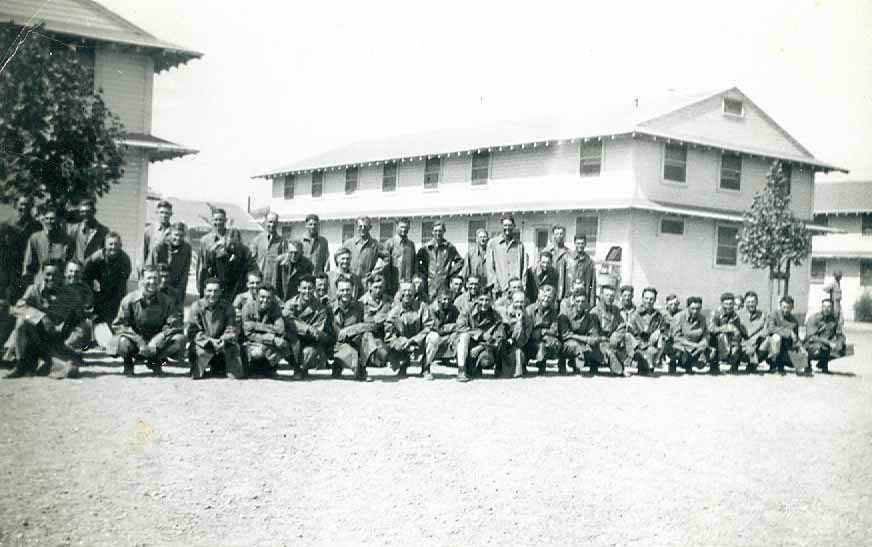
Camp Roberts, Burbank, California
8. Q: The link to your web site is included as a section in the book. Why is that?
A: When I wrote the first version, I scanned all the letters, pictures, etc. and copied them to a thumb drive for my family. As I was editing the final book, I realized that the graphics would make the book far too expensive for printing. Also, folks who read it before publication were, for the most part, interested in the letters. So I decided to set up a web site where people could go and find every letter, document, and photograph Mom saved from those two years of war time. HeWroteHerEveryDay.com is up and running for those who are interested.
9. Q: What kind of response have you gotten from people who have read your book? You mention that the response has been largely positive. Any negatives?
A: Yes, the response has been warm and generous. But then, the people who know me would probably not tell me if they didn’t like it.
Many people who read the advance manuscript wanted to know more about Dad after he got home. So the published version has a brief epilogue that outlines Dad’s life post war.
I did have one relative who wasn’t happy about a small anecdote in the book about someone on my mother’s side of the family. That surprised me, because the story is primarily about my father and the Arizona Hendricksons. But that was the only sour note in the symphony…at least so far.
10. Q: Will there be a sequel?
A: I honestly don’t think so. This book was unique in that it was driven by real events that were already written about by the subject of the book, my father. I am too close to the years following Dad’s war service. That was my childhood and I was his first baby since the twins were 5 months old by the time he got home. I would not know where to begin.
And, after all, the whole point of the book is that my father was just an ordinary man who lived through extraordinary times. He was sent to war. They didn’t just hold the Germans off; they turned the tide of the war. Dad wasn’t expected to survive, but he—and so many thousands of others—did survive. And they came home to America and lived ordinary lives. While that story might not make a good sequel to this book, it certainly made a good life for me and those of my generation. It’s a legacy that I hope we will be able to pass along to our children.
Lloyd Lofthouse, this blog’s host, is a former U.S. Marine and Vietnam Veteran.
His latest novel is the award winning suspense-thrillerRunning with the Enemy. Blamed for a crime he did not commit while serving in Vietnam, his country considers him a traitor. Ethan Card is a loyal U.S. Marine desperate to prove his innocence or he will never go home again.
And the woman he loves and wants to save was fighting for the other side.
To follow this Blog via E-mail see upper left-hand column and click on “FOLLOW!”




 The Soulful Veteran's Blog