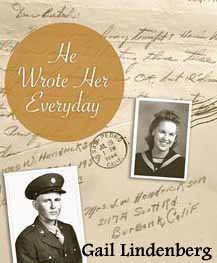
He Wrote Her Every Day by Gail Lindenberg is a true story that warms the heart. Barely married a year, Jim leaves his young wife, the love of his life, and ends up fighting in Europe during the final months of World War II. He experiences a lot of combat and is awarded a Silver Star when he risks his life leading a charge against a Nazi machine gun position.
James (Jim) William Hendrickson, Jr.
His brother Bill is in a prisoner of war camp somewhere in Germany, and Jim dreams of being the one who liberates him. You will need to read the book to find out what happened to Bill.
Jim also seldom missed a day to write a letter or add to one he was working on. Between being in the field chasing the enemy, on guard duty and/or in combat, he always finds time to write even when everyone else is trying to sleep—even when he is in a filthy, cramped foxhole in freezing winter weather.
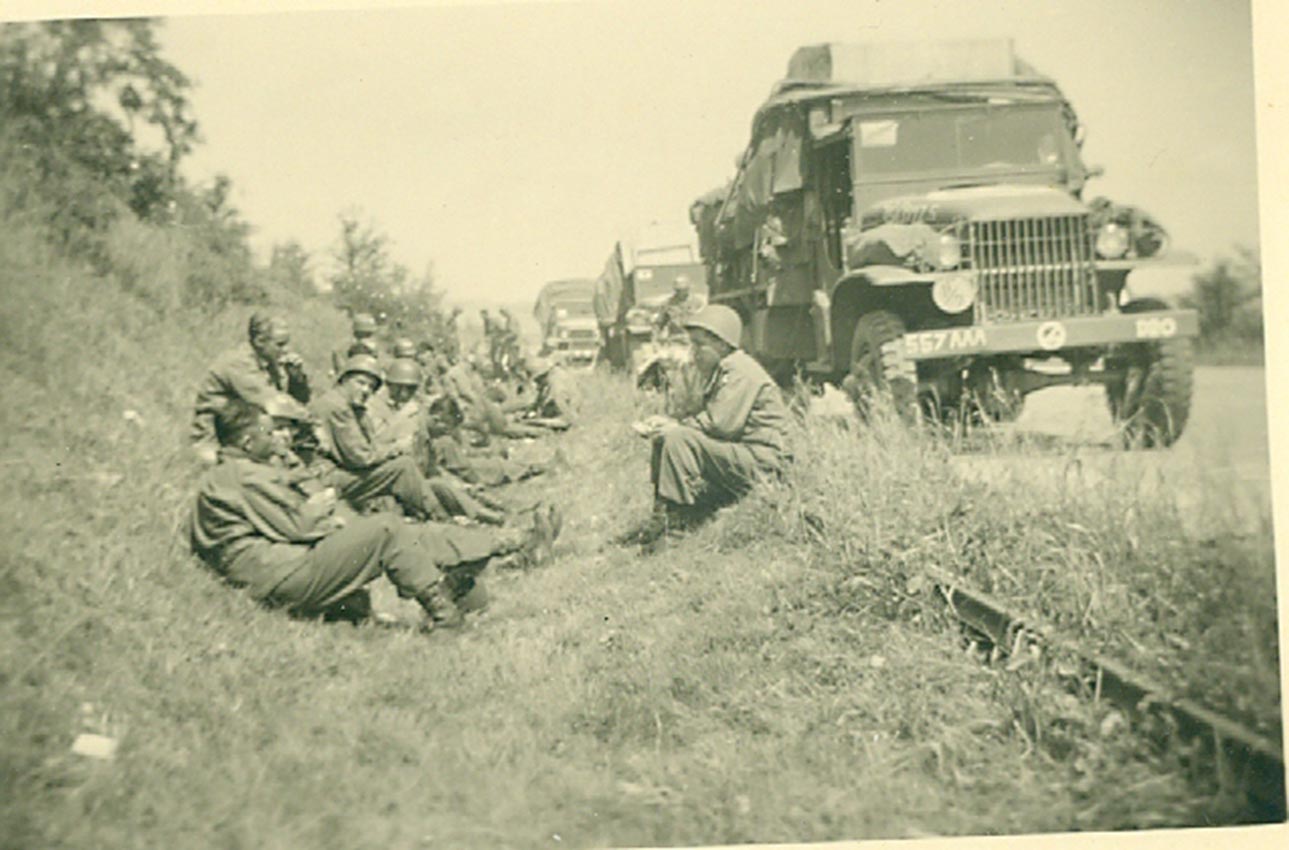
somewhere in Germany 1944
I’ve never read a seamless story that grounded me in both the home front and a combat zone like this one did—especially after the war and the long months of waiting in Germany when Jim is anxious to return home but there is one delay after another. I kept turning the pages waiting for that moment when Jim finally made it back home to Arizona, and the conclusion brought a big smile to my face as I remembered the moment when I arrived home from another war.
Irene (Butch) – Jim’s wife and the love of his life
The author sent me a copy of the paperback for my honest review, and don’t miss the rest of the photos you will discover at He Wroter Her Every Day.com. This is a story that was lovingly researched and written by one of his daughters—a wonderful story that immortalizes a father who served his country with courage and honor.
_______________________
Lloyd Lofthouse is a former U.S. Marine and Vietnam Veteran.
His second novel is the award winning love story and suspense-thriller Running with the Enemy. Blamed for a crime he didn’t do while serving in Vietnam, his country considers him a traitor. Ethan Card is a loyal U.S. Marine desperate to prove his innocence or he will never go home again.
This is a love story that might cost the lovers everything—even their lives.
To follow this Blog via E-mail see upper left-hand column and click on “FOLLOW!”
I bought the DVD for The Patrol at Costco thinking it was about American special-forces troops in Afghanistan, but it wasn’t. It was about a British Army Patrol often under attack from an unseen enemy. The UK troops in the film return fire but have no way to know if they inflicted any casualties on the Taliban. I think we tend to forget that U.S. troops aren’t the only forces fighting in Afghanistan. To date, the UK has lost 453 troops in Afghanistan in addition to 2,116 wounded in action.
The Patrol takes place in 2006, in Helmand Province, as the British Army deploys into the Taliban heartland. In 2006, Britain led the International Security Assistance Force (ISAF) in Helmand province in the south of the country with a 3,300-strong force after fresh outbreaks of violence. At its peak, in Helmand alone there were 137 UK bases and around 9,500 UK troops.
The Patrol has been called, “The British answer to The Hurt Locker and is just as depressing for its sense of reality. As in all war, there is no glory, and with casualties, morale suffers. Hollywood, the news and novels are where war is glorified. Rooted in reality, this film is not your average Hollywood epic. If you are interested in the reality of war, I suggest you ignore the average star rating on Amazon from customer reviews.
War is not combat all the time. The average infantryman in the South Pacific during World War II saw about 40 days of combat in four years. The average infantryman in Vietnam saw about 240 days of combat in one year thanks to the mobility of the helicopter. Now research is revealing that our troops serving in Iraq and Afghanistan are experiencing over 310 days of combat—a day of combat is a day that you don’t know if you will live or die that day. – Our Warriors Today and “Combat Trauma”
The first-time, writer-director Tom Perch draws on his own life in the army to build a convincing low budget film of how troops lose faith in their leaders when they have lousy weapons and see no reason to keep risking their lives in combat that makes no sense.
What worked for me in this film was that the usual macho type heroes we see in most combat films were missing. There were no heroes here and no cowards either. Just troops doing the job they were trained to do—and obviously sent in to harm’s way by corrupt, bungling governments.
_______________________
Lloyd Lofthouse is a former U.S. Marine and Vietnam Veteran.
His latest novel is the award winning suspense-thriller Running with the Enemy. Blamed for a crime he did not commit while serving in Vietnam, his country considers him a traitor. Ethan Card is a loyal U.S. Marine desperate to prove his innocence or he will never go home again.
And the woman he loves and wants to save was fighting for the other side.
To follow this Blog via E-mail see upper left-hand column and click on “FOLLOW!”
There’s no fantasy, hero worship or fake humor in this TV series. Everyone is flawed and injured from the war—even Americans who never served in Vietnam or wore a uniform.
“China Beach” was a TV series from 1988 to 1991, and I didn’t view it until recently after I first heard about it and bought a copy of the series on DVD at Costco. I didn’t buy the complete series that comes with almost 60 hours of run time. I bought Seasons 1 + 2 with about 22 hours.
And I think I know why this excellent TV series was cancelled after four seasons—although the series has more than 249 reviews on Amazon with 4.8 of 5 stars, most Americans can’t deal with the harsh reality of war. After all, less than 7% of Americans are veterans and even fewer have served in combat.
“China Beach” is set in a combat hospital during the Vietnam War in the late 1960s. The title refers to My Khe beach in the city of Da Nang, which was nicknamed “China Beach” in English by American and Australian troops during the war.
The main character is first lieutenant Colleen McMurphy who is a triage nurse dealing with often severely wounded troops. The directors focused on reality and there were real combat nurses who were consultants. There’s a bonus DVD with this set where we get to meet some of the nurses who served in Vietnam.
The fictional nurse, McMurphy, takes her job saving lives seriously and when she loses wounded troops, she takes the loss personally and is emotionally injured. Her PTSD is visible from the beginning. At times the suffering and drama were so intense, my eyes filled with tears from my own memories.
If you want a close look at the reality of combat and the price the troops and civilians pay, I highly recommend this series. You’ll have a safe front row seat to watch these characters become friends, lovers and then suffer loses that would break most people and scar them for life as it must have scarred the real nurses who served there.
You may question my opinion of this series so it may help to know that I’m a Vietnam combat vet who was a field radio operator in the U.S. Marines. And I was fortunate to never have to be medevaced to a combat hospital although some of the Marines in my unit were.
Now I’m thinking about the seasons of “China Beach” I haven’t seen.
_______________________
Lloyd Lofthouse is a former U.S. Marine and Vietnam Veteran.
His latest novel is the award winning suspense-thriller Running with the Enemy. Blamed for a crime he did not commit while serving in Vietnam, his country considers him a traitor. Ethan Card is a loyal U.S. Marine desperate to prove his innocence or he will never go home again.
And the woman he loves and wants to save was fighting for the other side.
To follow this Blog via E-mail see upper left-hand column and click on “FOLLOW!”
Who do you think would win a war between Russia and the United States if it were fought between army choirs?
Russian Army Choir singing at the 2014 Winter Olympics
Of course, the second video with the MADtvMarine Choir was for fun. Now, in all seriousness, here’s the U.S. Army Choir
It’s only fair that we compare the Russian Army Choir to the U.S. Army Choir, in the 3rd video.
In addition, the 4th video is from The Vocal Majority – [US] Armed Forces medley.
Next time we fight a war, let military choirs compete on a battle field filled with the sound of music. Maybe through song, we might find peace. Do you think the Taliban or al Qaeda might have a choir?
_______________________
Lloyd Lofthouse is a former U.S. Marine and Vietnam Veteran.
His latest novel is the award winning suspense-thriller Running with the Enemy. Blamed for a crime he did not commit while serving in Vietnam, his country considers him a traitor. Ethan Card is a loyal U.S. Marine desperate to prove his innocence or he will never go home again.
And the woman he loves and wants to save was fighting for the other side.
To follow this Blog via E-mail see upper left-hand column and click on “FOLLOW!”
Are we all crazy? Does PTSD ever go away? I’m sure that most members of the US military have a much better understanding of PTSD than the general public.
There are currently about 1.4 million active troops serving in the U.S. military and 21.5 million military veterans. But the U.S. population has more than 317 million people. That means 0.44% are serving in the active military and 6.7% are veterans leaving 93.15% of the population mostly clueless.
So, where does the general population acquire its perception of PTSD?
To answer that, we must ask how many Hollywood movies have painted a positive picture of combat veterans compared to movies that show veterans as angry, violent, dangerous drug users and/or alcoholics (mostly brought on by PTSD).
Three Vietnam Veterans have run for President of the United States—all three lost. One was a Republican and two were Democrats.
Al Gore served in Vietnam as a reporter/journalist for five months. He was stationed with the 20th Engineer Brigade in Bien Hoa and was a journalist with The Castle Courier. He received an honorable discharge from the Army in May 1971.
Gore said, “I don’t pretend that my own military experience matches in any way what others here have been through … I didn’t do the most, or run the gravest danger. But I was proud to wear my country’s uniform. And my own experiences gave me strong beliefs about America’s obligation to keep our national defenses strong.”
John Kerry reported for duty at Coastal Squadron 1 in Cam Ranh Bay in South Vietnam on November 17, 1968. In his role as an officer in charge of swift boats, Kerry led five-man crews on a number of patrols into enemy-controlled areas.
John McCain requested a combat assignment, and was assigned to the aircraft carrier USS Forrestal flying A-4 Skyhawks. His combat duty began when he was thirty, in mid-1967.
John McCain became a prisoner of war on October 26, 1967. He was flying his 23rd bombing mission over North Vietnam when his aircraft was shot down by a missile over Hanoi.
What is your opinion about the public image of combat veterans? Do you think these three men lost the White House because of that image?
Lloyd Lofthouse is a former U.S. Marine and Vietnam Veteran.
His latest novel is the award winning suspense-thriller Running with the Enemy. Blamed for a crime he did not commit while serving in Vietnam, his country considers him a traitor. Ethan Card is a loyal U.S. Marine desperate to prove his innocence or he will never go home again.
And the woman he loves and wants to save was fighting for the other side.
To follow this Blog via E-mail see upper left-hand column and click on “FOLLOW!”
Walking the mile-and-a-half home, both films stirred emotions and made for conversation. I admit that I didn’t think The Wolf of Wall Street was about a real man. It was so outrageous, so amoral, and so greedy—you name it—that I thought it was the product of a very active imagination.
When I Googled the film, I discovered it was based on a real story and was surprised that anyone could be this rotten other than a serial killer who loves murdering innocent people—the real Wolf of Wall Street, Jordan Belfort, was as depraved and greedy as they come. The film is worth seeing. DiCaprio does a great job playing Belfort, a man who is often unfaithful to his wives, and in the end has no loyalty to anyone when it comes to his own survival.
Belfort and his employees lead a lifestyle of total debauchery with lavish parties, sex and drugs both in the workplace and in their personal lives.
Belfort was indicted in 1998 for securities fraud and money laundering, but he only served 22 months in a federal prison designed for white collar criminals. This prison, as depicted in the film, was more of a country club with tennis courts—but still a prison you can’t leave until you’ve served your time. It seems that today, Belfort is worth millions again (although nowhere close to the amount—about $200 million—he took from his victims); hasn’t paid back what the court ordered; lives in Manhattan Beach, California and is engaged again.
Lone Survivor is about a team of SEALS in Afghanistan and is also based on a true story. The film starts out with SEAL boot camp and in short order shows how tough it is to earn the right to be a SEAL. These are tough guys who value loyalty, patriotism and honor above all else and they are more than willing to die for what they believe.
Mark Wahlberg plays the lone survivor, Marcus Luttrell. Three of the four SEALS in his team are killed in combat with a vicious enemy, the Taliban, who once ruled most of Afghanistan while supporting Al Qaeda.
While I was disgusted at Belfort’s debauchery and greed, I was angry at what happened to the SEALS in Lone Survivor. Not long after they were dropped off in the Afghan mountains to carry out their mission, they discover that the intel was bad. Instead of a few Taliban, they were up against hundreds and they lost radio contact. When the help arrives, it’s without the proper support because there are not enough Apache gunships to support all of the ground operations in Afghanistan. The result, one of the troop carrying choppers is shot down with everyone aboard killed aborting the rescue attempt.
Why was I angry? Because when I served in Vietnam—several times while in the field—I lost radio contact—once on a deep recon where four of us were dozens of miles in front of our own lines. We even drove our World War II vintage jeeps—with no armor I might add—through an abandoned village where the cooking fires were still smoldering and there was a Vietcong flag flying from a radio antenna sticking out of the top of a tree. Several decades later, and Congress should have done something about fixing it so no ground troops would ever be out of radio contact, and I blame the lack of enough air support on Congress and President G. W. Bush for not making sure the troops had all the support they needed to succeed and come home.
Then there are the rules of combat that limit our troop’s ability to fight a war. We had them in Vietnam and they sucked. Noncombatants should not be allowed to make rules for combat. Most Americans—who live in a real fantasy world—do not understand war.
The challenge is how do we measure who Americans might admire most?
For The Wolf of Wall Street, the film—with a $100 million budget—opened in December in 2,537 theaters and has earned $90.8 million as of January 10, 2014.
Lone Survivor opened wide in 2,875 theaters on January 10; had a production budget of $40 million and has earned $14.782 million (the film started in 2 theaters on December 25, 2013 and went wide on January 10) compared to The Wolf of Wall Street that made $18.5 million its first weekend.
Who do you admire most and why: Belfort’s and his mob or Marcus Luttrell and the SEALS?
_______________________
Lloyd Lofthouse is a former U.S. Marine and Vietnam Veteran.
His latest novel is the award winning suspense-thriller Running with the Enemy. Blamed for a crime he did not commit while serving in Vietnam, his country considers him a traitor. Ethan Card is a loyal U.S. Marine desperate to prove his innocence or he will never go home again.
And the woman he loves and wants to save was fighting for the other side.
To follow this Blog via E-mail see upper left-hand column and click on “FOLLOW!”
I’m currently watching The Walking Dead, season three on DVD, and the main character’s son—Carl—who isn’t even a teenager, has become an efficient killing machine of both humans and zombies.
But that isn’t what this post is about because The Walking Dead is fiction.
In this post, I am writing nonfiction for someone who has no voice. We now know that many who grow up to be racists, criminals and killers were victims of parental neglect, but this post isn’t about that either. [Turning Children into Killers]
This post is about George Sandefur—a smoker who died from an aggressive form of lung cancer—and I have not forgotten one story he told me at lunch one day when we were alone in the staff lounge.
At the time, he taught math and I taught English at Giano Intermediate School in La Puente, California and it was the early 1980s. He had the classroom next to mine. George told me this story a few years before the lung cancer took him.
You see, George served in the U.S. Army in the Korean War [1950 – 1953]. He told me about one patrol on a cold day. The narrow trail they followed clung to the side of a steep mountain he didn’t know the name of.
George brought up the rear and from his vantage point saw several young Korean children coming their way. None of these kids could have been over ten. The rest of American patrol had gone around a fold in the mountain and couldn’t see the children.
George stopped. He sensed something was wrong, and when he saw the machine gun strapped to the back of a little girl, he knew that the other troops in his patrol were walking into a trap and certain death.
He was the only one who had a clear shot, so he pulled the trigger.
It turned out those kids were heavily armed with explosives and the machine gun. All that little girl had to do was lean over so the seven or eight-year-old boy standing behind her could pull the trigger to kill the US troops.
George took lives that day but also saved lives, and he was left with a mental scar that followed him the rest of his life.
That one defining moment changed who George was and how he saw the world.
His latest novel is the award winning suspense-thriller Running with the Enemy. Blamed for a crime he did not commit while serving in Vietnam, his country considers him a traitor. Ethan Card is a loyal U.S. Marine desperate to prove his innocence or he will never go home again.
And the woman he loves and wants to save was fighting for the other side.
To follow this Blog via E-mail see upper left-hand column and click on “FOLLOW!”
In the early 1980s, I was working toward an MFA and one of my courses was a self-directed project monitored by a faculty adviser. The project was my memoir of fighting in the Vietnam War. A few years after completing the memoir, I took it to UCLA Extension’s Writers’ Program where the professor convinced me to convert it into fiction—a suspense thriller. The professor was a woman, who later helped find a literary agent to represent my novel.
I spent several years in the program with her as my advisor, and the final product after endless revisions and feedback from the professor and other authors in the program was “Running with the Enemy”. It was fiction but true to my experience of war and its horror.
Fast forward to publication and then June 11, 2013 when a reviewer by the name of “S” posted a 2-star review on Amazon—a review I’m actually proud of.
S concluded her review with: “I was sucked in by the nitty gritty feng shui of the book, then repelled by the over use of sexual violence and testosterone dousing. Even though the ending was predictable, I still liked that the good guys won and the bad guys lost. However, the limited roles by the female characters left me feeling that half the story still lies buried and voiceless.”
I’m proud of that 2-star review because the book I wrote was about the war I fought in—not the story S wanted me to write that would have been a lie. In the 1960s, the only American women who served in Vietnam that I knew of were nurses and they did not serve in combat units. There were no women in my battalion. Not one.
What I think S wanted was to see women kicking the shit out of men and beating the men at war. But that wasn’t my Vietnam. Tuyen, the only major woman character in the novel—the others were minor characters—was a half breed, a Eurasian, who had been sexually and physically abused by her half-brother since she had been a young girl.
If you have ever seen the film or the stage play of “Miss Saigon”, you might understand how women are still treated today in Southeast Asia and when that woman was a Eurasian like Tuyen, the treatment was worse, and the term for her was Bụi đời, the “dust of life”.
In fact, “Life was frequently difficult for such Amerasians [and Eurasians]; they existed as pariahs in Vietnamese society. Often, they would be persecuted by the communist government and sometimes even sold into prostitution as children.” [Benge, Michael (22 November 2005). “The Living Hell of Amerasians”. Front Page Magazine]
I think what “S” wanted from me as an author was to write a story that would fit a world she wanted—one that didn’t exist in my world. She wanted a kick-ass female character.
The latest example of this popular political correctness demanding that history and literature be rewritten may be found in the film “The Hobbit: The Desolation of Smaug”. Tauriel is a female elf who is a kick ass super warrior. The problem is that in the original Hobbit written by J. R. R. Tolkien, there are no major women characters and another fire-breathing modern day feminist—another S—also wanted the plot of this novel rewritten when made into film.
This revisionist was Nicole Lyn Pesce writing for the New York Daily News who said, “The women’s rights movement has made it to Middle-earth. The first ‘Hobbit’ film was criticized by some—like me—for its testosterone-heavy cast, so director Peter Jackson has brought in a kick-ass chick for the sequel.”
Does this mean we should rewrite history due to a modern, popular, political-correct movement? I don’t think so.
My novel was a man’s story just like “The Hobbit” was written by a man. In fact, you may want to read an essay about how J.R.R. Tolkien’s service in the British Army during World War I may have influenced his fiction. [JRR Tolkien and World War I by Nancy Marie Ott]
If Tolkien were alive today, would modern feminists be criticizing him for not including kick-ass women warriors in his novels, who didn’t exist in his day as they didn’t exist in mine?
I have news for “S”. If she had read my novel to the end, she would have discovered Tuyen kicking some serious male ass in the Golden Triangle near the conclusion of the novel. In that scene, Tuyen is so violent she even shocks the kick-ass recon Marine who loves her. Maybe Tuyen just didn’t kick enough male asses to satisfy S or someone like Nicole Lyn Pesce.
Here’s a bit of advice for today’s modern day feminists. Don’t wish for something you know little to nothing about. Take it from someone who has seen war up close and personal, you really don’t want to go there. If men are willing to go to war and die to protect women from that horror, let them.
_______________________
Lloyd Lofthouse is a former U.S. Marine and Vietnam Veteran.
His latest novel is the award winning suspense-thriller Running with the Enemy. Blamed for a crime he did not commit while serving in Vietnam, his country considers him a traitor. Ethan Card is a loyal U.S. Marine desperate to prove his innocence or he will never go home again.
And the woman he loves and wants to save was fighting for the other side.
To follow this Blog via E-mail see upper left-hand column and click on “FOLLOW!”
The Urban Dictionary says that pogey bait means: “The Marines in China before WW II were issued candy (Baby Ruths, Tootsie Rolls, etc.) as part of their ration supplements. At the time, sugar and other assorted sweets were rare commodities in China and much in demand by the Chinese, so the troops found the candy useful for barter in town.
“The Chinese word for prostitute, roughly translated, is pogey. Thus, Marines being Marines, candy became Pogey Bait.”
Hop on my time machine and join me in the early 1960s when I was being trained at the Marine Corps Recruit Depot in San Diego.
As a recruit still in boot camp, we were allowed visitors after so many weeks [can’t remember exactly how many weeks that was], and my parents drove from LA County to visit me for the first time since I had left home.
Unknown to me, my mother had baked my favorite cakes and cookies and brought along a cooler packed with ice, Doctor Peppers and Pepsi/Coke—my favorite sodas back then—now they are the same as poison to me. But as a teen, I gulped this poison daily by the liter.
In a letter home, I had asked my parents to request to see two other Marine recruits—friends of mine. Before we were released to go to the visiting area, one of the drill instructors told us that we were not to eat or drink any pogey bate.
However, my two friends ignored that order and stuffed themselves with cake and cookies washing it all down with one Coke, Pepsi or Doctor Pepper after another. I just said no and didn’t take one bite or sip.
When we got back to the barracks, we discovered that we had been under surveillance and the drill instructor knew who had disobeyed his orders about eating that pogey bate. When it came time to sleep, I went to bed but my two friends were outside doing squat thrusts past midnight as they shouted their sins for the platoon to hear.
But in the chow hall every meal, Marine recruits were getting their sugar fix another way. They were smothering slices of white bread with butter then pouring an inch of sugar on that slice of buttered bread before eating it.
I think this was proof that recent scientific studies are right that sugar is more addictive than cocaine. Source: Plos One.org PLOS ONE (eISSN-1932-6203) is an international, peer-reviewed, open-access, online publication.
Lloyd Lofthouse is a former U.S. Marine and Vietnam Veteran.
His latest novel is the award winning suspense-thriller Running with the Enemy. Blamed for a crime he did not commit while serving in Vietnam, his country considers him a traitor. Ethan Card is a loyal U.S. Marine desperate to prove his innocence or he will never go home again.
And the woman he loves and wants to save was fighting for the other side.
To follow this Blog via E-mail see upper left-hand column and click on “FOLLOW!”
As a WW II combat veteran of the 84th Infantry Division (Railsplitters), serving in the same unit as the subject of this book, I [Allan Wilford Howerton] was honored to be asked to read and react to the manuscript of He Wrote Her Everyday prior to its publication.
Note from Blog host: the 84th Infantry Division landed on Omaha Beach, November 1 – 4, 1944, and fought in the Battle of the Bulge in December 1944 – January 1945.
Ms Lindenberg, in getting the story together, has made a grand contribution to the literature of World War II. In addition to a war story, it is a wonderful book about love, longing, and faithfulness under unimaginable hardship and uncertainty.
Anyone with an interest in World War II will like He Wrote Her Everyday. It tells, among many other things, a true story about the plight of replacements rushed to the front lines to augment units suffering heavy casualties in the Siegfried Line and the Battle of the Bulge.
I was there, an infantryman in the same division, but thankfully not a replacement. They were assigned, often in the middle of a battle, knowing no one and without buddies to rely on. Many became casualties but those who survived adjusted pretty rapidly and went on, like the subject of this book, to make major contributions during the drive across Nazi Germany to end the war.
Writing about war experience is difficult for those who experienced it first-hand. It is nearly impossible for someone who wasn’t there to give a believable picture of how things really were. Use of the letters written during the war gives this book a strong sense of the soldier’s walk through the snow.
Lloyd Lofthouse, this blog’s host, is a former U.S. Marine and Vietnam Veteran.
His latest novel is the award winning suspense-thrillerRunning with the Enemy. Blamed for a crime he did not commit while serving in Vietnam, his country considers him a traitor. Ethan Card is a loyal U.S. Marine desperate to prove his innocence or he will never go home again.
And the woman he loves and wants to save was fighting for the other side.
To follow this Blog via E-mail see upper left-hand column and click on “FOLLOW!”

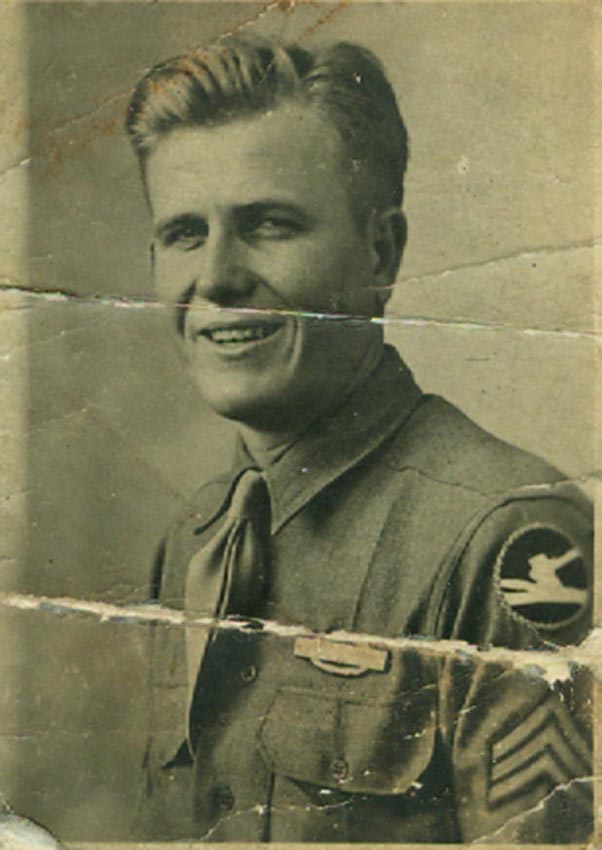 James (Jim) William Hendrickson, Jr.