The Noble Nightmare: Part 3/3

Imagine the cost in lives and dollars if the United States were to rule over 1.9 billion people in other countries for a few centuries until future freedom fighters drove the U.S. out after centuries of revolution.

For example, Vietnam was occupied by China for more than 1000 years from 221 B.C. until 938 A.D. when the Vietnamese resistance was finally successful and drove the Chinese out. Once the Chinese were gone, what form of government replaced them? Was it democratic?  No!

But then it would not have mattered, because a few centuries later the French arrived and occupied Vietnam, Cambodia and Laos for almost a century before they too were driven out by a popular resistance that eventually became another oppressive regime. Then the United States moved in and fought a war in Vietnam—based on another lie—for almost twenty years, leaving millions dead before it too pulled out. And during this time, South Vietnam was never ruled by a democratically elected government. Instead, the noble United States supported one dictator after another in South Vietnam.

The Government of Vietnam or Republic of Vietnam (South Vietnam) was originally led by Ngo Dinh Diem until his assassination in 1963. Afterwards, a series of “revolving door” leaders emerged, including Nguyen Cao Ky, General Khanh, Duong Van Minh, and Nguyen Van Thieu.

During the Vietnam War, the US dropped more than three times the number of bombs on Vietnam, Cambodia and Laos than it dropped on Germany, Italy and Japan during World War II. Were those bombs only dropped on military targets? No!


carpet bombing spares no one

It is estimated that the civilian death toll in Southeast Asia from America’s war (1955 – 1975) was 465,000 to 2.5 million. When we include military deaths that number is 1.1 to almost 3.9 million.

If we are unable to learn from history, we are guaranteed to repeat the same mistakes made by others.

Then of course, there is this incomplete history that many in the U.S. would rather never hear:

1. In 1953, the United States overthrew a democratic government in Iran and installed a dictator, the Shah of Iran, who ruled with American support until 1979.

2. In 1954, the United States overthrew a democratic government in Guatemala and installed a military dictator, and with American support brutal military dictators dominated Guatemala until the late 1980s.

3. In 1964, the United States overthrew a democratic government in Brazil and installed a military dictator, and with American support military dictators dominated Brazil until the late 1970s.

4. In 1965, the United States overthrew a democratic government in Indonesia and installed a military dictator, Suharto, who then with American help killed over 500,000 people–the people who supported the old democratic government. Suharto to this day continues to receive American economic, political, and military support.

5. In 1965, the United States helped install the brutal dictator, Mobuto, in Zaire, who killed tens of thousands of people and looted his country of over 8 billion dollars. The United States continued to support the brutal dictator Mobuto until just the last few years, when we are now calling him “a relic of the Cold War.” If he is a relic, he is the United States’ relic!

6. In 1973, after America had withdrawn from Vietnam, the United States overthrew a democratic government in Chile and installed a brutal dictator, Pinochet, who killed tens of thousands of people–people who supported the old democratic government. With American economic, political, and military support, the brutal dictator Pinochet dominated Chile until the late 1980s.

For a more complete list, see Dictators Supported by the United States and/or America’s Other Most Embarrassing Allies.

Now tell me how noble America’s government is.

One lesson we should learn from all this history is that one man’s noble cause often turns out to be a nightmare for millions.

Return to The Noble Nightmare: Part 2 or start with Part 1

_______________________

Lloyd Lofthouse, a former U.S. Marine and Vietnam Veteran, is the award winning author of The Concubine Saga.

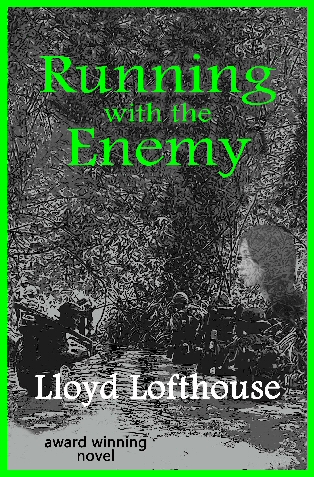
His latest novel is Running with the Enemy, a suspense thriller. Blamed for a crime he did not commit while serving in Vietnam, his country considers him a traitor. Ethan Card is a loyal U.S. Marine desperate to prove his innocence or he will never go home again.

And the woman he loves and wants to save was trained to hate and kill Americans.

To follow this Blog via E-mail see upper right-hand column and click on “Follow”.
The Noble Nightmare: Part 2/3

Foreign Policy Magazine lists The Worst of the Worst and says, “There are at least 40 dictators around the world today, and approximately 1.9 billion people live under the grip of the 23 autocrats on this list alone.”

The Foreign Policy piece is worth reading because it reveals how some of these dictators were seen as freedom fighters until they won their revolution. Foreign Policy says, “Although all dictators are bad in their own way, there’s one insidious aspect of despotism that is most infuriating and galling to me: the disturbing frequency with which many despots, as in Kyrgyzstan, began their careers as erstwhile freedom fighters who were supposed to have liberated their people. ”

I think it is hypocrisy for any Americans to support the war in Iraq based on moral grounds without supporting wars against all of the other brutal, autocratic, and oppressive regimes across the globe. To do that, the U.S. would have to mobilize as it did to fight Japan, Italy and Germany in World War II by enacting the draft and raising a military force of more than sixteen million to fight a global war of this scale.

In fact, the use of nuclear weapons might also be an option to end this war as it did in World War II when two nuclear bombs were dropped on cities in Japan killing almost 200,000 innocent civilians including children.

Then after that global war on oppressive regimes,—that is if it was successful—to maintain the peace, the United States would have to occupy all of those countries by keeping a military presence as we have in Japan, Germany and South Korea. The last question would be, if the United States did do this and fought wars in these countries that have a population of about 1.9 billion people, how would the United States guarantee that a dictator would never rule these people again?

The answer is simple: The U.S. would have to rule over these countries no matter how the people felt and to achieve this, order would be maintained by a permanent U.S. military force.

Continued on February 26, 2013 in The Noble Nightmare: Part 3 or return to Part 1

_______________________

Lloyd Lofthouse, a former U.S. Marine and Vietnam Veteran, is the award winning author of The Concubine Saga.

His latest novel is Running with the Enemy, a suspense thriller. Blamed for a crime he did not commit while serving in Vietnam, his country considers him a traitor. Ethan Card is a loyal U.S. Marine desperate to prove his innocence or he will never go home again.

And the woman he loves and wants to save was trained to hate and kill Americans.

To follow this Blog via E-mail see upper right-hand column and click on “Follow”.

The Noble Nightmare: Part 1/3

After reading a post on the Iraq War by an individual who thinks the war was moral and just, I left a comment on that Blog, and then decided to continue the discussion here.

The author of that post is an advisor on Foreign and Security Policy and a fellow at The Institute for Middle Eastern Democracy. Julie holds a BA in European Politics and an MSc in Conflict Studies (Comparative Politics) from the London School of Economics. Source: Julie’s Think Tank.com

Julie says, “It is important to learn the right lessons from Iraq.”

But I say, “Why do we have to learn from the Iraq experience when we have thousands of years of history to learn from?”

Julie clearly says that she “strongly supported the invasion of Iraq in 2003 and still maintains the same position.”

And I’m one of those people that changed his mind after the truth about WMDs came out revealing that it was another fabrication used as an excuse to start what many in America still consider to be a just and noble war.

Of course going to war to remove a dictator considered a monster such as Saddam could be seen as a moral and just cause, but why do so many Americans see the United States as the global force to do that and then not continue this in other countries that were listed by The Atlantic Wire as ruled by dictators?

Continued on February 25, 2013 in The Noble Nightmare: Part 2

_______________________

Lloyd Lofthouse, a former U.S. Marine and Vietnam Veteran, is the award winning author of The Concubine Saga.

His latest novel is Running with the Enemy, a suspense thriller. Blamed for a crime he did not commit while serving in Vietnam, his country considers him a traitor. Ethan Card is a loyal U.S. Marine desperate to prove his innocence or he will never go home again.

And the woman he loves and wants to save was trained to hate and kill Americans.

To follow this Blog via E-mail see upper right-hand column and click on “Follow”.

The Dark Side of Humanity

Sarah McCoy wrote a post for the Huffington Book Blog about “Men of War are Conflicted Characters“. After I read her post, I wanted to leave a comment but couldn’t because that section was closed, so I’m writing it here.

You may want to read McCoy’s post. It’s well written and deals with an author’s dilemma when she has to crawl inside the skin of someone most of the world considers a monster, because he fought for Hitler during World War II and was tagged with the term Nazi.

However, it was McCoy’s conclusion that I wanted to leave a comment for. She said, “I’ll be honest, it was an onerous task to write under the psychological hood of war. I struggled but knew it was essential to the story and my attempt to unearth a truth. War asks us to give up our humanity, but if we do, aren’t we losing what we’re fighting for in the first place?”

I say no. War does not ask us to give up our humanity. It asks us to reveal the horror of our humanity—to let the dark side we spend a lifetime struggling to suppress out of its bloody bag. Inside our skin lives both demons and angels. When an individual fails to keep the lid on his or her demons, we end up with people like Luis Garavito of Colombia who may have murdered more than 400 people. He was a serial killer known as The Beast.

These killers, who cannot control the dogs of war, live all over the world. Instead of listing them, you may want to visit this page on Wiki and see for yourself what happens when the lid comes off on its own and stays off.

In war, troops are trained to open that door and let the beast out.  Then they are expected to stuff it back in the box when we come home.

We can’t pretend it isn’t there, because just like night and day, sunrise and sunset, each person has a bright and dark side and it is the dark that we struggle to keep under control.

Carl Gustav Jung (1875 – 1961), the founder of analytical psychology, called it the shadow: The shadow is an unconscious complex that is defined as the repressed and suppressed aspects of the conscious self.

There are constructive and destructive types of shadow.

On the destructive side, it often represents everything that the conscious person does not wish to acknowledge within themselves. For instance, someone who identifies as being kind has a shadow that is harsh or unkind. Conversely, an individual who is brutal has a kind shadow. The shadow of persons who are convinced that they are ugly appears to be beautiful. Source: Psychologist Anywhere Anytime.com

Some men that wear uniforms might go to war conflicted, but I think to most trained warriors, it’s just a job. Ethan Card, the main character in my novel, Running with the Enemy, is an example of what I’m talking about. To succeed and survive, he must trust the beast from the dark side of humanity to help him get the job done.

It is the only way to win a war. If you disagree, show me a war that was won by fighting with a set of rules based on modern, humanitarian principals that did not exist a few decades ago.

What do you think was going through the mind of the pilot of the Enola Gay as he dropped “Little Boy” on the city of Hiroshima and killed 80,000 people in one nuclear flash? Next was Nagasaki with another 40,000 killed instantly. Some children had been evacuated out of the city, for fear of bombing, but many remained. “1,653 primary school children and 74 of their teachers died in Nagasaki.” Source: Ban the Bomb.org

Discover Children as Weapons of Death

_______________________

Lloyd Lofthouse, a former U.S. Marine and Vietnam Veteran, is the award winning author of The Concubine Saga.

His latest novel is Running with the Enemy. Blamed for a crime he did not commit while serving in Vietnam, his country considers him a traitor. Ethan Card is a loyal U.S. Marine desperate to prove his innocence or he will never go home again.

And the woman he loves and wants to save was trained to hate and kill Americans.

To follow this Blog via E-mail see upper right-hand column and click on “FOLLOW”.

Kill Anything That Moves: Part 3/3

Jennings’s review was posted the day after Turse’s book, Kill Anything That Moves: The Real American War in Vietnam, was released on January 16. I seriously question Jenning’s claim that he read this book and wrote his long criticism in such a short period of time. I suspect that he may have skimmed the book and then wrote what is obviously a biased review. In fact, he did buy the book, but the odds say he posted the review before the book reached him through the mail.

Of the fifteen, five-star reviews, five were verified Amazon purchases and four of those were posted seven to twelve days after the release, and a sixth was from a Vine Reviewer that was posted the day the book was released, which may mean he or she got the book free through the Amazon Vine program—advanced review copies are available through Amazon Vine. I know this because I am an Amazon Vine reviewer.

One of the five-star reviews—not a verified Amazon purchase—posted on January 17 copied and pasted an interview with Turse at Democracy Now. I doubt if HCI read the book.

Five of the one-star reviews appeared on the same day, January 21. Three appeared on January 22. I think this was an organized posting by a group—that did not read the book—with a goal to discredit and hurt the book’s sales. None of these reviews came from verified Amazon purchases.

My reading list is rather long so it may take several weeks/months to read and review Kill Anything that Moves.

In conclusion, I suspect that most of the civilian deaths in Vietnam were caused by bombs dropped by American aircraft and atrocities by American ground troop did take place but were not common as Turse claims—the anti war crowd has a loud voice and always will.

Return to Kill Anything That Moves: Part 2 or start with Part 1

_______________________

Lloyd Lofthouse, a former U.S. Marine and Vietnam Veteran, is the award winning author of The Concubine Saga.

His latest novel is Running with the Enemy. Blamed for a crime he did not commit while serving in Vietnam, his country considers him a traitor. Ethan Card is a loyal U.S. Marine desperate to prove his innocence or he will never go home again.

And the woman he loves and wants to save was trained to hate and kill Americans.

To follow this Blog via E-mail see upper right-hand column and click on “Sign me up!”

Kill Anything That Moves: Part 2/3

“Kill Anything That Moves” included the story of Jamie Henry who was a 20-year-old medic who served in Vietnam and witnessed the mass shooting of a small crowd of women a children.

The Los Angeles Times reported, “The files (that Turse copied and used for his book) are part of a once-secret archive, assembled by a Pentagon task force in the early 1970s, that shows that confirmed atrocities by U.S. forces in Vietnam were more extensive than was previously known.

“The documents detail 320 alleged incidents that were substantiated by Army investigators—not including the most notorious U.S. atrocity, the 1968 My Lai massacre.

“Though not a complete accounting of Vietnam war crimes, the archive is the largest such collection to surface to date. About 9,000 pages, it includes investigative files, sworn statements by witnesses and status reports for top military brass.”

The Vietnam War lasted for more than 7,000 days. Even if the 320 alleged atrocities did happen, that means one took place once every 22 days and the odds of being involved in one incident—if you served in Vietnam—was about 8,500 to one.

During the Vietnam War and afterwards, atrocities were committed by both sides, and this is a hot button issue to some. To measure the validity of the reactions to Turse’s book, I compared the five-star and one-star Amazon reader reviews. When I checked, there were thirty-five reader reviews. Fifteen were five-star reviews and fourteen were one-star.

Keep in mind that Turse’s book was released on January 15, 2013—sixteen days before I wrote this post.

Of the fourteen, one-star reviews only one was a verified Amazon purchase and it was written by Phillip Jennings, who served in the U.S. Marines as a pilot and flew for Air America in Laos. Air America was an airline owned and operated by the CIA. Maybe he dropped some of the bombs that killed civilians.

In addition to legal operations, Air America allegedly transported opium and heroin on behalf of Hmong leader Vang Pao. This allegation has been supported by former Laos CIA paramilitary Anthony Poshepny (aka Tony Poe), former Air America pilots, and other people involved in the war.

University of Georgia historian William M. Leary, writing on behalf of Air America itself, claims however that this was done without the airline employees’ direct knowledge (except for those employees that said they did know about it) and that the airline itself did not trade in drugs. Curtis Peebles denies the allegation, citing Leary’s study as evidence.” Source with citations: Wiki

To say Jennings may be biased would be an understatement.

Continued on February 3, 2013 in Kill Anything That Moves: Part 3 or return to Part 1

_______________________

Lloyd Lofthouse, a former U.S. Marine and Vietnam Veteran, is the award winning author of The Concubine Saga.

His latest novel is Running with the Enemy. Blamed for a crime he did not commit while serving in Vietnam, his country considers him a traitor. Ethan Card is a loyal U.S. Marine desperate to prove his innocence or he will never go home again.

And the woman he loves and wants to save was trained to hate and kill Americans.

To follow this Blog via E-mail see upper right-hand column and click on “Sign me up!”

Kill Anything That Moves: Part 1/3

While out driving around and doing some shopping, my wife listened to an interview on NPR with Nick Turse and told me about it. I then did some research on Nick Turse’s book Kill Anything That Moves: The Real American War in Vietnam.

I haven’t bought or read the book yet, but I plan to, because the topic is worth reading to see what Turse wrote after his extensive research.

NPR.org reported, “The U.S. government has maintained that atrocities like this were isolated incidents in the conflict. Nick Turse says otherwise. In his book, Turse argues that the intentional killing of civilians was quite common in a war that claimed 2 million civilian lives, with 5.3 million civilians wounded and 11 million refugees.”

Turse takes the high end of the estimate of civilians killed during the Vietnam War. In truth, the estimates range from 245,000 to two million. In Cambodia, there were another 200,000 to 300,000 dead and in Laos 20,000 to 200,000—from bombs dropped by American aircraft, because American troops did not fight in large numbers in Cambodia or Laos.


15:32 minutes

For a comparison, in World War II, it is estimated that 37.5 to 54.5 million civilians were killed, and World War II spanned only six years 1939 – 1945. The Vietnam War lasted nineteen years, five months, four weeks and one day—about three times longer than World War II. In that time, the US dropped more bombs on Cambodia, Laos and Vietnam than it dropped in all of World War II.

I suspect that most of the civilian deaths in Vietnam were caused by bombs dropped by American aircraft.

While I served in Vietnam, I heard of incidents like those Turse writes about, but I suspect that it wasn’t as common as Turse clams. After all, the US fought in Vietnam for almost twenty years and the last decade saw huge increases in troop numbers and the bombs dropped.

In 1959, America had 760 troops in Vietnam. The Gulf of Tonkin incident in August 1964 would change those numbers drastically. By 1963, the US had 16,300 troops in Vietnam and in 1964 there were 23,300. Then in 1965 those numbers reached 184,300. In 1968, the high point of the war, the US had 536,100 troops in Vietnam.

In total, 2.7 million Americans served in uniform in Vietnam. In 1966, I was one of them.

This is what I remember from my tour. We had rules that said we had to see who was shooting at us before we returned fire but we seldom saw who was shooting at us. I had unseen snipers shoot at me a number of times and come very close—one round touched my ear. Our base camp was hit usually at night by mortars and rockets, and it is true that body counts were important to General Westmoreland. At the time, the belief among America’s leaders was that we could kill our way to victory.

Continued on February 2, 2013 in Kill Anything That Moves: Part 2

_______________________

Lloyd Lofthouse, a former U.S. Marine and Vietnam Veteran, is the award winning author of The Concubine Saga.

His latest novel is Running with the Enemy. Blamed for a crime he did not commit while serving in Vietnam, his country considers him a traitor. Ethan Card is a loyal U.S. Marine desperate to prove his innocence or he will never go home again.

And the woman he loves and wants to save was trained to hate and kill Americans.

To follow this Blog via E-mail see upper right-hand column and click on “Sign me up!”

Mirror, Mirror on the wall, who is the fairest superhero of them all?

Smithsonian.com published The Psychology Behind Superhero Origin Stories by Robin Rosenberg.

Rosenberg says, “As a clinical psychologist who has written books about the psychology of superheroes, I think origin stories show us not how to become super but how to be heroes, choosing altruism over the pursuit of wealth and power.”

Rosenberg says, “I’ve found that superheroes undergo three types of life-altering experiences that we can relate to.”

1. trauma

2. a life altering force is destiny

3. sheer chance

“At their best,” Rosenberg says, “superhero origin stories inspire us and provide models of coping with adversity, finding meaning in loss and trauma, discovering our strengths and using them for good purpose.”

Reading Rosenberg’s piece in Smithsonian after watching “To Whom it May Concern, Ka Shen’s Journey” the previous night helped me understand his explanation. Ke Shen’s Journey was a documentary on the life of Nancy Kwan.

You may remember Kwan in “The World of Suzie Wong” (1960), or “Flower Drum Song” (1961). And in 1961, she won a Golden Globe Award for Most Promising Newcomer in film.

In fact, Kwan’s father was a hero. During World War II, he was a spy for the British and when the Japanese discovered what he was doing, he took his two, infant children and fled Hong Kong disguised as a Chinese peasant. Another Chinese spy working for the British in Hong Kong wasn’t so fortunate. He was caught and beheaded by the Japanese.

For Kwon, her life altering experience was the loss of her only child, a son from her first marriage. Bernie died at age 33 in 1996. He contracted AIDS from his girlfriend whom Kwan had cautioned him to avoid.

Bernie had unprotected sex with the girl he loved. He didn’t use a condom. The girlfriend died of AIDS first and Bernie stayed by her side and cared for her to the end. Eventually, when the virus threatened his life, he moved home so his mother and stepfather could care for him, and they watched the son they both loved die slowly over a period of three years as he wasted away.

Today, almost age 75, Nancy Kwan actively supports the study of AIDS and the promotion of AIDS awareness.

I think Rosenberg is right, because I’m convinced that what he explains is one reason why I joined the U.S. Marines and later became a classroom teacher in a barrio high school populated by violent street gangs. I made a choice. We all make choices, but why do we make such choices?

For me it wasn’t trauma—at least I don’t think so—that motivated me to join the U.S. Marines. I think it was the role models I saw in Hollywood films. For example, John Wayne’s movies. By the time I joined the Marines in 1964, John Wayne had been in 158 films. A few that stick in my head are: The Fighting Seabees; Back to Bataan; They were Expendable; Fort Apache; She Wore a Yellow Ribbon; Sands of Iwo Jima; The Horse Soldiers; The Alamo, and The Longest Day, etc.

Of course, no film compares to the reality of combat and coming home from war with PTSD and/or recovering from a severe combat wound. Those factors are also a life altering force.

It seems to me that there are a lot of people in America that are not inspired to be a hero or altruistic.

The Department of Veterans Affairs says that 8.1% of the U.S. population are veterans. In addition, the NY Times reported that less than 1% of the American population is serving in the active military.  What does that tell us about the rest of America—not counting the physically and mentally disabled, police, teachers and firefighters?

Discover John Kerry, Purple Hearts, PTSD and WMD

_______________________

Lloyd Lofthouse, a former U.S. Marine and Vietnam Veteran, is the award winning author of The Concubine Saga.

His latest novel is Running with the Enemy. Blamed for a crime he did not commit while serving in Vietnam, his country considers him a traitor. Ethan Card is a loyal U.S. Marine desperate to prove his innocence or he will never go home again.

And the woman he loves and wants to save was trained to hate and kill Americans.

To follow this Blog via E-mail see upper right-hand column and click on “Sign me up!”

PTSD and Homeless Veterans

In the Marines, we learned to never leave the wounded or dead behind.

I have lived with the symptoms of PTSD for forty-six years. I was fortunate. I was capable of holding down a job. I haven’t forgotten the homeless veteran I met in an alley early one early morning in Pasadena, California. I wrote about it in A Prisoner of War for Life.

The key is to learn how to cope. If you have PTSD, you will never get rid of it as if it were a cold or the flu. PTSD stays with you for life.

USA Today reported, “War might be making young bodies old. … The tragic signs of post-traumatic stress disorder or battlefield concussion are all too evident. Even more alarming for researchers is emerging evidence that these newest American combat veterans — former GIs and Marines in their 20s and 30s — appear to be growing old before their time. Scientists see early signs of heart disease and diabetes, slowed metabolisms and obesity — maladies more common to middle age or later.”

Some veterans are so damaged from combat experience, that they become homeless.

The population of the United States is more than 314 million people. The US Armed Forces that protects America’s civilians numbers 1.458 million—less than one-half-of-one-percent of the total US population. In addition, there are about 860 thousand military reservists.

In fact, the number of military veterans in the United States in 2012 was 21.8 million—6.94% of the total US population.

It doesn’t matter the reason a US citizen joins the military—patriotism or a financial need—and fights in one of America’s foreign wars. The fact that he or she served and put his or her life on the line or risked serious injury in combat,  I think that the ninety-three percent of the population that never served and risked life and limb owes those veterans an obligation.

That also means supporting homeless veterans with jobs and shelter.

The National Alliance to End Homelessness says, “The nation’s homeless population … went from 643,067 in 2009 to 636,017 in 2011. … The only increase was among those unsheltered.”

However, “The national rate of homelessness was 21 homeless people per 10,000 people in the general population. The rate for veterans was 31 homeless veterans per 10,000 veterans in the general population.”


PBS Documentary on Homeless Veterans – WORTH WATCHING if you have the time.

The Veterans Administration is the only federal agency that provides substantial hand-on assistance directly to Veterans who are homeless or at risk of homelessness.

Veteran homelessness is a problem of national importance. According to a count on a January night in 2011, there were 67,495 homeless Veterans. And an estimated 144,842 Veterans spent at least one night in an emergency shelter or transitional housing program in a recent year. Because of this, in 2009, President Obama and U.S. Department of Veterans Affairs Secretary Eric K. Shinseki announced the federal government’s goal to end Veteran homelessness by 2015.

An estimated 144,842 Veterans spent at least one night in an emergency shelter or transitional housing program in one recent year.

Many other Veterans are considered at risk of homelessness because of poverty, lack of support from family and friends, substance use or mental health issues, and precarious living conditions.

The VA has a hot line to support veterans who are homeless or at risk of becoming homeless. That number is: 1-877-4AID-VET (1-877-4243-838) Source: VA.gov/Homeless

In recent months, I have been editing a novel about PTSD and homeless veterans.  It isn’t my work. It was written by Alon Shalev, the author of  The Accidental Activist and A Gardener’s Tale.  His next novel is titled, Unwanted Heroes (to be published soon). It’s a story about healing and/or the failure to heal from PTSD. A love story is part of the mix too.

_______________________
Lloyd Lofthouse is a former U.S. Marine and Vietnam Veteran.

Low-Def Kindle Cover December 11His latest novel is the award winning suspense-thriller Running with the Enemy. Blamed for a crime he did not commit while serving in Vietnam, his country considers him a traitor. Ethan Card is a loyal U.S. Marine desperate to prove his innocence or he will never go home again.

And the woman he loves and wants to save was fighting for the other side.

To follow this Blog via E-mail see upper left-hand column and click on “FOLLOW!”

Missing John Wayne

I was not there when John Wayne dropped by the Battalion CP of the 1st Marine Division’s Tank Battalion in 1966 at Chu Lai, Vietnam. Instead, I was in the field. I don’t remember what I was doing in the field. I was on a night patrol, a recon, an ambush or a field operation but I wasn’t there.

I was in the field getting shot at—a walking target with a radio on my back or driving a radio jeep with no armor.  The jeep I drove in Vietnam was more than twenty years old and had a canvas top with open sides (no doors). Today, it would be unthinkable to send our troops into combat in one of those.

I was told Wayne drove in by himself in a 1945 Willys Jeep and walked around talking to Marines, drank a few warm beers with enlisted men then ate with the officers in their mess tent.

Years later, I wondered if Wayne really visited US troops in Vietnam and discovered, thanks to Google, that he did.

 “Once again, John Wayne found himself in the midst of a heated political controversy. It started in June 1966, when Wayne visited Vietnam to cheer American troops on the front and wounded soldiers in hospitals. The mission of the tour was twofold: It was a good-will trip, and at the same time provided him the opportunity to gather first-hand material for a film.

“It is unclear whether the idea to make a film on Vietnam originated before or during the trip. Before he left for the three-week tour, sponsored by the Department of Defense, Wayne said he was “going around the hinterlands to give the boys something to break the monotony.” “I can’t sing or dance,” he said, but “I can sure shake a lot of hands.” Source: Emanuel Levy Cinema 24/7

If anyone instilled a sense of patriotism in me for the US (not its political leaders), it was growing up watching John Wayne movies.

As a child, I knew nothing of politics but too much, thanks to my mother, of God and the Bible.

My father didn’t believe in God, didn’t vote and didn’t belong to any political party. He deeply distrusted politicians and said they were all liars and couldn’t be trusted. Today, I suspect that what he believed came from having survived the Great Depression (1929 to mid 1940s). At fourteen, he dropped out of school to find a job to survive. He would work for forty-six years before he retired on a union pension.

It doesn’t matter if I agree with Wayne’s conservative, hawkish, right-wing politics, because his screen image did more to instill my sense of patriotism than anything else did. In fact, he may have agreed with my father’s political beliefs.

Wayne’s attitude toward politics was at best ambivalent, considering it a necessary evil. “I hate politics and most politicians,” he repeatedly declared, and “I am not a political figure.” At the same time, he conceded that, “When things get rough and people are saying things that aren’t true, I sometimes open my mouth and eventually get in trouble.”

“About the only thing you have to guide you,” he said, “is your conscience.” One should not let “social groups or petty ambitions or political parties or any institution tempt you to sacrifice your moral standards,” but he conceded that, “It takes a long time to develop a philosophy that enables you to do that.” Integrity and self-respect were his most cherished values, “If you lose your self-respect, you’ve lost everything.” Source: Emanuel Levy Cinema 24/7


Good for Wayne. I respect him for being true to what he believed and standing up for it. To this day, I wished I’d been there at my base camp in 1966 the day he drove in to visit the troops, so I could shake his hand and listen to what he had to say.  Two years later, his movie, Green Berets, came out the same year as the Tet Offensive—considered by many to be the turning point in the war that led to the defeat of US goals.

What does patriotism mean to you?

_______________________

Lloyd Lofthouse, a former U.S. Marine and Vietnam Veteran, is the award winning author of The Concubine Saga.

His latest novel is Running with the Enemy. Blamed for a crime he did not commit while serving in Vietnam, his country considers him a traitor. Ethan Card is a loyal U.S. Marine desperate to prove his innocence or he will never go home again.

And the woman he loves and wants to save was trained to hate and kill Americans.

To follow this Blog via E-mail see upper right-hand column and click on “Sign me up!”