As the war ends in Afghanistan, the federal government should cut at least 250,000 civilian jobs at the Department of Defense [DOD] and return that department’s annual budget to $400 billion or less.
Time Magazine reported[worth reading to discover how spending got out of control at the DOD], “From 2001 to 2012, the active duty military grew by just 3.4 percent. Yet over the same timeframe the number of civilian defense employees grew by 17%, an increase five times greater than the armed forces.”
Here’s my first suggestion to cut the federal budget—start by cutting back the number of civilian contractors who develop and build weapons for the US military.
Second, does the US really need the same number of aircraft carriers as every other nation on the planet combined? China, for example, has one twenty-two-year-old, non-nuclear powered second-hand aircraft carrier, and we hear more about that aircraft carrier in the US media—as of it was a threat to world security—while the U.S. has ten in active service and one in reserve with three more under construction. The only other country with more than one aircraft carrier is Italy and they have two.
The newest aircraft carrier is the Gerald R. Ford, and it cost $13 billion to build with two more to follow—the contracts for the other two should be cancelled saving $26 billion or more.
The U.S. has ten active carriers. The rest of the world combined also has ten, but only France has one that is nuclear powered. All the US carriers are nuclear powered and they are larger—much larger.
Why does the US need such expensive firepower? Where’s the threat?
I’m not going to argue with anyone that the US needs a strong military because at heart I am a hawk who loves what the US is doing as it continues to develop modern weapons second to none in the ability to search out enemies and destroy them—and I think the Gerald R. Ford is way cool, but do we need it? The Gerald R. Ford is an incredible weapon but who was it designed to fight—aliens from another planet?
For god’s sake, we are fighting a gang of international fundamentalist Islamic thugs known as al Qaeda and they don’t even have one aircraft carrier—they don’t even have a country. And the only way they can get an aircraft of any kind is to steal them like they did on 9/11.
Lloyd Lofthouse is a former U.S. Marine and Vietnam Veteran.
His latest novel is the award winning suspense-thriller Running with the Enemy. Blamed for a crime he did not commit while serving in Vietnam, his country considers him a traitor. Ethan Card is a loyal U.S. Marine desperate to prove his innocence or he will never go home again.
And the woman he loves and wants to save was fighting for the other side.
To follow this Blog via E-mail see upper left-hand column and click on “FOLLOW!”
Rick Newman writing for Yahoo Finance suggests that President Obama could redeem himself for the Obamacare Mess, if he killed part of the government.
If you click on the Yahoo-Newman link above and read the piece, you will discover there is no mention of cutting jobs at the Department of Defense [DOD]. The cuts Newman suggests are so small compared to the annual deficit and size of the national debt, it’s hard not to laugh and cry real tears at the absurdity of it.
Newman points out: “The federal payroll, not counting the beleaguered postal service, is about 8% bigger than it was before the latest recession began at the end of 2007.”
The question Newman should have asked is where did civilian employment in the federal government increase the most, but he didn’t. Instead, he quotes a source that says that in the 1980s, the private sector got rid of an entire layer of middle management and suggests the government do the same thing. Then he points out a few small departments/agencies of the federal government with a combined budget of $81 – $185 Billion, but the federal budget for 2013 was $3.8 trillion and the actual deficit was $680 billion. You do the math.
What I want to know is why he didn’t mention the Department of Defense?
In May 2012, the Washington Times.com reported, “President Bush’s last budget, for fiscal 2009, pegged Defense Department civilians at 739,000, according to the department’s latest “Green Book” budget document on total spending.”
But if you check the numbers going back to 1962 comparing the ratio of civilian workers in the federal government to the total population, you would discover that the number of civilians working for the federal government has been dropping for years. The Washington Post.com reported that in 1962 under President Kennedy, 13.3% of the total US population worked for the federal government. By 2012—under President Obama—the federal workforce was 8.4% of the total even counting the 8% increase Newman complains about.
In addition, if we look closer, we discover that between June 2012 and September 2012, civilian workers employed by the federal government shrunk by 40,146 workers to 2,760,569—most of the jobs cut came from the DOD. Click the next link and check it out; you can see the number of workers added or cut by department. Source: opm.gov
In Part 2, I will focus on the Department of Defense—the only department that should see its civilian workforce and budget cut dramatically. In 2000 before 9/11, defense spending was $366.2 billion. By 2013, it had reached $821.6 billion. If we compare average annual defense spending by president starting with Clinton, we discover defense spending under Clinton averaged $335.6 billion annually for a total of $2.648 Trillion; under G. W. Bush the annual average was $605.5 billion with a total of $4.844 trillion, and under Obama, the first four years totaled $3.397 trillion or $849.2 billion annually. Source: US Government Spending.com
Do we ever hear Obama’s critics complain about his increased spending for the DOD? No, because we only hear about Social Security; Medicare and Obamacare—all programs designed to pay for themselves through specific taxes.
The increase in defense spending during the wars on terror; in Iraq and Afghanistan have cost the United States an additional $5.556 Trillion since 9/11.
Lloyd Lofthouse is a former U.S. Marine and Vietnam Veteran.
His latest novel is the award winning suspense-thriller Running with the Enemy. Blamed for a crime he did not commit while serving in Vietnam, his country considers him a traitor. Ethan Card is a loyal U.S. Marine desperate to prove his innocence or he will never go home again.
And the woman he loves and wants to save was fighting for the other side.
To follow this Blog via E-mail see upper left-hand column and click on “FOLLOW!”
In Conclusion, I think there are heroes around us every day. We just don’t notice them because they don’t fit the average definition of a hero.
The Oxford Dictionary says a hero is “a person, typically a man, who is admired or idealized for courage, outstanding achievements, or noble qualities: [for example] a war hero.
The Urban Dictionary offers seven definitions and some may surprise you. Here are three of them:
2. A hero is someone who gets a lot of OTHER people killed.
3. Someone who helps without anything expected return. Their gesture may be big or small, profound or not, it doesn’t make im’ any less of a hero.
6. A man or woman willing to sacrifice themselves to help others without the consideration of their own safety.
I think the policeman who risks his life to save others; the fire fighter who runs into a burning building to save another person; the soldier who risks life and limb to save his fellow buddies in combat are the easy heroes to identify.
But I’m not talking about these heroes. I’m talking about the mothers and fathers who get up and go to jobs that may not pay much, are tedious, boring but do it anyway because that’s what it takes to put food on the table and pay the rent. And I’m talking about the mothers and fathers who—no matter how tired they are after a long day at work—are involved in their child’s life; know what that child is doing at school; supports the teachers and spends quality time every day in meaningful conversation with his or her child. That might mean turning the TV off and hiding the iPod, and video games and smartphones.
A hero might be a homeless person who finds a wallet/purse with thousands of dollars in it and returns it to the owner without taking a cent. When honesty is carried to that extreme, isn’t that also an example of heroism?
I think some heroes are individuals who stand up in public and dare to speak out against popular, political correctness [I’m not talking about uneducated opinions] knowing they may face harsh criticism from political/religious groups that disagree with them. Instead, he or she stands firm on his or her beliefs and refuses to be bullied—as long as he or she is not acting out of ignorance and/racism and knows what he or she is talking about.
An example of this type of hero would be Malala Yousafzai, the Pakistani student who was shot in the head by the Taliban after speaking out for education rights for girls, because every country; every culture has its own brand of political/religious correctness, but that doesn’t mean it is right.
Lloyd Lofthouse is a former U.S. Marine and Vietnam Veteran.
His latest novel is the award winning suspense-thriller Running with the Enemy. Blamed for a crime he did not commit while serving in Vietnam, his country considers him a traitor. Ethan Card is a loyal U.S. Marine desperate to prove his innocence or he will never go home again.
And the woman he loves and wants to save was fighting for the other side.
To follow this Blog via E-mail see upper left-hand column and click on “FOLLOW!”
I’m going to start this post with a disclaimer, because my wife was on the panel that discussed this topic in Washington D.C. during the Daily Beast’s 2nd annual Hero Summit held on October 10, 2013. I also have an opinion on what makes a hero and will share my thinking in the conclusion of this post that will appear November 12, 2013.
This closing discussion of the Daily Beasts 2nd annual Hero Summitexamined many aspects of courage—physical, moral, political, even intellectual. Note: I suggest you click on the previous link, scroll down and read the comments.
The panelists included General John Allen, U.S. Marine Corps (Ret.). Allen quoted Lord Moran from memory: “If you know a man of character in peace, you will know a man of courage in war.” Heroism is about those people who are “willing to sacrifice everything, everything for the principles they hold most dear,” said Allen.
Allen clearly was thinking of the men and women—his soldiers—still in the field. “Less than one percent of the population is involved in the defense of this nation,” said Allen. They fight, they risk their lives every day and often in corners of the world that the rest of the United States has forgotten.
“We fail to talk about the routine heroism,” said Allen. Those soldiers—that professional military—is made up of people “who truly are keeping the wolf from the door.”
The second panelist was David Brooks, a New York Times columnist. Brooks talked about “the heroism of everyday life,” and especially the need to confront oneself, to battle against your own sin and weakness.
The third panelist was Anchee Min, my wife. “The home front is the real battle,” said the author of The Cooked Seed and Red Azalea, a New York Times Notable Book of the Year. Courage, in her life, included standing up to her very American daughter, enlisting her when she was young in the work of survival—buying her tools and a book about plumbing on her birthday—and driving her to earn good grades.
The fourth panelist was Wole Soyinka—Professor, Obafemi Awolowo University, Ile-Ife, Osun State, Nigeria—who was awarded the Nobel Prize for Literature in 1986. He spoke of his admiration of all those young people, especially those young women, who are fighting for an education against horrendous odds in places like Nigeria, Somalia, Mali and elsewhere.
Lloyd Lofthouse is a former U.S. Marine and Vietnam Veteran.
His latest novel is the award winning suspense-thriller Running with the Enemy. Blamed for a crime he did not commit while serving in Vietnam, his country considers him a traitor. Ethan Card is a loyal U.S. Marine desperate to prove his innocence or he will never go home again.
And the woman he loves and wants to save was fighting for the other side.
To follow this Blog via E-mail see upper left-hand column and click on “FOLLOW!”
My novel, “Running with the Enemy”, is being featured Sunday, November 10, at The Fussy Librarian, a new website that offers personalized e-book recommendations. Readers choose from 32 genres and indicate preferences about content and then the computers work their magic. It’s pretty cool — check it out! @ www.TheFussyLibrarian.com
Literary Awards for this novel:
Runner Up in General Fiction 2013 Beach Book Festival
Honorable Mentions in General Fiction 2013 San Francisco Book Festival 2013 Hollywood Book Festival 2013 New York Book Festival
Praise for “Running with the Enemy”
“Obviously drawn from the author’s first-hand experiences as a Marine serving in Vietnam,Running with the Enemy is a rough but occasionally heartfelt war story. … The book is sometimes too obviously drawn from his experience. But ultimately that’s a small complaint about a book that, on the whole, is quite good and has a lot to say about the nature of the conflict …” – 21st Annual Writer’s Digest Self-Published Book Awards commentary from an anonymous judge
“The author definitely has inlcuded vivid, entrancing descriptions of the country, the people and the military who served there. … It is an action-filled, intriguing story I will not forget soon.”
– 5-star review from KMT through a Library Thing Giveaway
“The fight/combat scenes are stunning, very realistic. … Betrayal, revenge, murder, and desperation make this a must read! … Very highly recommended.”
– 5-star review from Great Historicals
“This was quite a riveting but cruel story, not for the faint of heart. Well written with very graphic language and violent scenes but all-over, a very good suspense book.”
– 4.5-star review from Lynelle of (South Africa)
If you lived in a war zone, would you rather have dumb bombs or smart bombs dropped on targets?
Dylan Stableford—writing for Yahoo News—reported on a documentary about the fear and stress of life under the threat of U.S. drones, and I left this comment: “If people in countries where al Qaeda and the Taliban operate don’t like the U.S. drone attacks, then all they have to do is stop supporting Islamic terrorists and fight back against them so the U.S. troops will go home and take their drones with them.”
An anonymous, faceless person criticized my comment. His or her name was Win—who, as far as I know, could be an al Qaeda or Taliban PR person—wrote, “Lloyd, you sound like the typical dumbshit in government, underestimating how difficult it really is to do that. You are implying these people deserve what happened to them. If either you or me lost all that we have one day for absolutely no reason because some dumbshit from a foreign country willed that it happened to either one of us, I can guarantee, guaran-damn-tee that our blood would boil and our rage fueled.”
From Win’s comment it is obvious that he or she has little or no knowledge about the battlefield in countries where wars are fought. And I want to remind Win that we did not start this war for “absolutely no reason”. The war was started by Islamic Fundamentalist terrorists on 9/11 in New York City when they killed thousands of civilians by hijacking commercial jets full of passengers and ramming those jets into the World Trade Center and the Pentagon.
Now back to the question: If you lived in a war zone through no fault of your own and you didn’t want anything to do with the war, would you rather have dumb bombs or smart bombs used to hit targets in your country?
In World War II, for example, the United States killed millions of German and Japanese civilians bombing the cities in those countries with dumb bombs. Fleets of bombers flew over targets and dropped thousands—probably millions—of bombs without knowing exactly where those bombs would land and explode.
In fact, the United States dropped more dumb bombs on Vietnam, Laos and Cambodia than it dropped in all of World War II.
In World War II, civilian deaths in Germany are estimated to be between 1.5 to 3.5 million. In Japan, civilian deaths were 500-thousand to one million. In comparison, the United States—the country that dropped most of the dumb bombs that caused that collateral damage—only lost 1,700 of its own noncombatants.
To defeat Germany and Japan, the United States and its allies also dropped napalm on German and Japanese cities. In one bombing of Tokyo, for example, 2,000 tons of incendiary dumb-bombs were dropped over the course of 48 hours, and between 80,000 and 130,000 civilians were roasted to death in the firestorm that followed.
In Vietnam, the collateral damage was somewhere between 245,000 and two-million civilian deaths. But the United States didn’t drop dumb bombs only in Vietnam. The U.S. also dropped dumb bombs In Cambodia and Laos. In Cambodia the collateral damage was 200,000 to 300,000 civilian deaths. In Laos, the collateral damage from dumb bombs was 20,000 to 200,000 dead civilians—and millions were wounded.
Now, let’s focus on civilian casualty counts in the Iraq and Afghanistan Wars to see if the use of smart bombs to target enemy combatants resulted in reduced civilian casualties—that dirty word is known as collateraldamage.
Classified US military documents released by Wikileaks in October 2010 recorded that there had been 66,081 civilian deaths in Iraq over a period of six years. But the Iraq Body Count Project’s numbers are higher: 110,937 – 121,227.
When checking these numbers for Iraqi civilian deaths, there were no details on who did the killing and how these civilians died. And we know that al Qaeda blows up civilians all the time in the streets; on buses; in Mosques and Churches; in restaurants, at weddings and funerals, etc. Therefore, it’s easy to conclude that American smart bombs were not responsible for all of those deaths. In fact, reports from Afghanistan indicate that collateral damage from Western smart bombs is responsible for less than 10% of all civilian deaths.
One source I checked reported that “In the first six months of 2013, the United Nations Assistance Mission in Afghanistan counted 1,319 civilian deaths and 2,533 civilian injuries with 9% attributable to pro-government forces—this means that collateral damage from the West’s smart bombs may have only killed 119 civilians. Compare that to six months of civilian deaths during World War II in Germany or Japan or in Vietnam when the West was only using dumb bombs and often sent fleets of B52s to carpet bomb urban and rural areas.
That same report said, that in all of 2012, total civilian casualties were 2,754 deaths and 4,805 injured with 8% of those loses attributed to pro-government forces meaning that 92% of the deaths were caused by al Qaeda and/or the Taliban.
In conclusion, the United States is at war in Afghanistan with insurgent forces who started this war on 9/11—the same Islamic fundamentalists who have sworn to destroy Western civilization, and I’m convinced that they would not hesitate to use dirty bombs or nuclear weapons on Western cities like London, Paris, Berlin, Rome, New York, Washington D.C., Los Angeles, San Francisco, etc. killing millions of civilians without any effort to minimize the damage.
On April 11, 1880, General William Tecumseh Sherman, who played an instrumental role in defeating the South during America’s Civil War by ruthlessly destroying everything in his army’s path, said this in Columbus Ohio: “There is many a body here today who looks on war as glory, but boys, it is all hell.”
I fought in Vietnam as a field-radio operator in the United States Marine Corps. We had rules forced on us by civilian “dumb-shits” who said we couldn’t shoot at the enemy unless we could see who was shooting at us first. And most of the time, we couldn’t see who was shooting at us.
We lost the Vietnam War. We didn’t lose World War II.
If the West is going to win the war against al Qaeda and the Taliban, then the West must be as ruthless as it was in World War II, and if the West fails, then civilians will be dying in American and European cities by the millions.
General Sherman was right. War is hell, and if you are reading this and you do not live in a country that is a war zone like Iraq or Afghanistan, then you should bless your fortunate stars and pray that the war doesn’t come to your neighborhood.
No one who is innocent deserves to be killed from a bomb—dumb or smart—but as cruel as it sounds, “Better them then us.” And if you believe in coexistence, then I think you should be the one to—face-to face—convince al-Qaeda to stop killing innocent people.
_______________________
Lloyd Lofthouse is a former U.S. Marine and Vietnam Veteran.
His latest novel is the award winning suspense-thriller Running with the Enemy. Blamed for a crime he did not commit while serving in Vietnam, his country considers him a traitor. Ethan Card is a loyal U.S. Marine desperate to prove his innocence or he will never go home again.
And the woman he loves and wants to save was fighting for the other side.
To follow this Blog via E-mail see upper left-hand column and click on “FOLLOW!”
The Urban Dictionary says that pogey bait means: “The Marines in China before WW II were issued candy (Baby Ruths, Tootsie Rolls, etc.) as part of their ration supplements. At the time, sugar and other assorted sweets were rare commodities in China and much in demand by the Chinese, so the troops found the candy useful for barter in town.
“The Chinese word for prostitute, roughly translated, is pogey. Thus, Marines being Marines, candy became Pogey Bait.”
Hop on my time machine and join me in the early 1960s when I was being trained at the Marine Corps Recruit Depot in San Diego.
As a recruit still in boot camp, we were allowed visitors after so many weeks [can’t remember exactly how many weeks that was], and my parents drove from LA County to visit me for the first time since I had left home.
Unknown to me, my mother had baked my favorite cakes and cookies and brought along a cooler packed with ice, Doctor Peppers and Pepsi/Coke—my favorite sodas back then—now they are the same as poison to me. But as a teen, I gulped this poison daily by the liter.
In a letter home, I had asked my parents to request to see two other Marine recruits—friends of mine. Before we were released to go to the visiting area, one of the drill instructors told us that we were not to eat or drink any pogey bate.
However, my two friends ignored that order and stuffed themselves with cake and cookies washing it all down with one Coke, Pepsi or Doctor Pepper after another. I just said no and didn’t take one bite or sip.
When we got back to the barracks, we discovered that we had been under surveillance and the drill instructor knew who had disobeyed his orders about eating that pogey bate. When it came time to sleep, I went to bed but my two friends were outside doing squat thrusts past midnight as they shouted their sins for the platoon to hear.
But in the chow hall every meal, Marine recruits were getting their sugar fix another way. They were smothering slices of white bread with butter then pouring an inch of sugar on that slice of buttered bread before eating it.
I think this was proof that recent scientific studies are right that sugar is more addictive than cocaine. Source: Plos One.org PLOS ONE (eISSN-1932-6203) is an international, peer-reviewed, open-access, online publication.
Lloyd Lofthouse is a former U.S. Marine and Vietnam Veteran.
His latest novel is the award winning suspense-thriller Running with the Enemy. Blamed for a crime he did not commit while serving in Vietnam, his country considers him a traitor. Ethan Card is a loyal U.S. Marine desperate to prove his innocence or he will never go home again.
And the woman he loves and wants to save was fighting for the other side.
To follow this Blog via E-mail see upper left-hand column and click on “FOLLOW!”
A: It certainly wasn’t my original plan. When I retired from teaching, I had no intention of writing anything. But when my mother handed me those letters, the book took shape quickly. I still feel as though my father is the real author of the book. It’s as though he stood over my shoulder the entire time.
2. Q: Is this a novel? You never refer to it as such.
A: I call it a “book” because it defies easy categorization. The genre would have to be “historical novel,” and yet that doesn’t quite work for me either. Dad’s letters are primary witness accounts of events as they happened. My mother’s interviews are her own memories, filtered by time and my reporting of what she said. The back-story of the war experiences is my fictional version of what I read in the letters and remember from my father’s stories.
3. Q: Did you have any other books to serve as a model for your writing?
A: Yes, but they were not war novels. I have never been interested in reading books about war time and my lack of depth in this area was a major weakness when I began. Margaret Atwood wrote a book called ALIAS GRACE. It is historical fiction and tells the story of a woman by using articles and public records about her. Her book made me realize that this book of Dad’s would actually work as a genre of literature. I was encouraged by her pattern of including original documents, her own research, and a back-story that, while it might not have happened, was entirely plausible. Just because it didn’t happen exactly as written does not mean that it isn’t true.
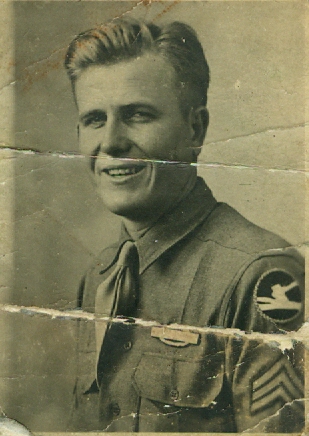
Staff Sergeant James William Hendrickson, Jr. 1945
4. Q: How long did it take you to complete the book?
A: I started scanning the letters at Christmas time in 2010. I read the letters as I scanned, and the idea for the story took root over the next few months.. I began the actual writing four months later. My goal was to complete the book in time for my Mother’s ninetieth birthday on December 8, 2012. Then I received a diagnosis of cancer. Surgery, chemo, and radiation treatment began in August of 2012. I printed a “rough draft” which was a hard-cover family version. Only twenty copies came off the press. Once I had recovered my faculties, such as they are, post chemo, I edited the book with the help of my Writer’s Workshop group. The book has been up on Amazon as a Trade Paperback and e-version since September of 2013.
5. Q: Your mother is a character in the book. What was your mother’s reaction to the story?
A: She says she feels like quite the celebrity. The book has received a very positive response, and she has heard from people from her home town as well as relatives and friends. She did say that she thought I was too hard on Grandma Hendrickson. And every time she reads a section through again, we have a conversation about that during our phone time. I still phone her every Saturday morning. She always tells me that my father would be very proud to read it…and we both laugh. We can see him shaking his head to think that his letters would be available to the world to read.
6. Q: How do you think your father would react to the book?
A: I can only hope that he would feel like it was a true depiction of who he was and who the men were who fought alongside him. Dad’s life was one of sacrifice for others. I think this is true of most men who serve their country, but especially so for the boys who fought in World War II out of conviction for a cause and a sense of duty. Dad wanted to bring his brother back from PW camp. He wanted to right a wrong. He lived his life by those convictions.
7. Q: Would you characterize this book as a romance more than a war novel?
A: I never saw it as a romance. These were just my parents. It was only after reading it aloud, six pages at a time, to my editing group that I had any sense at all that it would be perceived as such. One woman said, “Gail, I have fallen in love with your father.”
I do think that the history piece and the war story he tells might fall into the category of edging on being anti-war. But I have a strong notion that most men who go to war would like to be certain that their children will not have to. Dad’s idea was that this would be the war to end all wars.
The answer to your question should probably be that the book will be seen by the reader as they wish to view it. There are two history teachers I know of who are using the web site for the book with lesson plans to provide a research source for studies of WWII. And there are women who read it just to enjoy the story line provided by the strong relationship my parents were able to forge in war time.
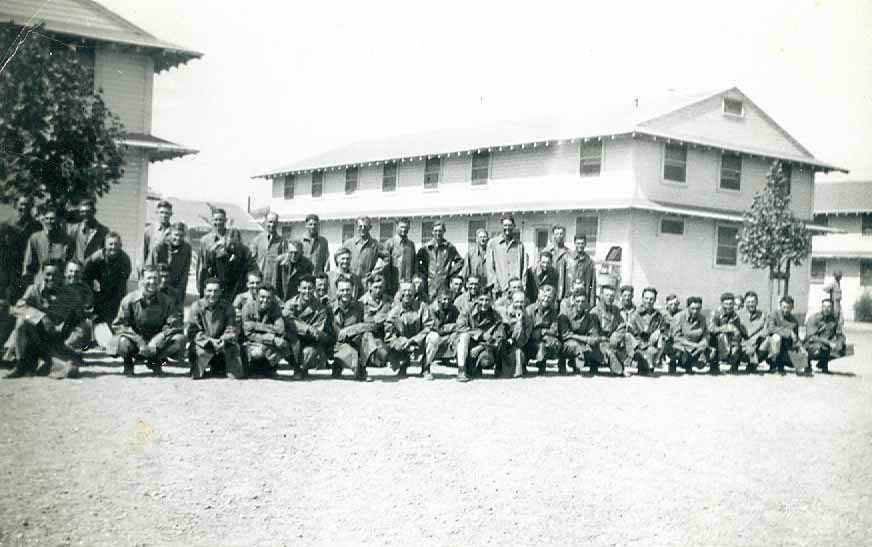
Camp Roberts, Burbank, California
8. Q: The link to your web site is included as a section in the book. Why is that?
A: When I wrote the first version, I scanned all the letters, pictures, etc. and copied them to a thumb drive for my family. As I was editing the final book, I realized that the graphics would make the book far too expensive for printing. Also, folks who read it before publication were, for the most part, interested in the letters. So I decided to set up a web site where people could go and find every letter, document, and photograph Mom saved from those two years of war time. HeWroteHerEveryDay.com is up and running for those who are interested.
9. Q: What kind of response have you gotten from people who have read your book? You mention that the response has been largely positive. Any negatives?
A: Yes, the response has been warm and generous. But then, the people who know me would probably not tell me if they didn’t like it.
Many people who read the advance manuscript wanted to know more about Dad after he got home. So the published version has a brief epilogue that outlines Dad’s life post war.
I did have one relative who wasn’t happy about a small anecdote in the book about someone on my mother’s side of the family. That surprised me, because the story is primarily about my father and the Arizona Hendricksons. But that was the only sour note in the symphony…at least so far.
10. Q: Will there be a sequel?
A: I honestly don’t think so. This book was unique in that it was driven by real events that were already written about by the subject of the book, my father. I am too close to the years following Dad’s war service. That was my childhood and I was his first baby since the twins were 5 months old by the time he got home. I would not know where to begin.
And, after all, the whole point of the book is that my father was just an ordinary man who lived through extraordinary times. He was sent to war. They didn’t just hold the Germans off; they turned the tide of the war. Dad wasn’t expected to survive, but he—and so many thousands of others—did survive. And they came home to America and lived ordinary lives. While that story might not make a good sequel to this book, it certainly made a good life for me and those of my generation. It’s a legacy that I hope we will be able to pass along to our children.
Lloyd Lofthouse, this blog’s host, is a former U.S. Marine and Vietnam Veteran.
His latest novel is the award winning suspense-thrillerRunning with the Enemy. Blamed for a crime he did not commit while serving in Vietnam, his country considers him a traitor. Ethan Card is a loyal U.S. Marine desperate to prove his innocence or he will never go home again.
And the woman he loves and wants to save was fighting for the other side.
To follow this Blog via E-mail see upper left-hand column and click on “FOLLOW!”
As a WW II combat veteran of the 84th Infantry Division (Railsplitters), serving in the same unit as the subject of this book, I [Allan Wilford Howerton] was honored to be asked to read and react to the manuscript of He Wrote Her Everyday prior to its publication.
Note from Blog host: the 84th Infantry Division landed on Omaha Beach, November 1 – 4, 1944, and fought in the Battle of the Bulge in December 1944 – January 1945.
Ms Lindenberg, in getting the story together, has made a grand contribution to the literature of World War II. In addition to a war story, it is a wonderful book about love, longing, and faithfulness under unimaginable hardship and uncertainty.
Anyone with an interest in World War II will like He Wrote Her Everyday. It tells, among many other things, a true story about the plight of replacements rushed to the front lines to augment units suffering heavy casualties in the Siegfried Line and the Battle of the Bulge.
I was there, an infantryman in the same division, but thankfully not a replacement. They were assigned, often in the middle of a battle, knowing no one and without buddies to rely on. Many became casualties but those who survived adjusted pretty rapidly and went on, like the subject of this book, to make major contributions during the drive across Nazi Germany to end the war.
Writing about war experience is difficult for those who experienced it first-hand. It is nearly impossible for someone who wasn’t there to give a believable picture of how things really were. Use of the letters written during the war gives this book a strong sense of the soldier’s walk through the snow.
Lloyd Lofthouse, this blog’s host, is a former U.S. Marine and Vietnam Veteran.
His latest novel is the award winning suspense-thrillerRunning with the Enemy. Blamed for a crime he did not commit while serving in Vietnam, his country considers him a traitor. Ethan Card is a loyal U.S. Marine desperate to prove his innocence or he will never go home again.
And the woman he loves and wants to save was fighting for the other side.
To follow this Blog via E-mail see upper left-hand column and click on “FOLLOW!”

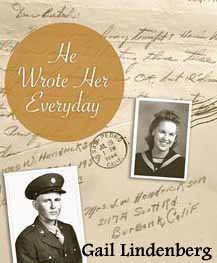
![Pageflex Persona [document: PRS0000035_00034]](https://thesoulfulveteran.com/wp-content/uploads/2013/05/april-5-website-cover.jpg)
 The Soulful Veteran's Blog