Kill Shot: a Walk in the Park

This is a work of fiction based on the experiences of its author, Robbie Rea, a qualified sniper, who served in the U.S. Marines for four years before joining special forces and training as a medic. He fought in the Middle East as a Green Beret. His forthcoming completed memoir is called “Next Mission”.

Guest Post by Robbie Rea

I walked in the park with my grandkids and smiled as I watched them run ahead and hide behind a tree. They thought I couldn’t see them and I played along until they ran up behind me and yelled, “Argh!” Playing along, I jump and then fell over like I was so scared that I passed out. All four of them climbed on top of me saying, “We got you papa! We got you!”

As I lay there wrestling with the little ones, I see Lisa smiling down at me. The sun shines behind her head illuminating the blonde hair around her beautiful face. She looks like an angel.

Suddenly everything went black as I felt my left wrist vibrating.

As I clicked the button on the side of the watch to stop the vibration, all of my senses fed my brain information so I could figure out where I was. My nose was the first sense to alert me of the familiar musty smell of dirty clothes, body odor and farts in the sleeping bag. My ears then picked up the sounds of snoring and other breathing sound of people sleeping. My skin simultaneously felt the sleeping bag that surrounded me and the tight stretched canvas cot that I lay on. Now I knew that I was back in Afghanistan. That forsaken area of combat that I often compared to hell.

I had been dreaming, and I want nothing more than to go back to my dream and stay there.

Once dressed, I make my way to the team room to prepare for battle. I check all my gear and make sure nothing will cause me problems during today’s mission. It was 3 a.m.local time.

As I checked the gear and got ready I thought of my family back home in Clarksville, TN. Comparing what I was doing now in contrast to preparing my kids lunches while they ate breakfast and then get their backpacks with homework into the car so I could drive them to school. On the rare occasions that I was home I’d insist on driving them to school instead of having them take the bus as usual. This allowed me to spend more quality time with them that I learned to appreciate more after each deployment.

The next step is to sound proof everything metal with black electrical tape so anything metal won’t touch anything else and make a clicking or clanging sound.

When all of the gear is prepared, the team puts everything on and then jumps up and down to make sure that nothing will make enough sound for anyone to hear if they are less than 30 feet away.

The last step in preparation was to take a ziplock bag and cut it down the sides so I could slip it over the receiver of my rifle. I would then tape up the sides to seal the metal parts to keep them safe from the sand and dust. As I did this and remembered putting sandwiches for my kids in the same ziplock bags, I wondered if it was time to transition so I could be home more often.

Then I remember why I am here. To prevent the bad people of the world from ever making it to my home and spreading their evil ways and robbing us of our freedom.

The sound of the intercom snap me back to reality as it announced our helicopter ride would be ready in five minutes.

My team on this day consists of myself and only three others for security.

As we made our way to the helicopter landing pad we checked each other’s gear one last time.

As we approach the helicopter, we heard the loud whining sound of the blades and felt the downdraft of hot air pushing against us.

As the Blackhawk lifted into the desert air the adrenaline kicked in and I took a deep breath to try to remain calm. Now is the time to slowly push back any thoughts or feelings from home. I had to numb myself to any human feelings and become the cold deadly warrior that was needed to get the job done.

The helicopter dropped us at our checkpoint and we began the 12 mile hike to our attack point. With every step that took me closer to our target, I mentally hardened myself more and more knowing that what I was about to do could have no feeling and no remorse. Only the calculated and well-trained deadly movements of a warrior was needed at this point.

As we approached our final destination, one of the security men stayed behind to protect us from any attack coming from that direction as the three of us proceeded forward just over the hilltop in front of us.

As we came to the peak of the hilltop, we lowered our bodies to crawl the rest of the way. Crawling, the sand worked its way into my clothes and body. The sun was just starting to creep up and the sky began to slowly change from black to purple.

Reaching my final point, I prepared for my task. Every movement from here on would be very slow and deliberate so if anyone below was looking, they would not pick up any movement.

It took about 40 minutes to prepare the hide site and now I slowly slid the sniper rifle from its case. Once in place, I positioned myself behind the .50 caliber rifle, flipped the sight covers off, and looked down range towards the target area.

The convoy quickly moved down the dirt road to the compound 2,000 meters away. The small military contingent positioned themselves so they would be ready when the general arrived. Their positioning confirmed that I was in the correct spot to make the shot.

As the convoy got closer and I knew that I was about to end someone’s life, I began to think about him as a human being. Was he a father? A brother? A husband? A son? Would his family mourn him? How many people would be at his funeral? I didn’t know this man, but I knew what my orders were. The picture of his face was burned into my memory as I’d studied his picture for hours.

Just before the vehicle came to a halt, the general emerged from his tent in full dress uniform. He walked toward the black Range Rover and waited for the door to open. I also waited with the crosshairs of my sights resting on the general’s chest.

The door to the vehicle opened and a man in robes exited. The general approached the man and gave him and hug and kiss on each cheek.

As my finger squeezed the trigger I thought momentarily of my children and grandchildren and of Lisa. There was a brief moment of hesitation and then the flooding thoughts of 9/11, the twin towers, Americans dead and naked being dragged through the streets.

BANG!

The bullet was on its way. I waited to see the red mist as the round went through the Arab benefactor and the general he was providing money and weapons to kill Americans.

I saw their lifeless bodies spilt in half and drop to the ground. Then the sound of the large sniper rifle reached the target and everyone there dropped to the ground.

I was always amazed at how people react when a sniper bullet hits its target and they all freeze in disbelief to what they see but then they always react when the sound of what happened registers to them.

Everything up to this point was in slow motion and everything from this point forward would be as fast as I could move.

Years of training took over as I put the rifle back into its case and quickly broke down the hide position. Then I quickly crawled up and over the hilltop and after getting safely over the other side, my two flanking security guards and I broke into a full out run.

Our rear security was already on the radio confirming our ride home.

We ran for 2 miles nonstop until we reached our extraction point and boarded the Blackhawk.

On the ride back to base, I heard the others telling the crew what had just happened. They were all laughing and high fiving each other. I sat there thinking about my grandkids and Lisa playing in the park knowing that they were still safe at home because two more terrorists were now out of business.

Only then did a smile slowly slip across my face.

_______________________

Lloyd Lofthouse, the host of this blog, who is not the author of this guest post, is a former U.S. Marine, Vietnam Veteran, journalist and award winning author. If you enjoyed reading Robbie’s short story, keep an eye out for his revealing and shocking memoir, Next Mission. The book is scheduled for release later this year.

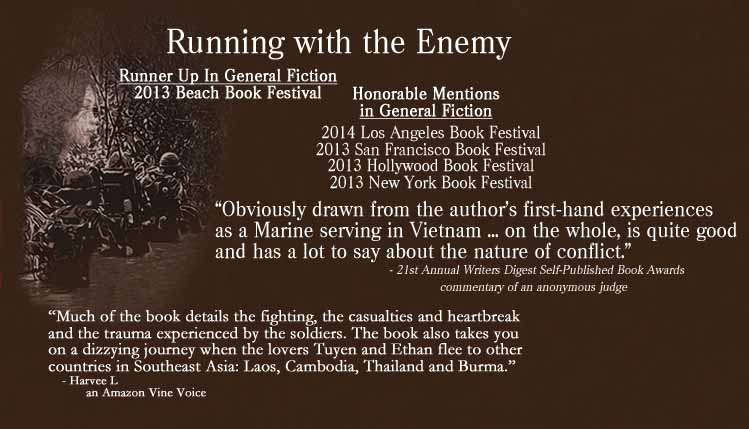
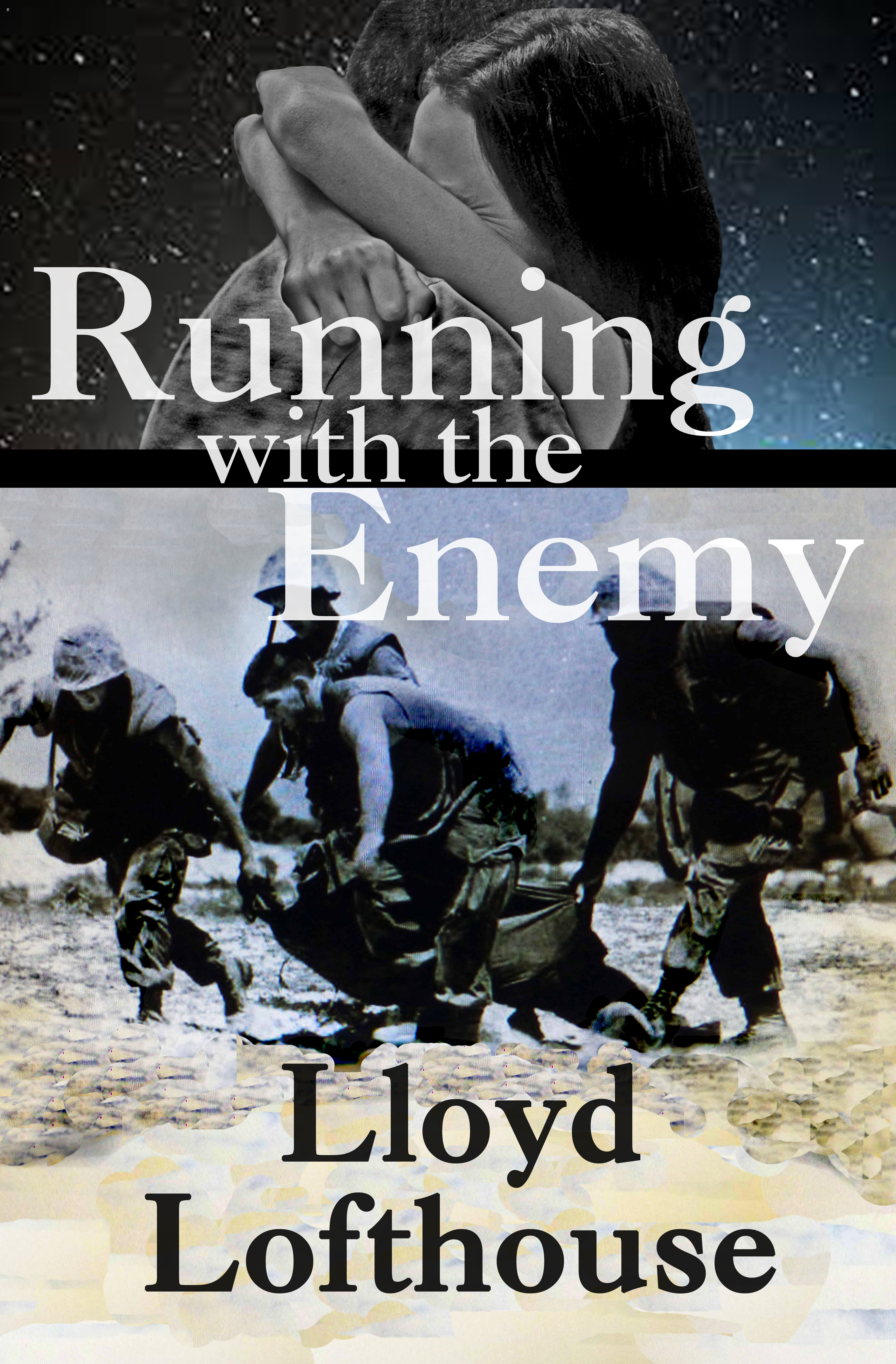
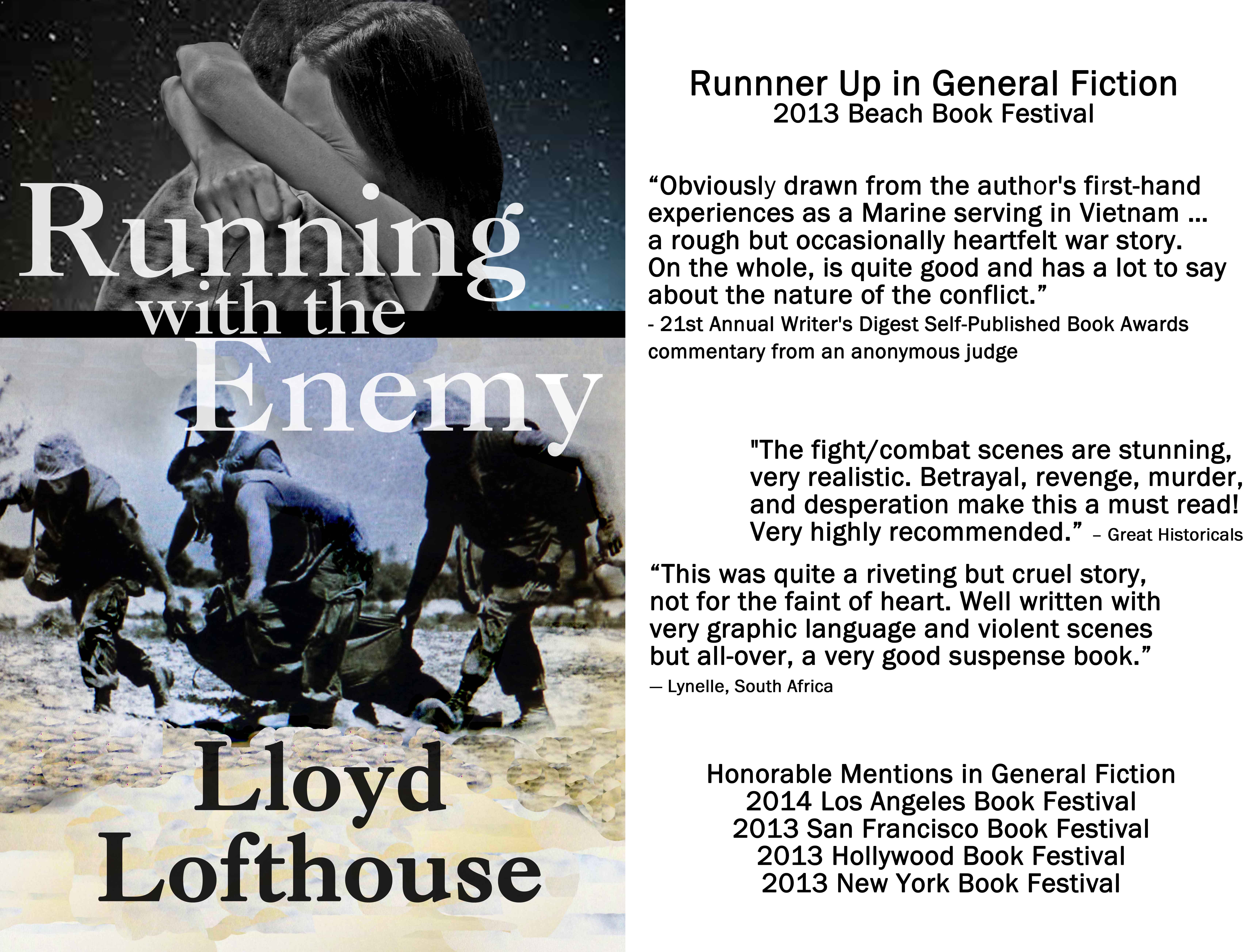
Lloyd’s second novel is the award winning love story and suspense-thriller Running with the Enemy. Blamed for a crime he didn’t do while serving in Vietnam, his country considers him a traitor. Ethan Card is a loyal U.S. Marine desperate to prove his innocence or he will never go home again.
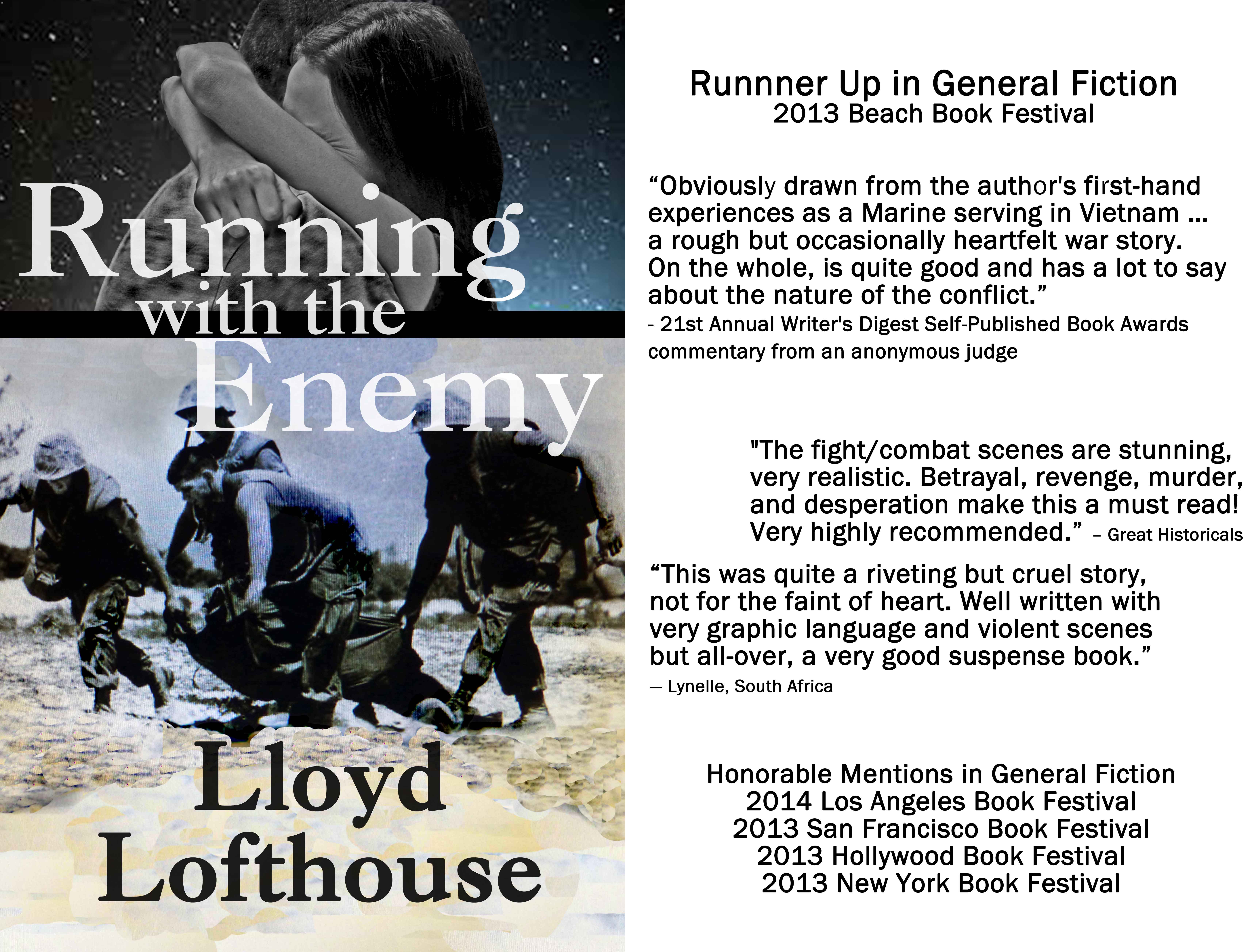
Promo Image with Cover Awards

Where to Buy

To follow this Blog via E-mail see upper left-hand column and click on “FOLLOW!”
Invisible Enemies: Life on the Front Lines of a Modern Vietnam

It isn’t a secret that military veterans tend to be conservative and vote Republican. In fact, Gallup reports that veterans are more likely to be Republican than are those of comparable ages who are not veterans. The reason I mention this is because Brian Welch’s memoir takes readers through Army boot camp to Iraq for two deployments, and Welch is brutally honest with his conservative views—a fresh perspective that most who serve in the U.S. military share but is missing from many films about war where the focus is usually on heroism, debauchery or the horrors of war. In fact, most films seem to be more concerned with political correctness than reality. But Term of Service (click link to visit Amazon and buy this book) avoids Hollywood hype and serves us combat as it really is.

Term of Service Cover

When we first meet the author in boot camp, he’s eager to fight for his country, but that eagerness fades when confronted by an elusive enemy that is seldom seen. For instance, unseen insurgents planting roadside bombs; invisible snipers shooting from a distance, or terrorists who become human bombs that infiltrate our lines and blow themselves up among U.S. Troops. The type of combat our troops faced in World War I, World War II and Korea seems to be a thing of the past. Instead of armies clashing with armies, today our troops often fight an invisible enemy.

This modern form of warfare grinds our troops down just like it did to combat vets in Vietnam where I fought decades earlier.  I think Welch’s honesty is refreshing, and anyone who wants to experience the tension of combat—the endless waiting not knowing what will happen next—and what it does to most of the troops, should read this book. War takes boys, runs them through the blades of a blender and when they come out, they are often cut and bruised physically and mentally.

_______________________

Lloyd Lofthouse is a former U.S. Marine and Vietnam Veteran.

His second novel is the award winning love story and suspense-thriller Running with the Enemy. Blamed for a crime he didn’t do while serving in Vietnam, his country considers him a traitor. Ethan Card is a loyal U.S. Marine desperate to prove his innocence or he will never go home again.

Promo Image with Cover Awards

Where to Buy

To follow this Blog via E-mail see upper left-hand column and click on “FOLLOW!”
 

The Politics of Deceit

Every Thursday afternoon I drive to a local VA medical clinic and join a veteran writers group. One of the regular members, who never served in combat, seems obsessed with the glory of war. He can’t seem to hear enough stories from us combat vets. To listen to him, it seems that he sees war as wonderful and proof that the United States is defending and supporting democracy and freedom everywhere in the world.

Most combat vets don’t think the same. In fact, I haven’t known a combat vet yet who doesn’t question everything an elected representative or corporate CEO claims on almost any topic that leads to more profits or power for a member of the 0.1%. For some reason, being shot at by bullets, mortar rounds and rockets—not counting the threat of stepping on a land mine and getting your legs blown off—creates skeptics of most combat vets who saw action.

Now I have read for the first time in Newsweek [RECOMMENDED READING] that the POW-MIA flag was another propaganda campaign backed by President Richard Nixon to fool the American people and demonize the enemy and create justification for the Vietnam War and his illegal bombings of Cambodia and Laos that he kept secret from the U.S. Congress (National Geographic Magazine). The POW-MIA flag was originally created to embarrass President Lyndon Johnson as a way to end the war instead of turning the Communists in North Vietnam and their South Vietnamese Allies into monsters who—it turns out—in reality didn’t hold a candle to the monsters the United States and its dictator in South Vietnam were.

If the United States is a great country that supports democracy and freedom throughout the world, why have there been so many repeated lies to start wars?

It’s obvious that the Vietnamese, who fought the United States, were not doing anything different than the Vietnamese have done before when they fought for 1,000 years to be free of China’s occupation starting in 111 BC and continuing to 938 AD.

The Vietnamese also fought French occupation for decades—French Indochina was formed in October 1887. After Gia Định fell to French troops in 1859, many resistance movements broke out in occupied areas. In the north, most movements were led by former court officers and lasted decades, with Phan Đình Phùng fighting in central Vietnam until 1895. In the northern mountains, former bandit leader Hoàng Hoa Thám fought until 1911. Even the teenage Nguyễn Emperor Hàm Nghi left the Imperial Palace of Huế in 1885 with regent Tôn Thất Thuyết and started the Cần Vương (“Save the King”) movement, trying to rally the people to resist the French. He was captured in 1888 and exiled to French Algeria. By 1900 a new generation of Vietnamese were coming of age who had never lived in precolonial Vietnam. These young activists were as eager as their grandparents to see independence restored.

Then beginning in 1950, American military advisors arrived in what was then French Indochina. U.S. involvement escalated in the early 1960s and escalated dramatically after the so-called Gulf of Tonkin incident that resulted in Congress giving the U.S. president authorization to increase U.S. military presence.

I arrived in Chu Lai, Vietnam in 1965 with the 1st Marine Division’s 1st Tank Battalion. At the time we didn’t know that the Tonkin Gulf incident was exaggerated and based on a lie. The original American report blamed North Vietnam for both incidents, but eventually became very controversial with widespread claims that either one or both incidents were false, and possibly purposefully so. While four North Vietnamese sailors were claimed to have been killed and six more wounded, there were no U.S. casualties.

In 1995, former U.S. Secretary of Defense Robert McNamara met with former Vietnam People’s Army General Võ Nguyên Giáp to ask what happened on 4 August 1964 in the second Gulf of Tonkin Incident. “Absolutely nothing”, Giáp replied. Giáp claimed that the attack had been imaginary—manufactured by President Lyndon B. Johnson’s White House staff with his permission.

Then there is President G. W. Bush’s lies about Weapons of Mass Destruction in Iraq causing Congress to once again authorize another war based on more exaggerations and lies.

If you have watched the videos and read this post, are you still a deaf, dumb and blind U.S. patriot totally obedient to the elected and corporate leaders of the United States?

I wonder if you also know that similar lies and propaganda have been used for decades in the United States to destroy the labor unions of middle class workers and also demonize public school teachers—all for profit and power.

_______________________

Lloyd Lofthouse is a former U.S. Marine and Vietnam Veteran.

His second novel is the award winning love story and suspense-thriller Running with the Enemy. Blamed for a crime he didn’t do while serving in Vietnam, his country considers him a traitor. Ethan Card is a loyal U.S. Marine desperate to prove his innocence or he will never go home again.

Best Choice on Jan 21 of New Cover

This is a love story that might cost the lovers everything—even their lives.

To follow this Blog via E-mail see upper left-hand column and click on “FOLLOW!”
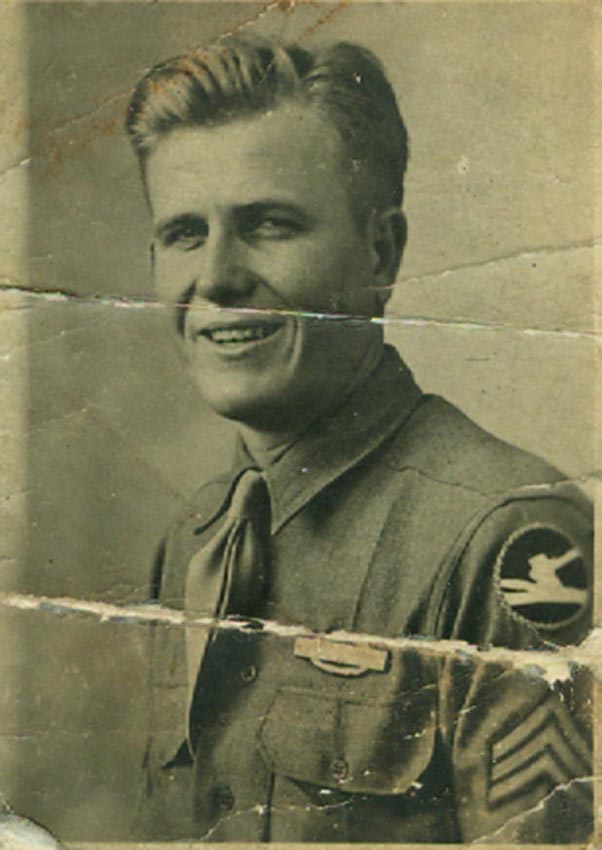
He served with love, courage and honor – a review of “He Wrote Her Every Day”

He Wrote Her Every Day by Gail Lindenberg is a true story that warms the heart. Barely married a year, Jim leaves his young wife, the love of his life, and ends up fighting in Europe during the final months of World War II. He experiences a lot of combat and is awarded a Silver Star when he risks his life leading a charge against a Nazi machine gun position.

jwh-staff-sargeant-1945James (Jim) William Hendrickson, Jr.

His brother Bill is in a prisoner of war camp somewhere in Germany, and Jim dreams of being the one who liberates him. You will need to read the book to find out what happened to Bill.

Jim also seldom missed a day to write a letter or add to one he was working on. Between being in the field chasing the enemy, on guard duty and/or in combat, he always finds time to write even when everyone else is trying to sleep—even when he is in a filthy, cramped foxhole in freezing winter weather.

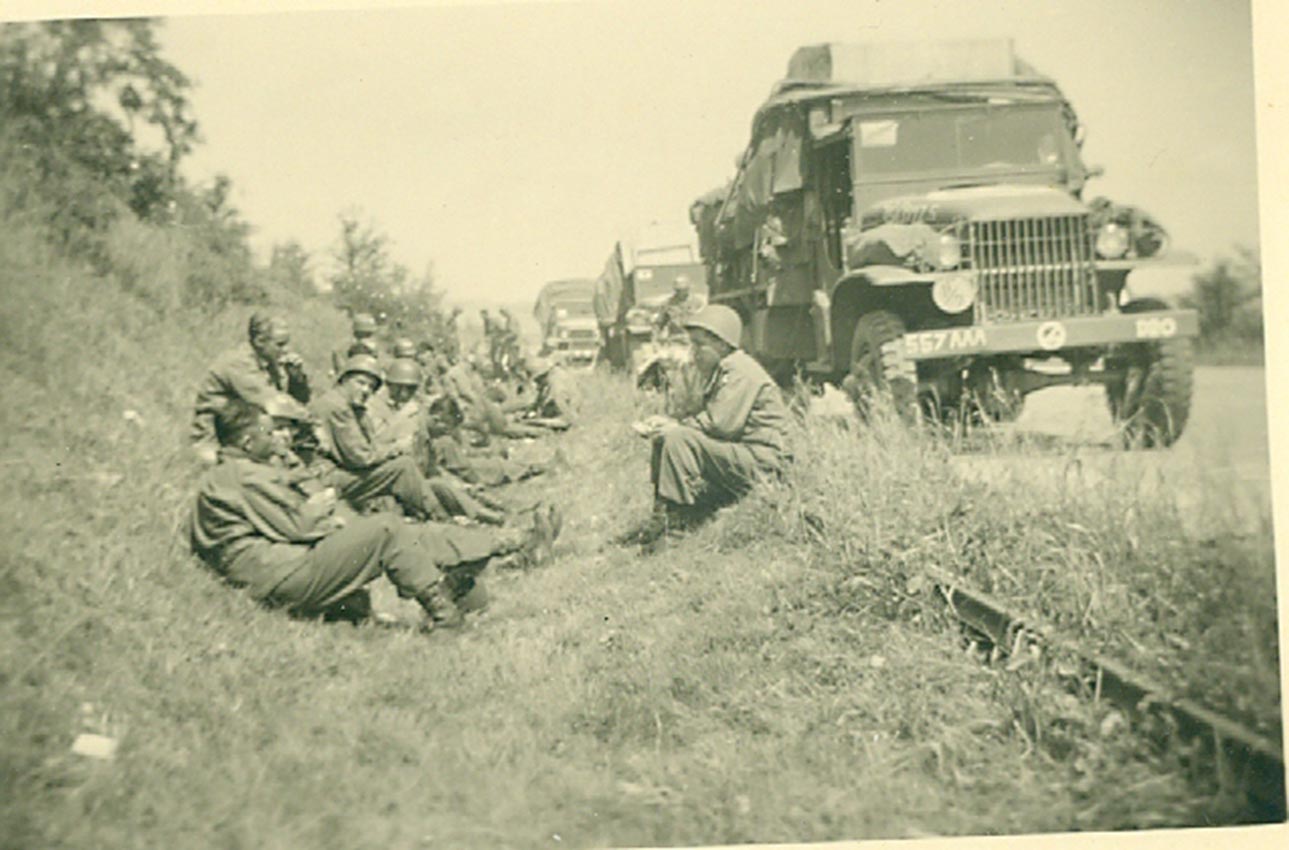
pix-in-germany-eating-ks

somewhere in Germany 1944

I’ve never read a seamless story that grounded me in both the home front and a combat zone like this one did—especially after the war and the long months of waiting in Germany when Jim is anxious to return home but there is one delay after another. I kept turning the pages waiting for that moment when Jim finally made it back home to Arizona, and the conclusion brought a big smile to my face as I remembered the moment when I arrived home from another war.

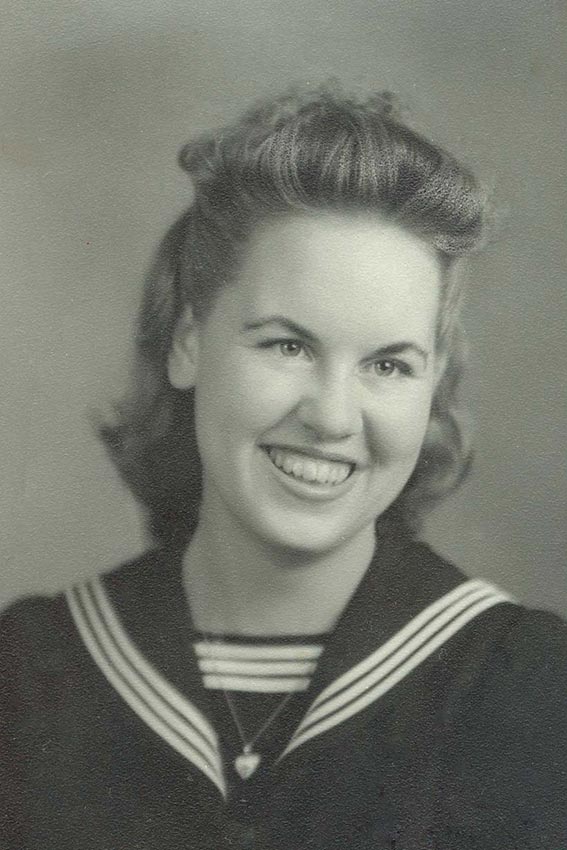
irene-at-190001edit

Irene (Butch) – Jim’s wife and the love of his life

The author sent me a copy of the paperback for my honest review, and don’t miss the rest of the photos you will discover at He Wroter Her Every Day.com. This is a story that was lovingly researched and written by one of his daughters—a wonderful story that immortalizes a father who served his country with courage and honor.

_______________________

Lloyd Lofthouse is a former U.S. Marine and Vietnam Veteran.

His second novel is the award winning love story and suspense-thriller Running with the Enemy. Blamed for a crime he didn’t do while serving in Vietnam, his country considers him a traitor. Ethan Card is a loyal U.S. Marine desperate to prove his innocence or he will never go home again.

Promo Image with Cover Awards

This is a love story that might cost the lovers everything—even their lives.

To follow this Blog via E-mail see upper left-hand column and click on “FOLLOW!”
Discovering Jacqueline Winspear’s Maisie Dobbs with my ears

I can’t remember when I paid $3 at Half Price Books for an audio book of Pardonable Lies by Jacqueline Winspear. You see, I enjoy reading. That’s why I buy books—audio and the old fashioned kind on paper—and DVD’s of films and TV series faster than I watch or read/listen to them, and they are all around me in the study where I write.  They are also books in storage under the house. I think I’ll have to live another thousand years to read them all—as long as I don’t buy more.

In an attempt to read faster, I started reading with my ears when I’m in the car on the way to the farmer’s market, Costco, Trader Joe’s and Whole Foods. And I drive in the slow lane to gain more listening time.

The reason I am now a fan of Winspear’s work, and specifically Maisie Dobbs, the main character in eleven of the author’s twelve novels, is because Maisie has a serious and convincing case of PTSD, and I came home in 1966 from Vietnam with PTSD.

As I wrote this post, I visited the author’s website, and saw that Pardonable Lies is the 3rd novel in the Maisie Dobbs series, and I smiled, because that means I have ten more to read—hopefully with my ears since I’m reading about four or five audio books to every tree book.

This is where I copy and paste from Winspear’s page on The World of Maisie Dobbs: “The period of time from the mid-1900’s until the 1930’s was a time of unprecedented change in Britain. The devastation of The Great War, mass emigration to America and Canada, rapid social changes—not least votes for women—to be followed by the Roaring Twenties, the General Strike and the Depression. It was a time of burgeoning artistic expression, with the movements that we now know as Art Nouveau and Art Deco demonstrating a dramatic departure from the Victorian age.

“The Great War demanded that there was hardly a field of endeavor left untouched by a woman’s hand, so that men could be released for the battlefield. The first women joined the police force, they worked in construction, on the trains and buses, on the land and in all manner of military support roles. The made munitions and they worked close to the front lines as nurses, ambulance drivers; as intelligence agents and code-breakers. And after the war, it was these same remarkable women who, more often than not, faced a life alone, for the men they might have married had been lost to war.

“It was also during these first decades of the century that scientific methods of detection were being rapidly developed. From medicine to international travel to the study of the human mind, all benefited from a time that was both terrifyingly painful in terms of the cost to human life, and yet demonstrated a hunger for innovation and a fascination with the avant-garde.

“It is in this world that Maisie Dobbs came of age.”

_______________________

Lloyd Lofthouse is a former U.S. Marine and Vietnam Veteran.

His second novel is the award winning love story and suspense-thriller Running with the Enemy. Blamed for a crime he didn’t do while serving in Vietnam, his country considers him a traitor. Ethan Card is a loyal U.S. Marine desperate to prove his innocence or he will never go home again.

Low Def Cover 8 on January 20

This is a love story that might cost the lovers everything—even their lives.

To follow this Blog via E-mail see upper left-hand column and click on “FOLLOW!”
Capturing the pulse of a nation at the end of an unjust war

While reading Last Plane Out of Saigon, an opinionated but accurate memoir by Richard Pena and John Hagan, I did a lot of reflection and here are some of my thoughts.

During a war, the U.S. government has the power to draft—against their will—recruits who might end up fighting in a just or unjust war. Then there are those Americans who join voluntarily to serve in the military. It’s been 49 years since I served as a volunteer in the U.S. Marine and fought in Vietnam, and for the last several decades, after a lot of research to understand what happened and why the U.S. started that war, I have concluded that the war in Vietnam was wrong and it was based on lies. I think the same about the Iraq War.

There is a big difference between volunteering versus being drafted and forced to serve, and two-thirds of the U.S. troops who served in Vietnam were volunteers and about 70% of those who were killed were also volunteers and 62% of the troops killed were age 21 or younger.

For me, a few weeks before I graduated from High school, I voluntarily surrendered the freedom most Americans take for granted and joined the U.S. Marines on a delayed deferment. In fact, once you join any of the branches of the U.S. military, you leave your free choice behind, and you don’t get it back until after you are honorably discharged. The military is another world with its own courts, hospitals and prisons, and the troops are trained to serve and obey without question. Disobey and a recruit might end up in prison or even executed for the crime of treason.

In the summer of 1965, I was in boot camp at MCRD in San Diego when we heard that the U.S. war in Vietnam was escalating and once we left boot camp every recruit was going to be on his way to fight. That scuttlebutt turned out to be true, and I arrived in Chu Lai, Vietnam, about 90 miles south of Da Nang on March 28, 1966.

About halfway through my combat tour, the first draftees started to arrive, and one was assigned to the communications platoon where I was a field radio operator. To me, and the other Marines in that platoon, it was considered wrong that anyone should be forced to serve in the U.S. Marines and fight in one of America’s wars, and we went out of our way to shelter that draftee.

In Richard Pena and John Hagan’s “Last Plane out of Saigon,” on page 100, Pena wrote something that I agree with: “I submit that the true American patriots are those who see the faults of our country and do not hide from them but instead attempt to rectify them.”

I didn’t always think that way. As a child, I grew up in a totally non-political family, and at the same time I was also being brainwashed by patriotic films disguised as adventures, thrillers and suspense out of Hollywood—for instance, most John Wayne movies. My parents never voted and the one time I asked my father why, he said all politicians were crooks, and it was a waste of time to vote because it wasn’t going to change anything. When I was in college on the GI Bill 1968 – 1973, I would become more aware and today I disagree with my father, because I think that when we don’t vote, the criminals in the White House and Congress get away with their crimes, but active, knowledgeable voters can change that.

To understand the dramatic attitude shift of the Vietnam War in the United States, in August 1965, when I reported to boot camp at MCRD, 62% of Americans agreed with the war. By the time I flew home from Vietnam near the end of December 1966, that number was down to about 52% and dropping. In 1968 when I was honorably discharged from active duty, support for the war was down to 37%, and by 1971, during my third year of college on the GI Bill, support was down to 28%.

“Last Plane Out of Saigon” is Richard Pena’s story, and it roughly captures the nation’s mood at the end of the war. Pena was drafted—forced to fight in a war that was clearly wrong. His book is a journal of what he felt, thought and did in Vietnam where he witnessed the horrors of war working in the operating room of Vietnam’s largest military hospital in Saigon.

I served in Vietnam in 1966 during the buildup. Soon after I left, U.S. troop strength reached about a half-million. But by the time Richard Pena arrived near the end of the war as a draftee in the fall of 1972, U.S. troop strength in Vietnam was down to about 100,000 and dropping.

I think many of American’s troops—both volunteers and draftees—served honorably for mostly honorable reasons, but many of the leaders of the United States who supported the war and sent the troops to fight justified their criminal actions based on lies and deceit.

That leads to a question I have no answer for. How does one serve honorably in a dishonorable war? As for the 5-stars I gave this book, how can I justify loving a book about a dishonorable war? I awarded the 5-stars based on the honesty of the book that revealed the reason why more than 70% of Americans were not allowing themselves to be fooled by the liars who started the war.

_______________________

Lloyd Lofthouse is a former U.S. Marine and Vietnam Veteran.

 Low Def Cover 8 on January 20

His latest novel is the award winning suspense-thriller Running with the Enemy. Blamed for a crime he did not commit while serving in Vietnam, his country considers him a traitor. Ethan Card is a loyal U.S. Marine desperate to prove his innocence or he will never go home again.

And the woman he loves and wants to save was fighting for the other side.

To follow this Blog via E-mail see upper left-hand column and click on “FOLLOW!”
Killing Season was obviously too brutal for many Americans—even the critics

According to Box Office Mojo, Killing Season’s widest release was to 12 theaters for seven days and then it went to DVD. I think this decision was made because most film audiences in American prefer romance and fantasies—not the brutal, bloody reality of gory, brutal up close and personal hand-to-hand combat.

The film was released on July 11, 2013, and it was a flop at the box office earning a total of $39,881 in theaters. Peter Sobczynski reviewed the film and gave it less than one star. Sobczynski says, “The film is quite awful—badly written, ineptly staged, horribly acted, historically suspect and boring beyond belief—and fully deserving of its ignominious fate.”

Here’s the thing, I don’t agree with Sobczynski. I didn’t think it was a bad film—and was that because I have no taste, or because I’m a former U.S. Marine who fought in Vietnam?

To me, this film reveals rather brutally what combat does to two men, and how war might leave mental scars that run deep. In fact, similar brutality appears in my novel, “Running with the Enemy”. If you have a weak stomach and lose sleep easily over reading about or watching extreme violence, this film and my novel are not for you.

Here’s a brief plot summary without spoilers: In Belgrade, Serbia, former Scorpions soldier Emil Kovač (Travolta) meets an informant to retrieve a file on American military veteran and former NATO operative Colonel Benjamin Ford (De Niro). Ford has fled to a cabin retreat somewhere in the Appalachian Mountains, to forget the war. Now a recluse, he meets Kovač, posing as a European tourist, during a hunting trip. The two men become friendly, until Kovač reveals his true identity. Intent on revenge for something Ford allegedly did in Serbia, he initiates a gory game of cat-and-mouse with Ford. The latter is badly injured but is quick to rebound.

I find it interesting that the film had 257 customer reviews on Amazon, and 132 were 4-and-5 star reviews—that’s 51%.  Only 62 were 1-and-2 stars—that’s 24%. More than twice as many reviewers enjoyed the film, and I was one of them.

The Most Helpful Review said, “Killing Season is a movie that thrills and leaves you thinking. It is timely because the tension echoes many of the current situations going on in society. In their own right each of the two in the movie have their reasons (and justifications) for their points and places. In the end (sorry, no spoiler here) the stark realization of the view from the other side really brings home the powerful moral of this movie. De Niro is his usual amazing self and Travolta delivers a nearly convincing eastern bloc persona. Well worth seeing.”

I also scanned the 1-star reviews and the most detailed one I read ended with: “If you’ve ever wanted to see De Niro piss on his own leg to heal a gaping wound this is your chance. You won’t get another.”

I asked Google why it might have been a good idea for De Nrio to piss on his wound, and Wise Geek.org says, “As difficult as it might be for some to comprehend, the medical benefits of urine have been widely studied in many areas including, but not limited to, the effect of pee on wounds. Normal urine is not only pH balanced, it is non-toxic and is believed to contain many nutrients and healing compounds. Normal urine is both anti-viral and anti-bacterial, making it a potentially ideal treatment for cuts, abrasions, wounds, and skin infections of any kind.”

>>>Focus on the key word there: “normal” urine.<<<

I don’t know about you, but don’t expect me to pee on my wound if I was in the same situation. I’d rather use powdered cayenne. I keep some in the car, bathroom, kitchen and my wood shop. In fact, Earth Clinic.com says, “For stopping profuse bleeding, we eagerly recommend using powdered cayenne to speed up the coagulation process and close the wound.”

I learned about using powdered cayenne on wounds when I belonged to a wood-carving club. Every veteran wood carver in that club had some fine ground pepper/powdered cayenne stored in their tool box with their super-sharp carving knives—just don’t put powdered cayenne or black pepper in your eyes, mouth or nose. It burns really bad, but surprisingly doesn’t burn when sprinkled on cuts and gashes—at least that has been my experience.

_______________________

Lloyd Lofthouse is a former U.S. Marine and Vietnam Veteran.

His latest novel is the award winning suspense-thriller Running with the Enemy. Blamed for a crime he did not commit while serving in Vietnam, his country considers him a traitor. Ethan Card is a loyal U.S. Marine desperate to prove his innocence or he will never go home again.

Low-Def Kindle Cover December 11

And the woman he loves and wants to save was fighting for the other side.

To follow this Blog via E-mail see upper left-hand column and click on “FOLLOW!”
“The Patrol” is a film based on actual events in combat

I bought the DVD for The Patrol at Costco thinking it was about American special-forces troops in Afghanistan, but it wasn’t.  It was about a British Army Patrol often under attack from an unseen enemy. The UK troops in the film return fire but have no way to know if they inflicted any casualties on the Taliban. I think we tend to forget that U.S. troops aren’t the only forces fighting in Afghanistan. To date, the UK has lost 453 troops in Afghanistan in addition to 2,116 wounded in action.

The Patrol takes place in 2006, in Helmand Province, as the British Army deploys into the Taliban heartland.  In 2006, Britain led the International Security Assistance Force (ISAF) in Helmand province in the south of the country with a 3,300-strong force after fresh outbreaks of violence. At its peak, in Helmand alone there were 137 UK bases and around 9,500 UK troops.

The Patrol has been called, “The British answer to The Hurt Locker and is just as depressing for its sense of reality. As in all war, there is no glory, and with casualties, morale suffers. Hollywood, the news and novels are where war is glorified. Rooted in reality, this film is not your average Hollywood epic. If you are interested in the reality of war, I suggest you ignore the average star rating on Amazon from customer reviews.

War is not combat all the time. The average infantryman in the South Pacific during World War II saw about 40 days of combat in four years. The average infantryman in Vietnam saw about 240 days of combat in one year thanks to the mobility of the helicopter. Now research is revealing that our troops serving in Iraq and Afghanistan are experiencing over 310 days of combat—a day of combat is a day that you don’t know if you will live or die that day. – Our Warriors Today and “Combat Trauma”

The first-time, writer-director Tom Perch draws on his own life in the army to build a convincing low budget film of how troops lose faith in their leaders when they have lousy weapons and see no reason to keep risking their lives in combat that makes no sense.

What worked for me in this film was that the usual macho type heroes we see in most combat films were missing. There were no heroes here and no cowards either. Just troops doing the job they were trained to do—and obviously sent in to harm’s way by corrupt, bungling governments.

_______________________

Lloyd Lofthouse is a former U.S. Marine and Vietnam Veteran.

His latest novel is the award winning suspense-thriller Running with the Enemy. Blamed for a crime he did not commit while serving in Vietnam, his country considers him a traitor. Ethan Card is a loyal U.S. Marine desperate to prove his innocence or he will never go home again.

Low-Def Kindle Cover December 11

And the woman he loves and wants to save was fighting for the other side.

To follow this Blog via E-mail see upper left-hand column and click on “FOLLOW!”


U.S. Troops and the Prostitutes Who Service Them (Viewed as a Single Page)

“The sin we condemn — the sinner … we try to understand.” – Adam Michnik (1946 – )

It has been said that prostitution is the world’s oldest profession. For instance, in 2400 B.C., the Sumerians listed prostitution in one the earliest lists of professions, and the practice of prostitution in ancient Rome was both legal and licensed, and even Roman men of the highest social status were free to engage prostitutes of either sex without incurring moral disapproval. In fact, rent from a brothel was considered a legitimate source of income in the Roman Empire.

In addition, Hammurabi’s Code (1780 B.C.) specifically mentioned the rights of a prostitute or the child of a prostitute.

And in 600 B.C. China, brothels were legal, while in Greece (594 BC) state brothels were founded and a prostitute’s earnings were taxed. Source: Historical Timeline – Prostitution

In fact, historically, “where there are soldiers, there are women who exist for them. In some ways, military prostitution (prostitution catering to, and sometimes organized by, the military) has been so commonplace that people rarely stop to think about how and why it is created, sustained, and incorporated into military life and warfare.” Source: The Asia Pacific Journal

That leads to when I was a 20-year old U.S. Marine in Okinawa on my way to fight in one of America’s endless wars, and I arrived a virgin who desperately didn’t want to be one. And when I left Okinawa for Vietnam, I had achieved a goal that hundreds-of-thousand—and maybe millions—in the US military have achieved both during peace time and war.

When I joined the US Marines, I was a high school graduate and an avid reader of science fiction and fantasy. I was not an intellectual—instead, I was a walking libido filled to overflowing with testosterone like so many of my fellow Marines.

I turned twenty-one in Vietnam, and up to that time Vietnam veterans were the best educated force the United States has ever sent into combat—79% had a high school education or better. Two-thirds of the men who served in Vietnam were volunteers, and 86 percent of those who died in Vietnam were Caucasians, 12.5% were black, and 1.2% were from other ethnic/racial groups.

If I had gone straight to Vietnam instead of spending a few weeks in Okinawa for additional training, I could have died a virgin—having never known what it was like to be sexually intimate with a woman.

And that reminds me of Mrs. Henderson Presents staring Judi Dench as Mrs. Laura Henderson who opens a theater in London during World War Two with an all-nude female review for the allied troops, because her son had died in combat a virgin, and she didn’t want these young men to die without having at least seen a young, nude woman at least once.

Before I shipped out to Vietnam, I never received any classes, lectures, in services or workshops on Southeast Asian culture and at that age—without a college education—I wasn’t curious or interested.

We were US Marines trained to kill. We weren’t there to study the culture. The only workshop I remember was one on how to avoid getting an STD and how dangerous one strain of syphilis/gonorrhea was in Vietnam.

We were told that if we were careless with a Vietnamese woman, it could be a very painful death sentence from a viral form of an STD that no drugs could cure.

In fact, I didn’t know anyone in my unit who expressed the slightest bit of interest in Vietnam’s culture or history. When we went on five days of R&R during our tour of combat—for example to Hong Kong, Thailand, Okinawa, Japan, or the Philippians—most of us were interested in only one thing: getting drunk and getting laid.

And the hundreds of thousands of US troops who felt the same way were not alone in history.

“According to Beth Bailey and David Farber, during the Second World War a large number of prostitutes in Hawaii, each servicing upward of 100 men a day, made a fiscal killing. Shackjobs, or long-term, paid relationships with women of Hawaiian or Filipino descent were also common among military personnel stationed in Hawaii (as they were later in Vietnam).”

And “during the war in Indochina, U.S. Senator J. William Fulbright and Sunday Times of London correspondent Murray Sayle maintained, independently of one another, that U.S. forces in South Vietnam had turned Saigon into a “brothel”—a reference to the estimated 500,000 Vietnamese prostitutes who served an approximately equal number of GI’s. John Brown University

“There were 20,000 prostitutes in Thailand in 1957; by 1964, after the United States established seven bases in the country, that number had skyrocketed to 400,000.” Prostitution in Thailand and Southeast Asia

“At the height of the US presence in the Philippines, for example, more than 60,000 women and children were employed in bars, night clubs and massage parlors around the Subic Bay and Clark Naval bases alone. Estimates of the total numbers of Filipina women and girls engaged in prostitution and other sex-based industries range between 300,000 and 600,000.” PeaceNews.info – Command and control: the economies of militarized prostitution

And if you think times have changed, read this: “As recently as 2002, a brothel in Australia closed their doors when a group of 5,500 U.S. Sailors coming back from a war zone stopped off in Australia. From the article: Mary-Anne Kenworthy said she was forced to close the doors of her famous Langtrees brothel for only the third time ever yesterday because her prostitutes were so worn out they could no longer provide a quality service.” Cause of Liberty – Prostitution

Do you condemn those who sinned—if it was a sin—or is it wrong to send a young virgin off to possibly die for his country while denying him the pleasure of a woman even if a prostitute was his only choice? What do you think?

_______________________
Lloyd Lofthouse is a former U.S. Marine and Vietnam Veteran.

image

Where to Buy

To follow this Blog via E-mail see upper left-hand column and click on “FOLLOW!”
I was never a POW but what about the next American War?

Two things happened in the last few days. First, I was shopping at Wholefoods and while waiting in line to buy dinner, I saw the cover of a May 2014 Economist Magazine with an Eagle sitting on a desktop globe and the banner headline asked: What Would America Fight For? The question haunting its allies

Cover of Economist Magazine May or June 2014

In that cover piece, The Economist said, “A survey last autumn by the Pew Research Centre suggests that 52% (of Americans) want the United States to ‘mind its own business internationally’, the highest figure in five decades of polling.”

After reading that, I laughed and thought: Americans may not have any say about the next war just like they had no real say in Vietnam or the 2nd Iraq War because they were lied to.

That leads me to mention one of my favorite quotes from President Abraham Lincoln: “You can fool all the people some of the time, and some of the people all the time, but you cannot fool all the people all the time.”

You see, the reason I laughed is because all Congress and the President has to do is come up with a lie that fools more than half of all adult Americans to have the okay from the people to start the next war—and when that happens will probably be decided by those who profit the most from war.

It wasn’t that difficult to discover the corporations that benefit the most from death. I Googled: “who profits the most in the United States from wars” and discovered from USA Today that the business of war is profitable. In 2011, the 100 largest contractors sold $410 billion in arms and military services. Just 10 of those companies sold over $208 billion. Based on a list of the top 100 arms-producing and military services companies in 2011 compiled by the Stockholm International Peace Research Institute (SIPRI), 24/7 Wall St. reviewed the 10 companies with the most military sales worldwide.”

The top five were:

  • Lockheed Martin with arms sales of $36.3 billion in 2011—total sales were $46.5 billion
  • Boeing with arms sales of $31.8 billion—total sales were $68.7 billion
  • BAE Systems with arms sales of $29.2 billion—total sales were $30.7 billion
  • General Dynamics with arms sales of $23.8 billion—total sales were $32.7 billion
  • And Raytheon with $22.5 billion in arms sales and $24.9 billion in total sales

What happens to individual fortunes and lost jobs when 78% of Lockheed Martin’s income comes from arms sales; 46% of Boeing’s; 95% for BAE Systems; almost 73% for General Dynamics, and more than 90% for Raytheon?

If you’re curious how much the defense (arms) industry spends to lobby Congress, all you have to do is visit Open Secrets.org to discover that 978 lobbyists who worked for this industry in 2011 spent/donated $138,182,721 to influence elected representatives to make sure the federal government continued to spend heavily on defense and of course the best way to justify this much spending is to start another war, and who will the U.S. attack next?

Then Sunday Morning (May 11), I went to the theater to see “The Railroad Man”, and the horror of war hit home hard. I think this is a film that every adult American should see—especially the CEOs of the arms industry, the lobbyists who work for that industry, Congress and the President. “The Railroad Man” was based on a powerful, real story of British troops who became POWs in Singapore during World War II. The main character, Eric Lomax played by Colin Firth, survived the war but came back with a severe, traumatic case of PTSD that makes what I brought home from Vietnam seem tame in comparison, but I was never a prisoner of war—water boarded and tortured.

Let’s look at the cost of two recent wars: the Vietnam War (1965-1975) cost $738 Billion with 58,209 U.S. deaths and 153,303 wounded, and the 2nd Iraq War (2003-2010) cost $785 Billion with 4,800 U.S. deaths and 31,965 wounded—according to a report issued June 29, 2010 by the Congressional Research Service.

The reason I mention only these two wars was because both were started based on lies fed to America through the corporate owned media so enough Americans would be fooled long enough to support the wars.

What do you think the next lie will be, and where will that war be fought?

_______________________

Lloyd Lofthouse is a former U.S. Marine and Vietnam Veteran.

His latest novel is the award winning suspense-thriller Running with the Enemy. Blamed for a crime he did not commit while serving in Vietnam, his country considers him a traitor. Ethan Card is a loyal U.S. Marine desperate to prove his innocence or he will never go home again.

Photo for Amazon Countdown Deal

And the woman he loves and wants to save was fighting for the other side.

To follow this Blog via E-mail see upper left-hand column and click on “FOLLOW!”